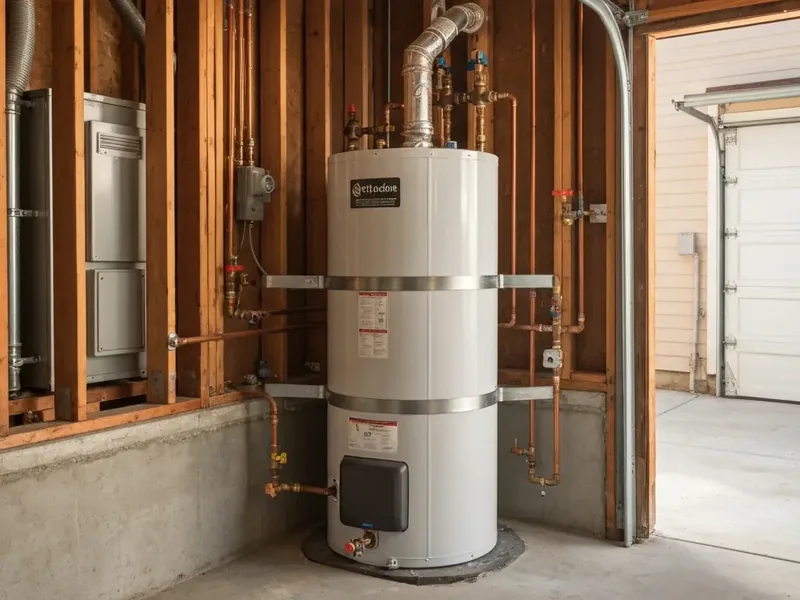
Brownsburg, IN 46112 wears two faces, and both of them show up in our water heater work. There is the older town — the Lincoln Township grid around the historic center, with mid-century ranch homes, postwar bungalows, and the occasional farmhouse that predates the suburb — and there is the newer Brownsburg of 2000s-and-later subdivisions spreading toward the SR-267 corridor and the I-74 interchange. Between them sits one of the town's claims to fame: the racing community anchored by Lucas Oil Indianapolis Raceway Park on the east side, which has made Brownsburg a genuine motorsports town with machine shops, race teams, and a working-class backbone. Water heater leaks here split along the same lines: aging tanks with original-era plumbing in the older neighborhoods, and builder-grade units hitting end-of-life in the newer ones. Water Heater Leak Repair Co. serves the full 46112 ZIP with diagnosis and repair for both.
Two Eras of Housing, Two Patterns of Water Heater Failure
In Brownsburg's older neighborhoods — the streets around the town center and the postwar plats — the typical water heater is a replacement unit threaded into plumbing that has seen decades of service. Galvanized supply lines, cast-iron drain stacks nearby, masonry chimneys venting the gas heater, and shutoff valves that have not been turned since the Clinton administration. The leak pattern here is fitting and valve failure as much as tank failure: corroded dielectric joints, weeping drain valves calcified with sediment, T&P valves on closed systems. When the tank itself goes, it is usually the base seam — decades of hard-water sediment doing what hard-water sediment does.
In the newer subdivisions — the 2000s-and-later developments — the pattern mirrors Avon's: builder-grade 40- and 50-gallon gas tanks installed when the neighborhood was new, now 12 to 18 years old and failing at the base. The installs are cleaner (PEX or copper stub-outs, proper venting, code-era discharge piping), which makes the diagnosis straightforward: the tank is done, and the question is sizing the replacement correctly rather than untangling old plumbing. We see these fail in neighborhood clusters, because the install year was the same for the whole street.
Brownsburg's racing and trades character adds a wrinkle worth mentioning: plenty of homes here have workshops, and workshop-adjacent utility areas sometimes host a second small water heater — a point-of-use or compact tank serving a garage sink or wash station. Those little units get ignored until they leak, and because they sit in outbuildings or unconditioned garages, freeze damage is a real failure mode. We service those too, and we check freeze exposure whenever a secondary heater is involved.
How a Leak Repair Visit Works in Brownsburg, IN 46112
Call (833) 713-2101 and we will ask the standard three: where is the water, how old is the heater, gas or electric. In Brownsburg we add a fourth for the older neighborhoods: is this the original plumbing era of the house, or has the area around the heater been updated? That tells us whether to expect clean connections or a archaeology dig of galvanized fittings — and what parts to load.
Immediate steps while you wait: close the cold-water supply valve above the heater, kill the heat (breaker for electric, gas control to pilot or off), and hose-drain to a floor drain or outside if water is spreading. In the older homes, a special caution: do not muscle a frozen gate valve. Decades-old gate valves snap, and a snapped valve turns a heater leak into a whole-house water emergency. If the valve will not turn easily, leave it and tell us — replacing the valve is part of the visit.
The on-site diagnosis runs top to bottom: supply connections and dielectric unions, T&P valve and discharge piping, drain valve, expansion tank, and finally the tank body — base seam, bottom head, jacket rust streaks. In Brownsburg's older homes we pay particular attention to the venting on gas units, because a heater replacement sometimes reveals a deteriorated flue or an orphaned water heater venting into an oversized chimney. We flag it when we see it. After repair or replacement, the system is refilled, air-purged, brought to temperature, and checked at every joint under pressure. Same-visit hot water restoration is the goal across 46112.
The Failures We See Most Across the 46112 ZIP
Rusted tank bases lead everywhere in Brownsburg, but the road there differs by neighborhood. In the newer subdivisions, it is sediment: a decade-plus of very hard central Indiana water (the limestone-aquifer load, roughly 19 grains per gallon regionally) compacted on the tank floor, superheating the steel until the lining fails. The rumbling burner, the rusty first-draw hot water, the intermittent damp ring — the classic sequence. In the older neighborhoods, the tank may be younger than the plumbing around it, and the failure is just as often at the connections: galvanic corrosion at copper-to-steel joints that were made before dielectric unions were standard, weeping for months as mineral crust before breaking into an active drip.
T&P discharge problems are common across both eras. Brownsburg's municipal system runs through pressure-reducing valves in many areas, creating closed plumbing systems where thermal expansion has nowhere to go. The relief valve opens, the discharge pipe drips outside the house, and the homeowner assumes the valve is bad. Our diagnostic tests system pressure and expansion-tank charge first — because replacing the valve without addressing the pressure just buys a few months before the new valve starts weeping too.
Drain valve failures deserve their own mention because they are so fixable. The cheap plastic drain valves on builder tanks get brittle and seep; on older tanks they clog with sediment and weep around the threads. A full-port brass drain valve is a same-visit upgrade that ends the problem permanently. We replace these constantly in 46112, and it is one of the highest-value small repairs in the trade.
Finally, the secondary-heater freeze failures: compact tanks in unconditioned garages and workshops that split during a hard January cold snap. The tell is a split seam or a cracked fitting rather than corrosion — clean metal, sudden leak, coldest week of the year. The fix includes freeze protection thinking: insulation, heat-trap nipples, and sometimes relocating the unit inside the thermal envelope.
Water Hardness in Brownsburg and What It Means for Your Heater
Hendricks County's groundwater carries the same limestone mineral load as the rest of central Indiana — very hard water that leaves scale on everything it touches. Inside a water heater, that load becomes sediment on the tank floor and scale on electric elements, and it shortens the life of every tank in 46112 that is not maintained against it. The anode rod — the sacrificial metal rod that corrodes so the tank does not have to — depletes faster here than in soft-water regions, and once it is gone, the tank's steel is on its own.
The practical program is simple: flush annually (twice yearly for heavy-use households), inspect the anode every few years, and keep the softener working if the home has one. Many Brownsburg homes do have softeners, and a neglected softener is one of the saddest things we see — the homeowner believes the water is treated while the resin has been exhausted for a year and the heater takes the full mineral load. During a leak visit we check the softener's salt and function as a matter of course, because protecting the replacement from the same water that killed the original is the whole point.
What to Do Right Now If Your Heater Is Leaking in Brownsburg
Shut the cold-water supply valve above the heater. Kill the heat — breaker off for electric, gas control to pilot or off for gas. If water is spreading, hose from the drain valve to the nearest drain or outside. Do not force a stuck valve, do not cap a dripping T&P discharge pipe, and do not keep testing the T&P lever on a compromised valve. Note the leak's location, the water's color, and the heater's age from the rating plate. Then call (833) 713-2101 — for active leaks anywhere in the 46112 ZIP, from the town center to the newest subdivision off SR-267, we prioritize same-day diagnosis.
Brownsburg, IN 46112 — Area Fact Box
Water Heater Leak Repair Co. serves all of Brownsburg and the surrounding Lincoln Township area. Key local facts:
| Detail | Brownsburg, Indiana |
|---|---|
| Verified ZIP code | 46112 |
| County | Hendricks County (Lincoln Township) |
| Housing type and era | Postwar ranch homes and bungalows near the town center; 2000s-and-later subdivisions; motorsports-trades community character |
| Key routes and landmarks | SR-267 corridor; I-74 interchange; Lucas Oil Indianapolis Raceway Park on the east side |
| Water conditions | Very hard groundwater from limestone aquifers (~19 grains per gallon regional estimate) |
| Typical heater setup | Basement/garage tanks in older homes with galvanized-era plumbing; garage/utility tanks in newer subdivisions; occasional secondary workshop heaters |
Water Heater Leak Repair FAQs for Brownsburg, IN 46112
The shutoff valve above my heater won't budge. What do I do?
Do not force it — old gate valves in Brownsburg's older homes snap when muscled, and a broken valve floods the area fast. Leave it alone, and if water is spreading, call (833) 713-2101 immediately and tell us the valve is stuck. We carry replacement ball valves and will change the valve as part of the visit; a modern quarter-turn ball valve also gives you a reliable shutoff for the future.
My neighbor's heater failed last month and mine is the same age. Should I wait?
In the newer subdivisions, no — same builder, same install year, same water means the same failure timeline, and we see these go in clusters. If your tank is 12-plus years old, have it inspected now: we can read the sediment load, check the anode, and tell you whether you have months or weeks. A planned replacement beats a 2 a.m. flood every time.
Can you fix the small second heater in my garage workshop?
Yes. Compact and point-of-use heaters in garages and workshops are common around Brownsburg, and they fail from the same causes plus freeze exposure. We diagnose and repair or replace them, and we will address the freeze risk — insulation, placement, and heat-trap fittings — so the replacement survives January.
Water is dripping from the pipe on the side of my house. Is that the heater?
Almost certainly — that is the T&P relief valve's discharge pipe, and dripping means the valve is relieving pressure. Do not cap or plug it. The cause is usually high system pressure or a failed expansion tank (common in Brownsburg's closed-plumbing homes), and we diagnose the pressure side first rather than just swapping the valve.
How do I know if my water is too hard for my heater?
In this area, assume it is hard — central Indiana groundwater runs very hard across Hendricks County. The practical signs: scale on faucets and showerheads, spotty dishes, and a water heater that rumbles or goes through elements quickly. We can assess the sediment load during the visit and check whether your softener (if you have one) is actually working.
Do you serve the neighborhoods near the raceway park?
Yes — we cover the full 46112 ZIP, from the town center and older plats through the subdivisions along SR-267 and the east side near Lucas Oil Indianapolis Raceway Park. Active leaks get priority scheduling anywhere in the ZIP. Call (833) 713-2101 with the heater's age and leak location.
Whether it is a corroded fitting in a postwar ranch or a sediment-killed builder tank in a new subdivision, Brownsburg's water heater failures follow patterns we fix every day. Call (833) 713-2101 and get an honest diagnosis for your 46112 home — repair when it is honest, replacement when it is right.