Water Heater Leak Repair in Lawrence, IN
IN SHORT: This page covers water heater leak repair in Lawrence, Indiana 46226, from emergency tank leaks to rusted fittings. When you call (833) 713-2101, the first step is a quick description of the leak — where the water is coming from and how fast it is spreading.
If your water heater is leaking in Lawrence, IN 46226, fast action matters. Lawrence sits on the northeast side of Indianapolis, and its housing stock tells a familiar story: many homes around the Fort Benjamin Harrison area were built from the 1950s through the 1970s, and their water heaters, basements, and utility closets have seen decades of use. Mid-century ranch homes and split-levels here often keep their water heater in a basement utility room or garage corner, where a slow tank leak can quietly spread across a concrete floor long before anyone notices. Whether you live near the Fort Harrison State Park trails or off East 56th Street, our technicians at Water Heater Leak Repair Co. service Lawrence daily, arriving with the parts and equipment to diagnose the leak and either repair it or guide you through replacement.
Why Water Heaters Leak in Lawrence Homes
Lawrence homes around the former Fort Benjamin Harrison footprint and the surrounding mid-century neighborhoods share several characteristics that make water heater leaks a common headache. Many homes here still rely on original-style basement utility setups: a 40 or 50 gallon gas tank tucked into a corner, original copper or galvanized supply lines, and a floor drain that may or may not be where it should be. Central Indiana water is moderately hard, and over years it leaves sediment in the bottom of the tank. That sediment insulates the bottom of the tank from the burner, forcing longer heat cycles and accelerating corrosion — one of the most common reasons older tanks in Lawrence start weeping from the bottom seam.
The age of the housing stock matters too. Lawrence's mid-century homes were often built with the water heater sharing a small utility room with the furnace. When a tank starts leaking in a tight space like that, water can wick into drywall, subflooring, and furnace components before it is spotted. Homes closer to Geist Reservoir's watershed or the newer subdivisions along Pendleton Pike and East 56th Street tend to have newer heaters, but even a heater under ten years old can leak from the temperature-and-pressure relief valve, the drain valve, or loose fittings — all fixable on a single service visit.
Water Heater Leak Repair Services in 46226
Every leak call in Lawrence follows the same field-tested process. When you call (833) 713-2101, our dispatcher asks about the leak's location — the top fittings, the bottom of the tank, the relief valve pipe, or the floor around the unit — and whether the leak is a drip, a steady trickle, or pooling water. That determines priority: active pooling gets same-day dispatch, and you will be told exactly where your water heater shutoff valve is and how to turn it off while the technician is on the way.
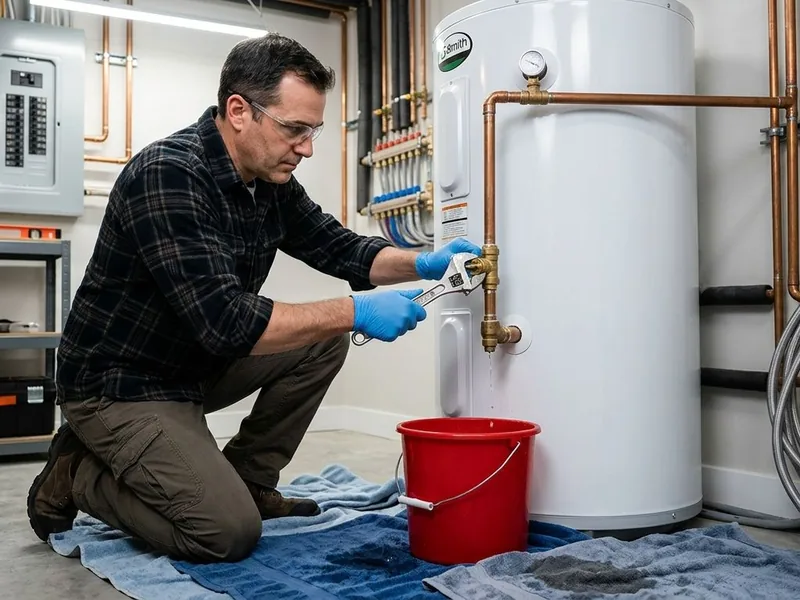
On arrival, the technician's first job is containment and diagnosis. We shut off water to the heater, check whether the leak is coming from a repairable point — the cold water inlet, the hot water outlet, the drain valve, the T&P relief valve, or an anode rod connection — or from the tank body itself. Leaks from fittings and valves are repaired on the spot: valves replaced, fittings reseated with fresh pipe compound or tape, and the T&P valve tested and replaced if it is discharging. Leaks from the tank body — the bottom seam, a pinhole in the tank wall — mean the tank has failed internally and needs replacement. In that case the technician explains your replacement options, matches the unit to your home's existing venting and gas or electric setup, and can often install the new heater the same visit.
Lawrence service runs cover the full footprint of 46226: the Fort Harrison neighborhoods, the corridors along Pendleton Pike and East 56th Street, and the residential pockets east toward McCordsville and south toward Warren Park. We also handle the follow-up details many callers forget to ask about — flushing sediment from a repairable tank, checking the expansion tank on closed-loop systems, and making sure the new or repaired heater's relief valve drains to a safe spot.
| Area | Lawrence, Indiana |
|---|---|
| Verified ZIP | 46226 |
| Housing type and era | Mid-century ranch and split-level homes (1950s–1970s) near Fort Benjamin Harrison, plus newer subdivisions |
| Key routes and landmarks | Fort Benjamin Harrison / Fort Harrison State Park, Pendleton Pike, East 56th Street, I-465 east loop |
How Service Works in Lawrence
Scheduling from Lawrence is straightforward because our technicians run regular routes through the northeast side of Indianapolis. Most non-emergency leak calls in 46226 are scheduled within one to two days; emergency calls — active leaks pooling on the floor — are prioritized the same day. When you call, have this ready: where the water is coming from, the age of your water heater if you know it (check the rating plate), and whether the heater is gas or electric. That lets us load the right parts before we roll.
After the repair or replacement, the technician runs the heater through a full cycle, checks every fitting for drips, confirms hot water at a tap, and walks you through what was done and what to watch for. For Lawrence's older homes with galvanized supply lines, we also flag connections that are corroding but not yet leaking, so you are not calling again in six months for the next weak link.
Fort Harrison's Converted Housing and Lawrence's Mid-Century Blocks
One thing that sets Lawrence apart from other Indianapolis suburbs is the footprint of the former Fort Benjamin Harrison. When the fort was decommissioned in the 1990s, its military housing — officers' quarters, enlisted duplexes, and barracks-adjacent support buildings — was converted to civilian use, and those converted homes still dot the 46226 area around the Lawton Loop and the fort grounds. Converted military housing has unusual utility layouts: water heaters tucked into basement corners or exterior-access closets, long plumbing chases from the original construction, and a mix of pipe materials added during conversion and later remodels. A leak in one of these homes can travel along an old chase and surface rooms away from the heater, which is why our technicians trace Lawrence leaks back to the source rather than assuming the puddle marks the spot.
Beyond the fort grounds, Lawrence's mid-century blocks along the East 56th Street and Pendleton Pike corridors hold ranches and split-levels from the 1950s through the 1970s. Many still have their water heater in the original basement utility room, often sharing the space with a furnace of similar vintage. In these homes the most common service we perform is replacing a tank that has simply aged out — the bottom seam weeps, the jacket shows rust streaks, and the concrete around the unit stays damp no matter how often it is mopped. If your Lawrence home still has its original-era heater location, have the surrounding valves and supply lines inspected at the same visit; the next failure is often inches away.
Winter Freeze Risk in Lawrence Garages and Crawl Spaces
Central Indiana winters are hard on water heaters installed in unheated spaces, and Lawrence has plenty of them — garage installations in the mid-century ranches, crawl space units in the split-levels, and heaters in converted porches or additions. When temperatures drop into the teens, supply lines to and from the heater can freeze, and the real damage often appears during the thaw: a frozen pipe splits, then leaks once water flows again. We see a spike in Lawrence leak calls every January and February for exactly this reason. If your heater lives in an unheated space, keep the garage door closed during cold snaps, insulate exposed hot and cold lines near the unit, and never set a vacation home's heat below the mid-50s. If you return from a winter trip to find water around the heater, shut off the main water supply before calling — a burst supply line will keep feeding the leak until the water is off.
Municipal Water and Sediment in 46226
Lawrence homes on the municipal water supply deal with moderately hard water, and hardness means sediment. Every gallon heated leaves a little mineral behind, and over years that sediment forms an insulating layer on the tank bottom. The burner then runs longer and hotter to heat through it, stressing the steel and accelerating the corrosion that ends in a bottom-seam leak. This is the single most preventable failure we see in Lawrence: tanks that were never flushed fail years earlier than flushed ones. During a service visit, ask the technician about your tank's sediment level and whether a flush makes sense — on a younger tank it is cheap insurance, and on an older one the technician will tell you honestly whether flushing is safe or likely to open up a weak spot.
Frequently Asked Questions — Lawrence, IN 46226
My water heater is in a tight basement utility room. Can you still reach it for repair?
Yes. Most Lawrence mid-century homes keep the heater in a small basement utility room shared with the furnace, and our technicians work in those spaces every week. We ask that you clear a path to the unit before the visit so the technician can get to the valves and fittings quickly.
The Fort Harrison area has older homes. Are parts still available for my old heater?
Fittings, valves, anode rods, thermocouples, and elements for heaters from the major brands are still stocked and standard. If your heater is so old that brand-specific parts are discontinued, the technician will tell you and discuss universal-fit options or replacement.
Should I turn off my water heater if it is leaking?
If water is actively pooling, turn off the cold water supply valve above the heater and shut off the power (breaker) or gas. Our dispatcher will walk you through it on the call. A slow drip from a fitting can usually wait for the scheduled visit.
Do you service both gas and electric water heaters in 46226?
Yes. Lawrence has both — gas is common in the mid-century neighborhoods, electric in some newer builds. We repair and replace both types.
My basement floor drain seems clogged and the leak is spreading. What do I do?
Mop or wet-vac standing water, keep it off the furnace base, and call (833) 713-2101. The technician can assess the drain situation during the visit, but the priority is stopping the leak first.
How do I know if my leaking heater can be repaired or must be replaced?
Rule of thumb: leaks from the top (fittings, valves) are usually repairable; leaks from the tank body itself (bottom seam, pinholes) mean replacement. The technician confirms which it is before recommending anything.
Do you haul away the old water heater after replacement?
Yes. Old tank removal and responsible disposal are included with every replacement in Lawrence.