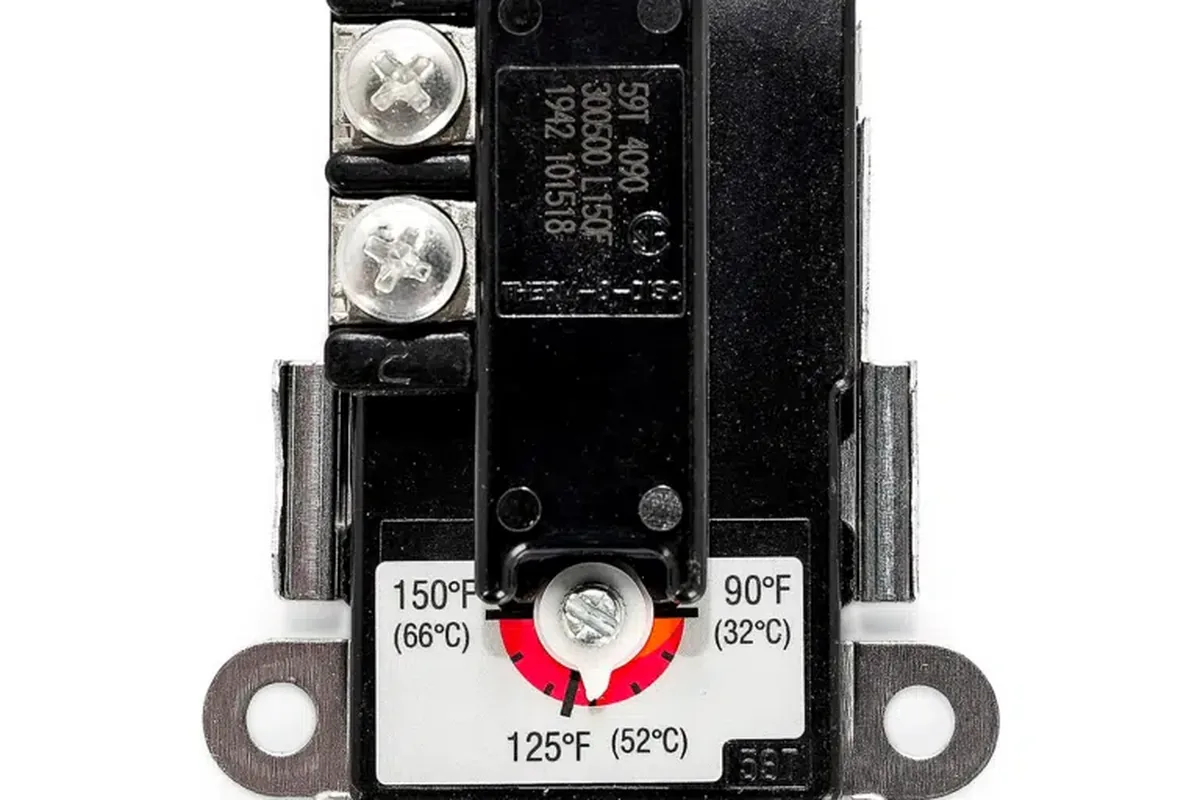
The thermostat on your water heater controls water temperature by cycling the heating elements or burner on and off. When it fails, water comes out scalding hot, lukewarm, or stone cold — and a stuck thermostat can overheat the tank, trip the high-limit switch, and put real stress on the tank and its fittings. If your water temperature in Westfield has become unpredictable, the thermostat is the most likely culprit, and replacing it restores safe, steady hot water.
Signs Your Thermostat Needs Replacing
- Water too hot or too cold: The most common symptom. Water that scalds no matter where you set the dial, or that never gets hot enough, points to a failed thermostat.
- Tripped high-limit (ECO) switch: If the reset button on your water heater keeps tripping, the thermostat may be failing to shut off the heating element, overheating the water.
- Rapid hot water depletion: Running out of hot water far faster than usual can mean one thermostat on a dual-element electric heater has died, so only part of the tank heats.
- Burnt smell near the unit: An overheating element caused by a stuck thermostat can produce a burning odor at the access panel.
- Thermostat dial feels loose or unresponsive: A control that turns with no resistance, or settings that change nothing, has usually failed internally.
- Age and corrosion: Thermostats on tanks older than 8–10 years are prime candidates for failure, especially where hard-water scale insulates the tank wall and distorts temperature readings.
Why Thermostats Fail
- Worn electrical contacts: Every heating cycle arcs the contacts slightly. After thousands of cycles, they pit, stick, or burn out.
- Scale insulation: Mineral scale on the tank wall keeps the thermostat from sensing true water temperature, so it overheats or underheats the tank.
- Moisture damage: A slow leak at the tank or fittings can drip onto the thermostat and control area, corroding the device.
- Power surges: Electrical surges can damage thermostat circuitry, especially after storm-related outages.
- Old age: Like any electromechanical control, thermostats wear out. Ten-plus years of daily cycling is a full service life.
Our Thermostat Replacement Process
Step 1: Diagnosis first
We verify the thermostat is actually the problem — not a failed heating element, sediment buildup, or a tripped breaker — by testing both thermostats and elements on electric tanks, or the gas valve and thermocouple on gas models.
Step 2: Safe power and gas shutdown
For electric heaters, we switch off the dedicated breaker and confirm zero voltage with a multimeter. For gas heaters, we set the gas control to pilot or off.
Step 3: Remove the old thermostat
We remove the access panels and insulation, document the wiring, and disconnect the failed thermostat.
Step 4: Install and calibrate the new thermostat
The replacement thermostat is mounted flush against the tank wall for accurate sensing, wired to match the original configuration, and set to a safe temperature — typically 120°F.
Step 5: Test and verify
We restore power or gas, run a full heating cycle, and check water temperature at a tap to confirm the thermostat cycles the heater on and off correctly. We also reset the high-limit switch if it had tripped.
Equipment and Materials We Use
- Multimeters and non-contact voltage testers: to diagnose thermostats and elements safely and confirm power is truly off.
- OEM or equivalent thermostats: matched to your tank's model, element wattage, and single or dual-element design.
- Infrared thermometers: to verify actual water temperature against the thermostat setting.
- Replacement access panel insulation: refitted so the thermostat senses tank temperature accurately, not ambient air.
- Wire connectors and electrical tape: rated for the heat of the control compartment.
Safety and Precautions
Water heater thermostats carry 240 volts on electric models — enough to cause serious injury. Never remove an access panel or touch thermostat wiring while the breaker is on. A stuck thermostat can also produce scalding water without warning, so test water temperature carefully if yours has been acting up, and keep children away from taps until it is fixed. If the high-limit switch keeps tripping, do not keep resetting it — that is the safety device telling you the tank is overheating. Turn the unit down or off and call us at (833) 713-2101.
Westfield and Hamilton County Factors
Hard water: Westfield's mineral-rich water builds scale on tank walls and elements, insulating the thermostat from true water temperature. This is one of the most common reasons local thermostats read wrong and overheat tanks. If scale is heavy, we will tell you — replacing a thermostat without addressing scale means the new one misreads too.
Housing stock: Many Westfield homes built in the 1990s and 2000s are now running original or second-generation water heaters whose thermostats are at or past end of life. Basements and garages, the two most common tank locations here, expose controls to damp air that accelerates corrosion on thermostat contacts.
Freeze cycles and outages: Winter storm outages in Hamilton County followed by power restoration can surge-control circuitry. If your thermostat failed right after an outage, mention it — it helps us check the whole control circuit, not just the thermostat.