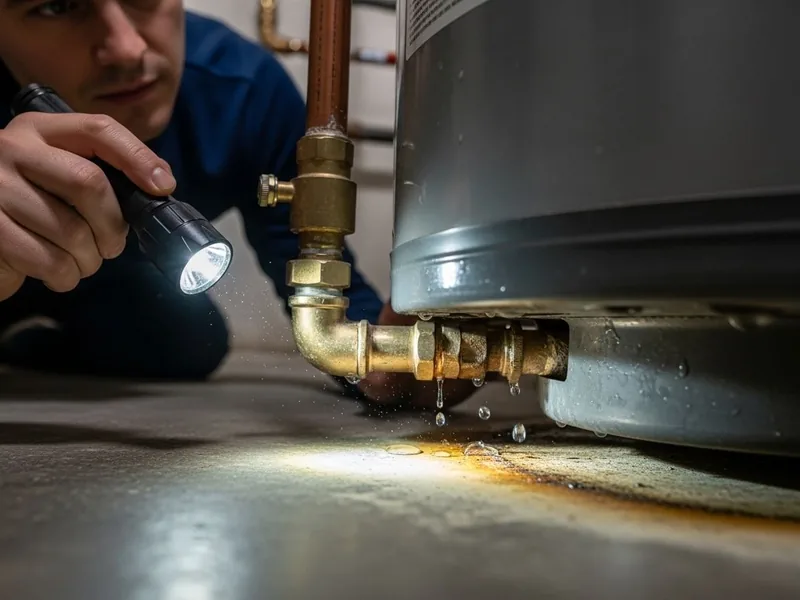
Cicero, IN 46034 is Hamilton County's lake town — a small community wrapped around the northern and western shores of Morse Reservoir, where the housing tells two stories at once. Along the waterfront and the older streets near downtown, you will find the original lake cottages: modest 1950s–1970s frame homes built when the reservoir was new, many still carrying their original plumbing and the water heaters installed decades ago. A few streets over, newer lake homes and subdivisions rise with modern systems and higher expectations. Both kinds of homes share the same enemies: very hard central Indiana water, winter freeze exposure, and heaters that sit in damp lake-air environments. A leaking water heater in Cicero might be a corroded cottage tank finally giving out, a failed fitting in a lake home's utility room, or a winterization casualty discovered at spring opening. Water Heater Leak Repair Co. serves the full 46034 ZIP — the town, the reservoir shoreline, and the surrounding Jackson Township countryside.
Lake Cottages, Lake Homes, and Two Generations of Water Heaters
Morse Reservoir was created in the mid-1950s by damming Cicero Creek, and the cottage community that grew up around it still defines much of Cicero's shoreline housing. Those cottages were built as seasonal or modest year-round homes: small footprints, crawl spaces or pier foundations, simple plumbing run with the materials of the era. Many still have their original galvanized supply lines, and the water heaters — often 30- or 40-gallon tanks shoehorned into closets, crawl spaces, or unheated utility nooks — have in some cases been replaced only once in sixty years. When these tanks leak, the surrounding plumbing usually needs attention in the same visit, and access is often tight enough to require real creativity.
The newer lake homes are a different world: 1990s-and-later construction with full basements or conditioned crawl spaces, PEX or copper plumbing, code-era venting, and 50-gallon gas tanks or tankless units. Their failure pattern is the familiar one — sediment-aged tanks hitting 12 to 15 years in very hard water — but with a lake-town twist: higher ambient humidity accelerates exterior corrosion on the tank jacket and burner assembly, and the damp environment shortens the life of gas controls and electrical connections mounted low on the unit.
Then there are the seasonal properties. Some Cicero shoreline homes still close up for winter, and winterization is where water heaters die quietly. A tank that is drained improperly — or not drained at all — can suffer freeze damage to fittings and valves; a tank left full but unheated in a freezing cottage can split outright. Spring opening then reveals the damage all at once: a split drain valve, a cracked fitting, or a tank that held all winter and lets go with the first heating cycle. We handle spring-opening leak discoveries across 46034 every year, and we can advise on proper winterization so it does not happen twice.
How Water Heater Leak Repair Works in Cicero, IN 46034
Call (833) 713-2101 and we will ask the location of the water, the heater's age and fuel type — plus two Cicero-specific questions: is the home seasonal or year-round, and where does the heater sit (basement, crawl space, closet, garage)? A seasonal cottage with a spring leak gets a different diagnostic lens than a year-round lake home, because freeze damage and winterization errors join the suspect list.
Immediate steps: shut the cold-water supply valve above the heater, kill the heat (breaker for electric, gas to pilot or off), and drain to a safe spot if water is spreading. In crawl-space cottages, be realistic about access — if you cannot safely reach the heater, do not crawl into a wet, low-clearance space with electrical equipment; shut the main house valve instead and wait for us. For seasonal homes discovered at opening, shut the main water supply to the house first if the leak's source is unclear; a burst supply line elsewhere in a just-opened cottage can mimic a heater leak.
On site, the diagnosis covers the full suspect list: tank body (base seam, bottom head, jacket), top fittings and dielectric unions, T&P valve and discharge piping, drain valve, expansion tank — and, for seasonal properties, freeze-split fittings and valves. In the older cottages we also assess the surrounding plumbing, because a new tank threaded into failing galvanized lines is a short-lived victory. After repair or replacement, everything is refilled, purged, heated, and pressure-checked, and for seasonal homes we walk through winterization steps before we leave so the next spring opening is uneventful.
Leak Patterns Around Morse Reservoir
Exterior corrosion is the signature failure of Cicero's shoreline cottages. Lake air is humid air, and a water heater in a damp crawl space or unconditioned utility nook rusts from the outside in — jacket, burner assembly, gas valve, and electrical connections all degrade faster than the same unit would in a dry basement. We see cottage tanks whose jackets are more rust than paint while the interior still holds, and the eventual leak often starts at a corroded fitting or a rusted-through jacket seam rather than the classic base failure. Ventilation and dehumidification around the heater pay real dividends here.
Sediment-aged tank bases are the signature failure of the newer lake homes — the familiar central Indiana story: very hard water (roughly 19 grains per gallon regionally, from the limestone aquifers) compacted on the tank floor over 12-plus years, superheated steel, fractured lining, failed base seam. Rumbling burner, rusty first-draw water, intermittent damp ring: the sequence every 46034 homeowner should recognize by year twelve.
Freeze damage is the seasonal signature. Split drain valves, cracked dielectric nipples, burst supply connectors — clean breaks in otherwise sound metal, discovered at spring opening or after the first hard freeze in a poorly winterized cottage. The repair is straightforward; the prevention is the valuable part, and we advise every seasonal customer on proper drain-down, antifreeze in traps, and heat-tape or insulation for exposed runs.
T&P discharge issues appear here as they do everywhere in Hamilton County — closed plumbing systems, thermal expansion, weeping relief valves — with one local note: some older cottages have no expansion tank and no pressure-reducing valve, just an old well pump or municipal feed with a check valve. The diagnostic still starts with pressure testing, because the fix depends on what the system actually is, not what the textbook says it should be.
Hard Water, Humidity, and Heater Life in Cicero
Cicero's water heaters fight a two-front war: very hard water inside, humid lake air outside. Inside, the mineral load — calcium and magnesium from the limestone aquifers — settles as sediment, scales elements, and depletes anode rods faster than average. Annual flushing is the minimum; for cottages on well water with iron, it is doubly important, because iron accelerates the corrosion that finishes off a tank once the anode is spent. Many shoreline properties run on private wells, and well-fed heaters in 46034 should have their anodes inspected every two to three years.
Outside, humidity attacks the steel the water never touches. A gas heater's burner assembly, pilot assembly, and gas valve corrode in damp air; electrical connections on electric units green up and loosen. The practical defenses: keep the area around the heater ventilated, fix any crawl-space moisture problems (vapor barriers, drainage) rather than just the heater, and consider a dehumidifier in enclosed utility spaces near the lake. When we replace a rusted-out cottage tank, we look at the environment that rusted it — because a new tank in the same damp closet without ventilation improvements is on the same clock.
Softeners help with the interior war and are common in Cicero's year-round homes, but they need the usual maintenance: salt, settings, regeneration. And a reminder for seasonal owners: a softener left unregenerated through a winter of disuse can harbor bacterial growth — sanitize and regenerate at spring opening, and have the heater flushed and checked in the same visit.
What to Do Right Now If Your Heater Leaks in Cicero
Shut the cold-water supply valve above the heater — or the main house valve if you cannot safely reach the heater. Kill the heat: breaker off, or gas to pilot/off. If water is spreading, hose-drain to a safe discharge point. In a wet crawl space, do not enter around electrical equipment; shut the main and wait. Note the heater's age, fuel type, whether the home is seasonal, and where the water appears. Then call (833) 713-2101. For the 46034 ZIP — town, shoreline, and township roads — active leaks get priority scheduling, and spring-opening discoveries get same-day diagnosis whenever the schedule allows.
Cicero, IN 46034 — Area Fact Box
Water Heater Leak Repair Co. serves Cicero, the Morse Reservoir shoreline, and surrounding Jackson Township. Key local facts:
| Detail | Cicero, Indiana |
|---|---|
| Verified ZIP code | 46034 |
| County | Hamilton County (Jackson Township) |
| Housing type and era | 1950s–1970s lake cottages near the reservoir; newer lake homes and subdivisions (1990s–2010s); small-town center |
| Key routes and landmarks | SR-19 corridor; Morse Reservoir shoreline (reservoir created mid-1950s on Cicero Creek); historic downtown Cicero |
| Water conditions | Very hard groundwater (~19 grains per gallon regional estimate); town system plus private wells near the lake, some with iron; humid lakeside air accelerates exterior corrosion |
| Typical heater setup | Cottage tanks in crawl spaces, closets, and utility nooks; modern basement/utility-room tanks in newer homes; seasonal properties with winterization needs |
Water Heater Leak Repair FAQs for Cicero, IN 46034
We just opened our cottage for spring and the water heater is leaking. What happened?
Most likely freeze damage or a winterization miss: split drain valves, cracked fittings, or a tank that sat through freezing temperatures improperly drained. Shut the main house valve if the source is unclear, then call (833) 713-2101. We handle spring-opening leaks across 46034 every year — diagnosis, repair, and a proper winterization walkthrough so next spring is uneventful.
The outside of my cottage water heater is rusting badly. Is that dangerous?
It is a warning. Exterior rust on the jacket, burner assembly, or gas valve — common in Cicero's humid lakeside crawl spaces — degrades controls and connections and often precedes a leak at a corroded fitting or seam. Have it inspected: sometimes improved ventilation and a repair buy years, sometimes the unit is done. Either way, do not ignore advancing exterior corrosion on a gas appliance.
Can you work in a tight cottage crawl space?
Yes — low-clearance cottage installs are a regular part of our 46034 work. We bring pumps, compact tools, and the experience to diagnose and replace tanks in spaces the original installer barely fit through. We will also give you an honest opinion on whether relocating the replacement to a more accessible, drier spot is worth doing while the system is open.
Does lake humidity really shorten water heater life?
It shortens the life of everything it touches outside the tank — jackets, burners, gas valves, electrical connections. The interior still fails on the usual hard-water schedule, but exterior corrosion can kill controls and fittings years earlier in a damp lakeside installation. Ventilation, vapor barriers, and keeping the area dry are genuine life-extenders here.
I'm on a well near the reservoir. Anything special I should know?
Well water around Morse Reservoir commonly carries iron along with the hardness, which accelerates internal tank corrosion once the anode rod is depleted. Inspect the anode every two to three years, flush annually, and make sure any softener and iron filtration are actually working. When we replace a well-fed tank in 46034, we review the treatment chain with you.
How quickly do you serve the 46034 ZIP?
We run the SR-19 corridor and the reservoir shoreline regularly. Active leaks get priority scheduling; spring-opening discoveries get same-day diagnosis whenever possible. Call (833) 713-2101 with the heater's location, age, and whether the home is seasonal, and we will get you scheduled.
From a rusted cottage tank on the reservoir to a sediment-aged unit in a newer lake home, Cicero's water heaters live harder lives than most — hard water inside, lake air outside, and winter in between. Call (833) 713-2101 and let Water Heater Leak Repair Co. sort it out for your 46034 home, with winterization advice included so the fix lasts.