Water Heater Leak Repair in Lebanon, IN
IN SHORT: This page covers water heater leak repair in Lebanon, Indiana 46052, from historic downtown homes to newer builds along the I-65 corridor. When you call (833) 713-2101, the first step is a quick description of the leak — where the water is coming from and how fast it is spreading.
A leaking water heater in Lebanon, IN 46052 needs attention fast, and the kind of attention it needs depends a lot on which Lebanon home you live in. Lebanon is the Boone County seat, and its housing is two worlds: the historic core around the downtown square and the courthouse, with Victorian-era and early-20th-century homes whose utility spaces were designed long before modern water heaters existed, and the newer growth spreading toward I-65 and the business parks on the city's edge, where 1990s-to-2000s homes have standard utility rooms. Water Heater Leak Repair Co. serves all of Lebanon — from the brick streets near the Boone County Courthouse to the subdivisions off Indianapolis Avenue — with same-day service for active leaks.
Why Water Heaters Leak in Lebanon Homes
In Lebanon's historic downtown neighborhoods, water heaters often live in crawl spaces, old coal cellars converted to basements, or cramped utility corners where original cast-iron or galvanized plumbing meets modern copper and PEX. That mix of old and new piping is a classic leak source: dielectric unions between dissimilar metals corrode, old gate valves on the supply line seize or weep, and sediment-heavy tank bottoms rust through after years of long heating cycles. A pinhole in a supply line above an old heater can drip for weeks before it is noticed in a dim cellar.
In the newer Lebanon homes near I-65 and the eastern growth areas, the problems are different but no less real. Builders in the 1990s and 2000s commonly installed basic 40-gallon gas tanks in garages or utility closets; many of those original units are now reaching the end of their service life. Hard water sediment is the quiet culprit across Boone County — it builds up in every tank, and in Lebanon's newer homes it often goes unflushed for a decade, cutting efficiency and corroding the tank from the inside out.
Water Heater Leak Repair Services in 46052
When you call (833) 713-2101 from Lebanon, our dispatcher asks where the leak is coming from — top fittings, bottom of the tank, the T&P relief valve pipe, or the floor — and how fast it is spreading. Active pooling gets same-day dispatch anywhere in 46052, and you will get shutoff instructions for your water and power or gas while the technician is en route.
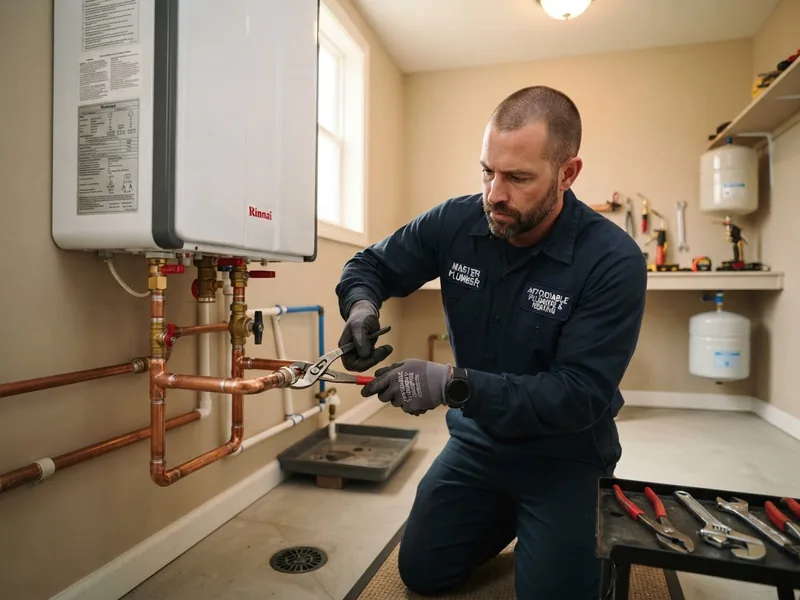
The technician's first step on site is diagnosis: shut off water to the heater and determine whether the leak is repairable — cold inlet, hot outlet, drain valve, T&P valve, anode rod port — or a tank-body failure. Fitting and valve leaks are fixed on the spot with stocked parts. Tank-body leaks mean replacement, and in Lebanon's historic homes that sometimes means creative problem-solving: getting a new 50-gallon tank down narrow cellar stairs, reworking old venting, or replacing seized supply valves before the new unit can even be connected. Our technicians handle that regularly and explain the options and the plan before any work starts.
Service coverage includes the full 46052 area: the downtown square and courthouse district, the residential streets around Memorial Park, the neighborhoods along Indianapolis Avenue and North Lebanon Street, and the newer subdivisions toward I-65 and the eastern business corridor. We also service the rural edges of the Lebanon ZIP where homes on well water may deal with extra sediment — a frequent cause of premature tank failure.
| Area | Lebanon, Indiana |
|---|---|
| Verified ZIP | 46052 |
| Housing type and era | Historic Victorian/early-1900s homes downtown plus 1990s–2000s growth toward I-65 |
| Key routes and landmarks | Boone County Courthouse square, I-65, Indianapolis Avenue, Memorial Park |
How Service Works in Lebanon
Technicians run regular routes through Boone County, so Lebanon calls are typically scheduled within one to two days and emergencies the same day. When you call, note whether your heater is gas or electric, its approximate age (the rating plate on the tank shows the manufacture date), and where the water is appearing. If your heater sits in a crawl space or old cellar, mention that — it helps us plan access.
After the repair, the technician runs the unit through a heating cycle, verifies every connection is dry, confirms hot water at the nearest tap, and shows you the shutoff valves so you can act fast if you ever see water again. For older Lebanon homes, we also check the supply valves and nearby piping for corrosion that could become the next leak.
The Courthouse Square District: Lebanon's Oldest Plumbing
Downtown Lebanon grew up around the Boone County Courthouse — an early-1900s landmark anchoring one of central Indiana's classic county-seat squares — and the Victorian and Queen Anne homes on the surrounding streets are where our most interesting 46052 service calls happen. These houses were built before modern water heaters existed, so every unit in them is a retrofit: squeezed into a former coal cellar, a dug-out crawl space, or a back-porch utility closet added decades later. Stone foundations, low basement ceilings, and original floor joists make for tight working conditions, and the plumbing tells the home's whole history — galvanized from the 1940s, copper spliced in during the 1970s, PEX added last decade. Each transition between materials is a potential leak point, and the fittings directly above the heater, which endure constant heating and cooling cycles, are where most square-district leaks begin. Our technicians carry the dielectric unions and adapters these mixed-material systems require, and we expect the unexpected in these basements.
One square-district quirk worth knowing: many of these old basements have no floor drain near the heater, and some have none at all. A leaking tank in a drainless stone basement does not politely exit — it spreads across the floor, wicks into the bottom of stored belongings, and feeds the musty dampness old basements are already prone to. If your historic Lebanon home has no floor drain, a leak pan under the heater with a drain line routed to a sump or exterior is worth discussing during your service visit. It will not stop a leak, but it buys critical time.
The Big Four Trail Corridor and Lebanon's East-Side Growth
Lebanon's growth has pushed east toward I-65, with 1990s-through-2010s subdivisions and the business corridor near the interstate interchange filling in what was once farmland. The Big Four Trail — the rail-trail running through town — now threads past neighborhoods whose water heaters are standard modern installations: 40 and 50 gallon gas tanks in garages and utility rooms. These are straightforward to service, and the most common issues are the modern ones: T&P relief valve discharge from high water pressure, failed expansion tanks on closed-loop systems, and original builder-grade tanks from the 1990s and 2000s reaching the end of their service life in waves. If your east-side Lebanon home still has its original tank from the subdivision's build year, plan for replacement before it fails — these tanks tend to go within a few years of each other across a neighborhood.
Well Water on the Rural Edges of 46052
Outside the city water system, many 46052 homes run on private wells, and well water changes the water heater equation. It typically carries more sediment, iron, and hardness minerals than municipal water, which means faster sediment buildup, more frequent anode rod depletion, and shorter tank life — sometimes dramatically shorter. We recommend well-water homes flush annually and check the anode rod every couple of years; a depleted anode rod is an invisible countdown to tank failure. If your well water leaves rust stains in sinks or smells of sulfur, mention it when you call — the technician can recommend tank protection strategies matched to aggressive water, and in some cases a powered anode rod makes sense for a new installation.
Frequently Asked Questions — Lebanon, IN 46052
My water heater is in an old cellar with narrow stairs. Can you replace it?
Yes — this is common in Lebanon's historic downtown homes. Our technicians regularly carry new tanks into tight cellars and remove old ones. Mention the access when you call so the crew plans accordingly.
I am on well water outside town. Does that change anything?
Well water often carries more sediment and minerals, which shortens tank life and makes annual flushing more important. The technician can check your anode rod and recommend a flushing schedule suited to well water.
The courthouse-area homes are old — will new parts fit my plumbing?
In most cases, yes. Adapters exist to connect modern heaters to older galvanized or copper supply lines. The technician assesses your connections on site and explains any extra fitting work before starting.
Should I shut off the water if my heater is dripping?
A slow drip from a fitting can wait for your appointment; active pooling should be shut off at the cold supply valve. Call (833) 713-2101 and the dispatcher will talk you through it.
Do you service homes along the I-65 corridor businesses and rentals?
Yes. We service residential water heaters throughout 46052, including rental properties and small commercial-style units in converted buildings — call to describe your setup.
How long does a typical leak repair visit take?
Most fitting and valve repairs are completed in under two hours. Full replacements, especially with difficult cellar access, can take half a day. You will get a time estimate before work begins.
Do you remove the old tank after a replacement in Lebanon?
Yes. Removal and responsible disposal of the old water heater are included with every replacement.