Water Heater Leak Repair in Plainfield, IN
IN SHORT: This page covers water heater leak repair in Plainfield, Indiana 46168, from logistics-corridor neighborhoods along I-70 to older homes near downtown. When you call (833) 713-2101, the first step is a quick description of the leak — where the water is coming from and how fast it is spreading.
Plainfield, IN 46168 sits in Hendricks County along the I-70 logistics corridor, and that corridor has shaped its housing: steady residential growth from the 1970s onward, a mix of mid-century homes near the older downtown, 1980s–2000s subdivisions spreading outward, and newer builds filling in toward the interstate. Water heaters across Plainfield reflect that mix — original tanks aging out in the older neighborhoods, builder-grade units from the subdivision boom years reaching end of life, and newer high-efficiency setups in the latest developments. Water Heater Leak Repair Co. serves the entire 46168 ZIP with same-day service for active leaks, from the historic core to the neighborhoods ringing the I-70 interchanges.
Why Water Heaters Leak in Plainfield Homes
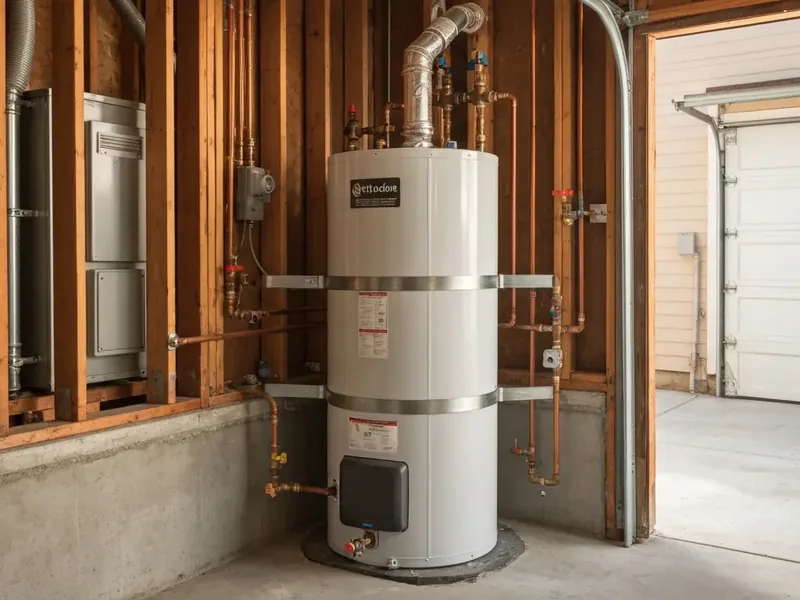
Plainfield's 1970s–1990s subdivisions are the epicenter of leak calls. Those homes commonly have a 40 or 50 gallon gas tank in the garage or a utility room, and the original units are now well past typical service life. The failure mode is familiar: sediment baked onto the tank bottom over years of unflushed service corrodes the steel, and the bottom seam starts weeping — first a damp ring on the concrete, then a spreading puddle. Because many Plainfield garages double as storage, the leak can hide behind boxes for days.
The older homes near downtown Plainfield bring a different set of issues: aging supply lines, corroded fittings where old galvanized meets newer copper, and heaters tucked into basement utility areas with poor lighting where drips go unnoticed. In the newest Plainfield developments near the I-70 corridor, we more often see T&P relief valve discharges tied to municipal water pressure and failed expansion tanks, plus the occasional leaking connection on recirculation loops in larger homes.
Water Heater Leak Repair Services in 46168
When you call (833) 713-2101 from Plainfield, our dispatcher asks where the water is coming from — top fittings, tank bottom, relief valve pipe, or the floor — and how fast it is spreading. Active pooling anywhere in 46168 gets same-day dispatch, and you will get shutoff instructions for water and power or gas while the technician is en route.
On site, the technician shuts off water to the heater and diagnoses the source. Leaks from the cold inlet, hot outlet, drain valve, T&P valve, or anode rod port are repairable on the spot with stocked parts. A leak from the tank body — bottom seam or pinhole — means the tank has failed and needs replacement. Plainfield's standard configurations (40/50 gallon gas, plus electric in some all-electric builds) are common enough that same-visit replacement is the norm. The technician explains the diagnosis and the plan before any work starts, then runs the repaired or new unit through a full heating cycle and verifies every connection is dry.
Coverage includes all of 46168: the downtown Plainfield area, the residential corridors along US 40 and State Road 267, the subdivisions spreading toward the I-70 interchanges, and the neighborhoods near the Hendricks County fairgrounds area. We also serve the rural edges of the ZIP where well water adds sediment load and shortens tank life.
| Area | Plainfield, Indiana |
|---|---|
| Verified ZIP | 46168 |
| Housing type and era | Mid-century homes downtown plus 1970s–2000s subdivisions and new builds near I-70 |
| Key routes and landmarks | I-70 logistics corridor, US 40, State Road 267, downtown Plainfield |
How Service Works in Plainfield
Plainfield sits on our regular Hendricks County routes, so most calls in 46168 are scheduled within one to two days and emergencies the same day. When you call, have your heater's fuel type and approximate age ready (the rating plate shows the manufacture date), plus where the water is appearing. If the heater is in a cluttered garage, clear a path before the technician arrives.
After the work, the technician confirms hot water at a tap, shows you the shutoff valves, and flags any nearby corroding connections that could become the next leak — especially valuable in Plainfield's older neighborhoods with mixed-era plumbing.
Along the National Road: Plainfield's Oldest Homes
US 40 through Plainfield is the historic National Road — one of America's first federally funded highways — and the homes along it are among the oldest in Hendricks County. Early-1900s farmhouses, interwar bungalows, and postwar cottages line the corridor, many on deep lots where the original outbuildings still stand. Water heaters in these homes are retrofits in the truest sense: installed in root cellars, enclosed back porches, and basement corners of houses built decades before indoor plumbing was standard. The plumbing archaeology is rich — galvanized supply lines from mid-century upgrades, copper spliced in later, and in some cases remnants of old well or cistern piping abandoned in place. Leaks here often start at the junctions between eras: a dielectric union corroded through, a 1960s gate valve that weeps when disturbed, a drain valve that crumbles at the first touch. Our technicians approach National Road corridor homes expecting layered history, and we carry the fittings to bridge every era of it.
Many of these corridor homes also sit on large lots with detached garages — and occasionally the water heater lives in the garage, exposed to winter freeze risk. If yours does, winterize it like any unheated-space installation: insulate the lines, keep the space as warm as practical, and know your main shutoff.
Rental Turnover Near the Logistics Corridor
Plainfield's I-70 logistics corridor — the warehouses and distribution centers that made the town a freight hub — supports a large rental housing stock nearby, from single-family rentals to small multi-unit buildings. Rentals have a leak-reporting problem: tenants may not notice a slow drip in a garage or basement utility area, may not know who to call, or may assume a damp floor is normal. By the time a landlord hears about it, a weeping fitting has become a rotted subfloor. If you own rental property in the 46168 area, build water heater checks into your turnover routine — a five-minute look at the tank, the floor around it, and the shutoff valves between tenants catches most problems early. We work with Plainfield landlords regularly and can assess a unit's heater during a single visit, flagging tanks that will not survive the next lease term.
White Lick Creek and Damp Basements
White Lick Creek winds through Plainfield, and homes in the lower-lying areas near it live with a particular challenge: basements that run damp in wet seasons. A chronically damp basement masks the early signs of a water heater leak — a weeping bottom seam just blends into the background moisture until the problem is advanced. If your Plainfield basement stays damp, pay extra attention to the area around your water heater: look for rust streaks on the tank jacket, mineral crust on fittings, and any change in the damp pattern near the unit. A sump pump keeps groundwater down but does nothing about a leaking tank; the two problems just share a floor. During a service visit, our technicians can help you tell the difference and make sure a tank leak is not hiding behind a groundwater problem.
Plainfield homeowners should also know that water pressure can vary across 46168 by elevation and distance from the municipal supply — and intermittent relief valve discharge is often the symptom. If your T&P valve drips some days and not others, pressure testing during a service visit usually explains the pattern, and a pressure-reducing valve plus a correctly charged expansion tank ends it for good.
Frequently Asked Questions — Plainfield, IN 46168
My garage is full of storage and I just found a puddle behind boxes. What now?
Move what you can, mop up standing water, and shut off the cold supply valve above the heater. Call (833) 713-2101 — hidden leaks behind storage are common in Plainfield garages, and same-day service stops the spread.
How long do water heaters typically last in Plainfield?
Conventional tanks average 8–12 years, though hard water sediment can shorten that. If your Plainfield home's original tank is from the 1990s or 2000s build, it is living on borrowed time — an inspection is worthwhile.
My relief valve pipe is dripping onto the garage floor. Is that serious?
It signals excess pressure or a failed expansion tank and needs prompt attention. Do not cap the valve. Call and the technician will test pressure and the expansion tank.
Do you service electric water heaters too?
Yes — gas and electric, tank and tankless. Plainfield has all types across its neighborhoods.
Can you replace my heater the same day I call?
Usually yes. Plainfield's standard 40 and 50 gallon configurations are stocked on the truck, so most replacements finish the same visit.
I am on well water at the edge of town. Does that matter?
Yes — well water typically carries more sediment, which accelerates tank corrosion. Mention it when you call; the technician can check the anode rod and set a flushing schedule.
Do you haul away the old tank?
Yes. Old tank removal and responsible disposal are included with every replacement in Plainfield.