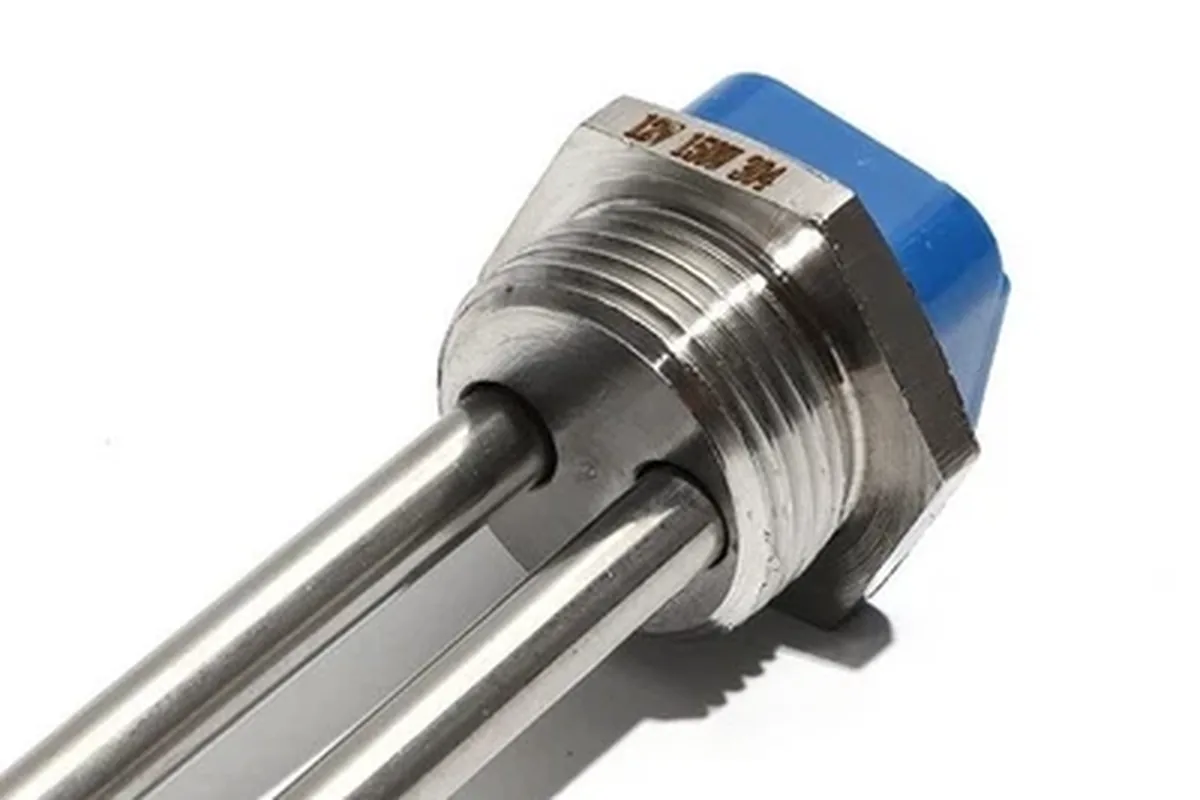
Signs Your Heating Element Has Failed
Electric water heaters typically have two heating elements — upper and lower — and each fails with its own signature. Lukewarm water that never gets fully hot usually implicates the upper element or upper thermostat, since the upper element heats the top of the tank first. Hot water that runs out unusually fast — a shower that goes cold halfway through — points to the lower element, which does most of the heating work and fails most often.
A breaker that keeps tripping is the other classic sign: a burned-out element can short to ground, drawing fault current that trips the breaker. No hot water at all with the breaker on suggests both elements or a thermostat/high-limit issue. Because symptoms overlap, we confirm with a multimeter rather than guessing — testing resistance across each element and checking for shorts to ground.
Why Elements Fail in Westfield
In Westfield, the leading element killer is hard-water scale. Dissolved calcium and magnesium precipitate onto the hot element surface, forming an insulating mineral crust. The element then cannot shed heat into the water efficiently, so its internal temperature climbs until the resistance wire burns through — the same reason an electric kettle scales up and dies. Homes on Hamilton County's limestone-aquifer water see this faster than homes on softer supplies.
The second killer is sediment burial. The lower element sits near the tank bottom, exactly where sediment accumulates, and a buried element overheats in its mineral cocoon. Dry-firing is the third: if the tank is drained for maintenance and power is restored before it refills completely, the exposed element destroys itself in seconds. Age, loose wiring connections that overheat terminals, and voltage irregularities account for the rest.
Our Step-by-Step Replacement Process
- Step 1 — Power off and verify. We switch off the dedicated breaker and confirm zero voltage at the heater with a meter. Breaker labels lie; meters do not.
- Step 2 — Drain below the element. We drain the tank to below the failed element's level, routing discharge safely.
- Step 3 — Access and disconnect. We remove the access panels and insulation, disconnect the wiring, and label everything for correct reassembly.
- Step 4 — Test to confirm. We meter each element's resistance and check for shorts to ground, confirming which element failed — and whether its partner is on the way out.
- Step 5 — Extract the old element. Using an element wrench, we unthread the failed element and inspect the tank port threads and gasket seat.
- Step 6 — Install the matched replacement. We install an element with the exact wattage and voltage rating the heater calls for, with a new gasket, torqued to seal without cracking the port.
- Step 7 — Refill completely and purge air. This step is critical: the tank must be entirely full with all air purged before power returns, or the new element dry-fires instantly.
- Step 8 — Restore power and verify. We switch the breaker on, confirm the element draws correct current, and verify the thermostat cycles normally.
Equipment and Materials We Use
Heating elements are not interchangeable: wattage, voltage, and physical style (screw-in vs. flange, straight vs. foldback) must match the heater's specification plate. We stock the common residential ratings and verify against your unit before installing. Every replacement gets a new gasket — reusing a compressed gasket is asking for a seep — and we use a proper element wrench that grips without rounding the hex.
Diagnostic gear matters as much as parts: a quality multimeter for resistance and ground-fault testing, non-contact voltage verification, and an ammeter to confirm the new element draws its rated current once energized. Correct current draw is the proof the installation is right.
Safety and Precautions
Electric water heaters run on 240 volts, and our safety protocol treats every wire as live until meter-verified otherwise. The breaker goes off before panels come off, and we test for voltage at the elements themselves — not just at the breaker — because mislabeled panels are common. Wiring is reconnected with proper torque on terminals; a loose connection overheats, and an overheated terminal is a fire risk inside the access panel.
The other cardinal rule: never energize the tank before it is completely full. A dry-fired element fails in seconds, turning a simple repair into a repeat visit. We purge air through the hot taps and confirm steady, air-free flow before the breaker goes back on. And we verify the high-limit safety switch is functional, since it is the device that protects against a runaway thermostat.
Local Factors: Westfield Water and All-Electric Homes
Westfield's limestone-aquifer water is the defining local factor for element life. Hardness here runs high enough that scale-coated elements are the norm rather than the exception on units that have never been flushed or descaled. If your electric heater is more than a few years old and has never been serviced, assume the elements are working under a mineral blanket — replacement plus a flush and a maintenance plan is the honest prescription.
Many newer Westfield subdivisions are all-electric, meaning the water heater, range, dryer, and HVAC all draw from the same panel. In these homes, a shorted element tripping the water heater breaker sometimes gets misattributed to panel or service problems; we have seen homeowners chase electrical ghosts when the actual culprit was a five-year-old lower element shorted to ground. Knowing the symptom pattern saves that wild-goose chase.
Homes with water softeners fare better on scale but are not immune — softened water still leaves some deposition, and sediment from the tank bottom still buries lower elements. And on the outskirts of town where well water is common, mineral content can be higher still, making annual flushing and periodic element checks especially worthwhile.