Greenfield, IN 46140 is the seat of Hancock County — a town with genuine literary heritage as the boyhood home of James Whitcomb Riley, the 'Hoosier Poet,' whose home and museum still stand on West Main Street along the historic National Road (US-40) corridor. The housing reflects that layered history: Victorian and early-1900s homes near the historic downtown, postwar ranch homes and bungalows in the mid-century plats, and modern subdivisions that have grown up along the I-70 corridor as Greenfield became an east-side Indianapolis commuter town. Water heater work in 46140 spans all three eras — original-era plumbing in the historic homes, aging builder tanks in the 1990s–2000s subdivisions, and everything in between. Water Heater Leak Repair Co. serves the full 46140 ZIP with leak diagnosis and repair for each.
Three Eras of Greenfield Housing, Three Leak Profiles
Near the historic downtown and along the National Road corridor, Greenfield's oldest homes carry Victorian and early-1900s bones: full basements, stone or block foundations, and plumbing that has been adapted across generations. A water heater here may be venting through a masonry chimney, threaded into galvanized lines, and governed by a shutoff valve installed decades ago. The leak profile is connection-heavy: galvanic corrosion at copper-to-steel joints, weeping solder joints, calcified drain valves, and T&P valves on closed systems. When the tank itself fails, it is usually the base seam after years of sediment — but the fittings deserve equal suspicion, and our diagnostic treats them that way.
The mid-century plats — postwar ranch homes and bungalows from the 1950s through the 1970s — have their own pattern: replacement-age tanks (often on their second or third unit) in basements and crawl spaces, supply plumbing that mixes galvanized, copper, and later PEX from successive updates. These homes' heaters fail at the connections and at the tank in roughly equal measure, and the crawl-space installs are particularly leak-prone because a slow weep can soak floor framing for months before anyone notices.
The I-70 corridor subdivisions — 1990s-and-later homes built as Greenfield grew into a commuter suburb — follow the familiar boom-suburb script: builder-grade 40- and 50-gallon gas tanks now 12 to 20 years old, failing at the base seam on the hard-water schedule. Clean installs, straightforward diagnostics, honest replacement recommendations. The Pennsy Trail corridor and the town's eastward growth have added plenty of these homes, and their tanks are aging together.
Across all three eras, one constant: Hancock County's very hard groundwater, the limestone-aquifer mineral load that shortens tank life everywhere in central Indiana and makes maintenance non-optional in 46140.
How Water Heater Leak Repair Works in Greenfield, IN 46140
Your call to (833) 713-2101 starts with the leak location, the heater's age and fuel type, and the house's era — downtown historic, mid-century plat, or I-70 subdivision. That last question shapes the parts load and the time estimate, because a 1915 Victorian with galvanized plumbing is a different job than a 2004 two-story with PEX stub-outs, and we arrive prepared for the house we are actually visiting.
Immediate steps: close the cold-water supply valve above the heater (gently on vintage gate valves — they snap when forced), kill the heat (breaker for electric, gas control to pilot or off), and hose-drain to a floor drain, sump pit, or outside if water is spreading. In the historic homes, verify the floor drain actually drains before depending on it. In crawl-space ranch homes, do not enter a wet low-clearance space around electrical equipment — shut the main house valve instead and wait for us.
On-site diagnosis runs top to bottom: supply pipe condition, dielectric unions, T&P valve and discharge piping, drain valve, expansion tank, and the tank body — base seam, bottom head, jacket. In Greenfield's oldest homes we check gas venting paths, because replacement day is when deteriorated flues get discovered. After repair or replacement: refill, purge air, bring to temperature, pressure-check every joint. And in the older homes, we replace suspect shutoffs and connectors while the system is open — a new tank on a 40-year-old valve is a future emergency, not a finished job.
Leak Patterns Across Greenfield's Neighborhoods
In the historic core, fitting and connection failures lead. Decades of very hard water on galvanized and early-copper plumbing produce the signature mineral crust at joints — white-green buildup that graduates from damp to dripping as galvanic corrosion thins the fitting. The repair is cut-back-to-sound-pipe with proper dielectric unions; the mistake is ignoring the crust until the fitting fails structurally. We tell every 46140 owner of an older home: that crust is a calendar, not a decoration.
Tank-base failures follow the sediment script everywhere in Greenfield: hard water bakes onto the tank floor, the burner or element superheats the steel, the lining fractures, the seam lets go. Warning signs are the region's standard — rumbling, rusty first-draw water, the intermittent damp ring. In homes where the tank has never been flushed, the sediment can be inches thick and the failure abrupt rather than gradual.
T&P discharge issues track the plumbing era: the newer subdivisions are closed systems with pressure-reducing valves (thermal expansion, weeping relief valves, dripping discharge pipes outside the house), while some older homes have their own pressure quirks from check valves and old well-pump setups. Either way, we test house pressure and expansion-tank charge before replacing the valve — the valve is usually the messenger.
Crawl-space slow leaks deserve special mention for Greenfield's ranch homes: a weeping fitting or pinhole tank leak in a crawl space can run for months, feeding mold in floor framing and rusting the heater's burner assembly from below, before anyone connects the musty smell to the water heater. If your ranch home smells musty and the water heater is in the crawl space, have it inspected — the leak you cannot see is the one doing the damage.
Hard Water and Heater Maintenance in the 46140 Area
Hancock County's groundwater carries the central Indiana limestone load — very hard water that settles as sediment, scales elements, and depletes anode rods faster than average. The defense is the standard program, and it is not optional in 46140: annual flushing (twice yearly for heavy-use households), anode inspection every few years, and a verified-working softener where one is installed. Many Greenfield homes have softeners; we check salt, settings, and regeneration on every visit, because a dead softener protects nothing and its owner usually does not know it is dead.
For the township's well owners outside town: private wells here commonly add iron to the hardness, accelerating internal corrosion and staining fixtures. Well-fed heaters need anode checks every two to three years and annual flushing at minimum. Rusty hot water with clear cold water means the anode is exhausted — call at that warning stage, before the leak.
A Greenfield-specific note for the historic homes: if the house still has galvanized supply lines, the water reaching the heater carries rust from the pipes themselves, which depletes the anode faster. When we replace a tank in one of these homes, we discuss the condition of the heater loop piping honestly — sometimes the right move is repiping the immediate connections so the new tank starts with clean supply.
What to Do Right Now If Your Heater Is Leaking in Greenfield
Close the cold-water supply valve above the heater — gently on old valves. Kill the heat: breaker off, or gas to pilot/off. Hose-drain to a working drain if water is spreading. Do not force stuck valves, do not cap a dripping T&P discharge pipe, do not keep working a compromised T&P lever. Note the heater's age and fuel type, the house's era, and where the water appears. Then call (833) 713-2101 — active leaks anywhere in the 46140 ZIP, from the Riley-era blocks downtown to the I-70 subdivisions and township roads, get priority scheduling for same-day diagnosis.
Greenfield, IN 46140 — Area Fact Box
Water Heater Leak Repair Co. serves Greenfield and the surrounding Hancock County area. Key local facts:
| Detail | Greenfield, Indiana |
|---|---|
| Verified ZIP code | 46140 |
| County | Hancock County; county seat |
| Housing type and era | Victorian and early-1900s homes near historic downtown; postwar ranch homes and bungalows; 1990s-and-later subdivisions along the I-70 corridor |
| Key routes and landmarks | US-40/National Road corridor; I-70; James Whitcomb Riley boyhood home and museum; Pennsy Trail |
| Water conditions | Very hard groundwater from limestone aquifers; town system plus private wells with iron on township outskirts |
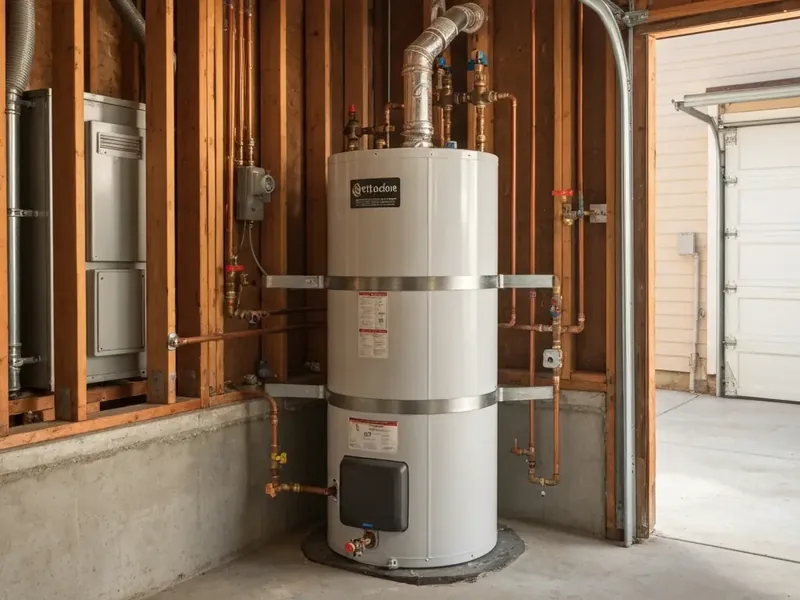
| Typical heater setup | Basement tanks in historic homes with galvanized-era plumbing; basement/crawl-space tanks in ranch homes; modern garage/utility installs in newer subdivisions |
Water Heater Leak Repair FAQs for Greenfield, IN 46140
My ranch home has a musty crawl space and the water heater is down there. Connected?
Quite possibly. Slow weeps from fittings or pinhole tank leaks in crawl spaces can run for months unseen, feeding mold in floor framing and rusting the heater from below. If the musty smell is strongest near the heater's location, have it inspected — we diagnose crawl-space leaks regularly in Greenfield's ranch homes and will tell you whether the heater, the plumbing, or ground moisture is the source.
Can you replace a water heater in a 100-year-old basement?
Yes — Greenfield's historic homes are familiar work for us: narrow stairs, low clearances, galvanized lines, masonry chimneys. We plan the removal and installation path before we start, handle the connection upgrades the old installation needs (shutoff valve, dielectric unions, venting check), and leave the system fully tested. The age of the house changes the logistics, not the outcome.
What is the white-green crust on my heater's pipe fittings?
Mineral crust from a slow weep — hard water evaporating at a corroding joint. In Greenfield's older homes it is the early stage of galvanic corrosion failure at copper-to-steel connections. It is repairable now and expensive later; call (833) 713-2101 at the crust stage and we will cut back to sound pipe and install proper dielectric unions.
My subdivision home was built in 2004 with the original heater. Replace or wait?
Plan the replacement now. Twenty-plus years is well past a builder tank's life in this water, and we are seeing that vintage fail across 46140. An inspection will read the sediment load and anode condition and tell you how urgent it is — but 'wait for the flood' is the most expensive option, especially over a finished basement.
Does the National Road corridor's older housing affect water heater service?
It affects the plumbing around the heater: the US-40 corridor's historic homes carry the oldest supply plumbing in town — galvanized lines, old valves, adapted-over-decades layouts. We diagnose the whole system in these homes, not just the tank, because the leak's true source is wrong often enough to matter. The heater gets fixed; the connections get fixed with it.
Do you serve the township areas outside Greenfield?
Yes — the full 46140 ZIP including Hancock County's rural routes and well-water properties. Well-system heaters get the well diagnostic: anode condition, sediment load, iron treatment review. Active leaks get priority scheduling anywhere in the ZIP. Call (833) 713-2101 with the heater's age and leak details.
From a Riley-era Victorian to an I-70 subdivision two-story, Greenfield's water heaters fail in patterns tied to the house's age — and the fix is always the same first step: shut the water, kill the heat, and call (833) 713-2101. Water Heater Leak Repair Co. will diagnose your 46140 leak honestly and fix it right, whatever era your home belongs to.