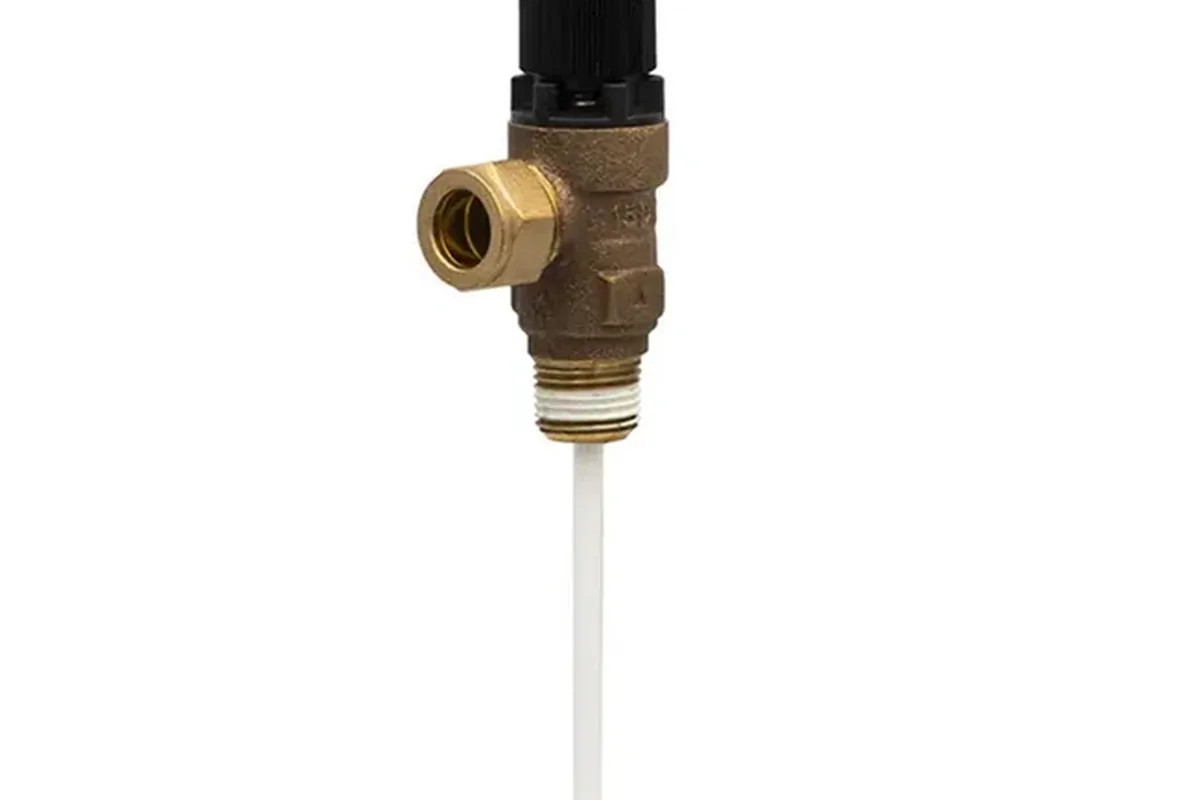
The TPR valve — temperature and pressure relief valve — is the last line of defense on your water heater. It opens automatically to release water if temperature or pressure climbs past safe limits, preventing tank rupture. When a TPR valve starts weeping, dripping, or fails to seat, it is no longer reliable, and a water heater without a working TPR valve is genuinely dangerous. Replacing a failed TPR valve is one of the most important safety repairs a water heater can get.
Signs Your TPR Valve Needs Replacing
- Constant dripping from the discharge pipe: The pipe running down from the TPR valve should be dry. Steady drips or a wet floor beneath it mean the valve is weeping.
- Water pooling after heating cycles: If puddles appear under the discharge pipe mainly after the heater runs, the valve is likely releasing at normal pressure — a sign it has weakened.
- Corrosion or mineral crust on the valve: White or green buildup on the valve body means it has been seeping and may not seal properly.
- Valve stuck shut or won't test: Lifting the test lever should release a burst of water. If nothing comes out, the valve may be seized — it will not protect you in an overpressure event.
- Valve won't reseat after testing: If the valve keeps dripping after you release the test lever, its seal is worn and it needs replacement.
- Valve older than 5 years: TPR valves are recommended for replacement every few years. An old valve in a Westfield home with hard water is a likely failure point.
Why TPR Valves Fail
- Mineral scale and sediment: Hard water deposits build up on the valve seat and spring, preventing a clean seal.
- Corrosion: Constant exposure to hot water corrodes the brass valve body and internal spring over time.
- Thermal fatigue: Years of heating cycles wear the spring tension, so the valve opens at lower and lower pressures.
- High system pressure: Homes with high municipal water pressure or a failed expansion tank stress the TPR valve until it starts relieving continuously.
- Never being tested: Valves that sit untouched for a decade often seize. Regular testing keeps them moving — but a valve that has already seized usually needs replacement.
Our TPR Valve Replacement Process
Step 1: Check why the valve is relieving
Before replacing anything, we test system pressure and check the expansion tank. A weeping TPR valve is sometimes a symptom of high pressure, not a bad valve — we make sure we are fixing the cause.
Step 2: Safe shutdown
We shut off power or gas to the heater and close the cold-water supply, then relieve pressure through a hot water tap.
Step 3: Remove the old valve
The discharge pipe is disconnected and the old valve is unthreaded from the tank. We inspect the tank threads for corrosion or damage.
Step 4: Install the new TPR valve
A new valve rated to match your tank's BTU input and working pressure is threaded in with proper pipe sealant. We reconnect the discharge pipe so it terminates correctly — within 6 inches of the floor, with no valve or cap on the end.
Step 5: Test and verify
We restore the system, bring the tank to temperature, test the new valve with the lift lever, and confirm it seats fully with no dripping. We also recheck system pressure to make sure the underlying cause is resolved.
Equipment and Materials We Use
- Water pressure gauges: to measure static and thermal-expansion pressure and confirm the system is within safe range.
- TPR valves rated to your tank: matched by BTU/hour input and pressure rating — never a generic undersized valve.
- Pipe thread sealant and Teflon tape: rated for hot-water service.
- Discharge pipe and fittings: to bring the drain line up to code when the existing run is missing, capped, or improperly terminated.
- Expansion tank pressure gauges and pumps: to check and recharge the expansion tank when high pressure is the root cause.
Safety and Precautions
A water heater with a failed TPR valve can build pressure with no way to release it — this is the failure mode behind tank ruptures. Do not cap, plug, or put a valve on the discharge pipe, and never remove the TPR valve and plug the opening. If your TPR valve is discharging heavily or the tank is making rumbling or popping sounds, shut off the heater and call us at (833) 713-2101. When testing a TPR valve yourself, stand clear of the discharge pipe — the water released is scalding. If the valve does not reseat after testing, leave it and call us.
Westfield and Hamilton County Factors
Hard water: Westfield's mineral-heavy water is rough on TPR valves. Scale builds on the seat and spring faster here than in soft-water areas, which is why we see local TPR valves weeping at 3–5 years old. Replacing the valve without checking scale and pressure means the new one can fail early too — so we check both.
Municipal pressure and expansion tanks: Parts of Hamilton County run higher municipal water pressure, and many Westfield homes have closed plumbing systems with backflow prevention. Without a working expansion tank, thermal expansion has nowhere to go and the TPR valve becomes the relief point, dripping after every heating cycle. We test for this on every TPR call.
Housing stock: In older Westfield homes, we regularly find TPR discharge pipes that terminate into walls, run uphill, or are missing entirely — all of which make a valve failure far more damaging. When we replace your TPR valve, we correct the discharge routing at the same time so the safety system actually works as designed.