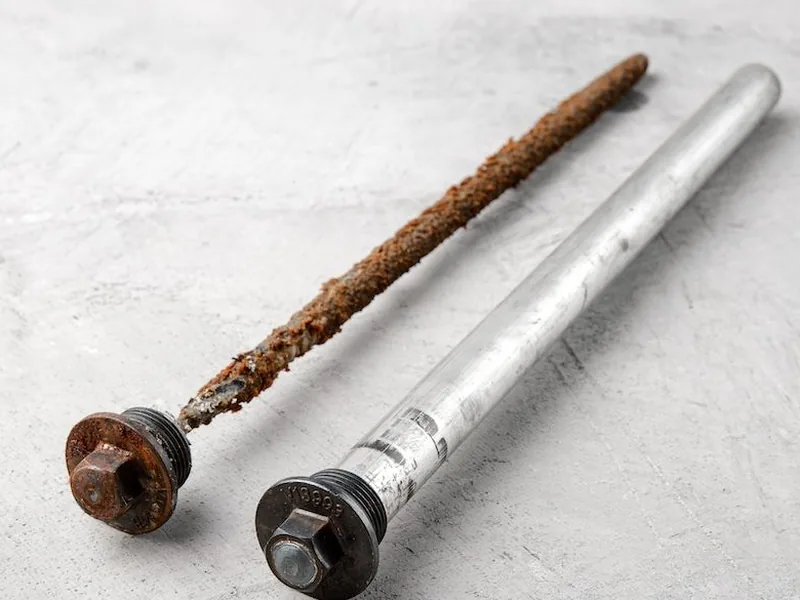
Inside every tank-style water heater sits a humble metal rod that quietly decides how long your tank will last. The anode rod sacrifices itself to corrosion so the steel tank does not have to, and when it is spent, the tank starts rusting from the inside out. Most Westfield homeowners have never heard of it, yet replacing this inexpensive part on schedule is one of the cheapest ways to postpone a full water heater replacement and avoid the flooded basement that follows a rusted-through tank.
What an Anode Rod Does
Water plus steel plus heat equals corrosion. To fight it, manufacturers install a rod made of a more reactive metal — usually magnesium or aluminum — threaded into the top of the tank. Through a process called galvanic corrosion, the rod corrodes first, attracting the corrosive activity that would otherwise eat the tank lining. Think of it as a lightning rod for rust: it draws the damage to itself. A healthy rod can add years to a tank's life. A depleted one leaves the tank defenseless, and once the steel starts pitting, pinhole leaks are only a matter of time.
Types of Anode Rods
Not all rods are the same, and the right choice depends on your water and your heater:
- Magnesium rods: The most common factory choice. They offer the strongest protection and work best in soft or moderately hard water, which covers much of Westfield. They deplete faster in very hard water.
- Aluminum rods: Less expensive and longer-lasting, but they can contribute to a sulfur or rotten-egg smell in some water conditions and may produce more sediment.
- Aluminum-zinc alloy rods: A popular middle ground. The zinc content helps suppress the bacteria that cause sulfur odors, making these a good pick if your hot water smells like rotten eggs.
- Powered (impressed-current) rods: Instead of dissolving, these use a small electrical current to protect the tank. They never need replacing and are worth considering if your rods keep disappearing fast.
Signs Your Anode Rod Needs Replacement
Because the rod is hidden inside the tank, you have to read the clues it leaves behind:
- Rotten-egg smell in hot water only: Sulfur bacteria react with a depleted magnesium rod. If cold water smells fine but hot water stinks, the rod is a prime suspect.
- Rusty or discolored hot water: When the rod is gone, the tank itself starts corroding, and rust tints the hot water. Check this at a tap closest to the heater.
- The heater is 3 to 5 years old and the rod has never been checked: In average water, a standard rod lasts roughly three to five years. In hard water or with a softener, it can vanish in under two.
- Visible wear on inspection: A rod that is down to a thin wire, coated in calcium, or less than half an inch thick is spent.
- Tank age approaching the warranty period: If your heater is nearing the end of its expected life and still on its original rod, replacing the rod can buy meaningful extra time.
How to Inspect Your Anode Rod
You can check the rod yourself if you are comfortable with basic tools, but take safety seriously:
- Turn off the water heater. For gas units, set the gas control to pilot or off. For electric units, switch off the breaker.
- Shut off the cold-water supply valve above the heater and relieve pressure by opening a hot-water tap elsewhere in the house.
- Locate the anode rod hex head on top of the tank, often under a plastic cap. You may need to clear insulation to reach it.
- Loosen the rod with a 1-1/16 inch socket and a breaker bar. Lift it out and examine its condition.
- If it is heavily corroded, coated, or eaten down to the core wire, replace it with a rod of the same type or an upgraded alloy.
Some rods are seized in place after years of heat cycling, and forcing one can damage the tank. If the hex head will not budge with reasonable effort, stop and call for professional anode rod replacement in Westfield rather than risking a cracked fitting or a bigger leak.
When Replacement Helps — and When It Is Too Late
Replacing the rod is preventive maintenance: it protects a sound tank. It cannot repair a tank that is already leaking. If water is seeping from the tank body itself, from rusted seams, or from the base, the steel has already been compromised and the honest answer is replacing the water heater before the leak grows. A quick inspection can tell the difference — a technician will check whether the tank walls are still solid or whether corrosion has gone too far for a new rod to matter.
Westfield Water and Anode Rod Life
Central Indiana municipal water runs moderately hard, and many Westfield households also run water softeners. Both conditions are tough on anode rods: hard water accelerates depletion through mineral activity, while softened water is more conductive and can dissolve a magnesium rod in as little as a year or two. Homes on well water with sulfur content face the double problem of faster rod loss and odor issues. The practical takeaway for Westfield owners is to check the rod every two years rather than assuming the factory schedule applies. If you are already seeing the warning signs above, or you want an expert eye on the tank before committing to the work, call (833) 713-2101 and a local representative will connect you with a professional who can inspect the rod, the tank, and the water conditions together.