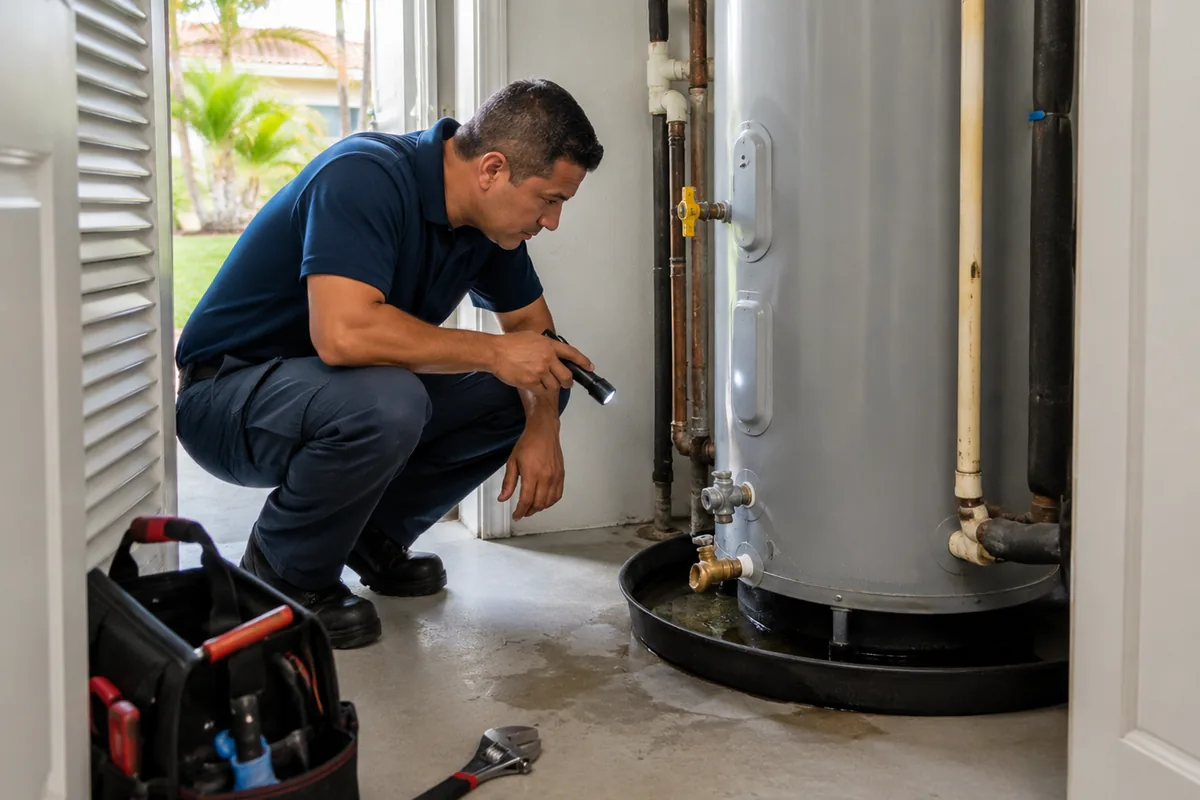
Water spreads fast. A leaking water heater can put gallons on your floor in minutes, soaking drywall, flooring, and anything stored nearby. Knowing exactly what to shut off — and in what order — before trouble starts is the difference between a mop-up and a major repair bill. This guide walks Westfield homeowners through the first steps to take the moment a water heater leak is discovered.
Step 1: Shut Off the Water Supply
Find the cold-water inlet valve on the pipe entering the top of the heater. It is usually a gate valve with a round wheel handle or a ball valve with a lever handle. Turn a wheel handle clockwise until it stops; flip a lever handle a quarter turn so it sits perpendicular to the pipe. This stops new water from feeding the leak. If the inlet valve is stuck or missing — common on older Westfield installations — shut off the main water valve for the whole house instead. It is typically near where the water line enters the home, in the basement, crawlspace, or utility room.
Step 2: Turn Off the Heat Source
A water heater that keeps heating with little or no water inside can overheat dangerously, so kill the heat source next:
- Gas water heaters: Find the gas control valve on the front of the unit, near the bottom. Turn the dial from ON to PILOT or OFF. Do not touch the gas line connections themselves.
- Electric water heaters: Go to your breaker panel and switch off the breaker labeled for the water heater. If it is not labeled, switch off the double-pole breaker feeding the unit. Never restore power until the tank is completely refilled — dry-firing destroys heating elements in seconds.
Step 3: Relieve Pressure Safely
With water and heat off, open a hot-water tap at a nearby sink to relieve pressure in the lines. If the tank is actively leaking from the top or a fitting, you can also attach a garden hose to the drain valve and route water to a floor drain to lower the tank level — but skip this if the leak is at the drain valve itself or the tank base, where disturbing things may worsen the flow. If you need help deciding what is safe to touch, emergency water heater repair in Westfield is one call away at (833) 713-2101, and a representative can talk you through the immediate steps.
Step 4: Contain the Water
While waiting for help, limit the damage: move valuables, boxes, and electronics away from the water; lay down towels to slow the spread; and if water is near electrical outlets or the breaker panel, stay out of standing water and call for help rather than wading in. A wet-dry vacuum helps once the active leak is stopped. Take photos of the leak and any damage for your records before cleanup begins.
Gas Smell? Leave First, Shut Off Later
If you smell gas — a rotten-egg odor — near the water heater, do not flip switches, do not relight anything, and do not hunt for the leak. Leave the house immediately, get everyone out, and call your gas utility's emergency line from outside. Only after the gas company clears the home should you worry about water shutoff. Gas control problems and pilot issues often go hand in hand with neglected heaters, and any gas-related repair belongs to a professional.
What to Tell the Repair Professional
When you call (833) 713-2101, having a few details ready speeds everything up: whether the unit is gas or electric, tank or tankless, where the water is coming from (top, bottom, side, or a specific valve), whether the leak is a drip or a flow, and what shutoff steps you already took. A local representative will take your information and connect you with an available professional in the Westfield area. If you want to understand exactly where the water is escaping before anyone arrives, a professional water heater leak detection visit will trace the source precisely so the repair targets the real problem.
After the Emergency: What Comes Next
Once the water is off and the area is safe, resist the urge to turn everything back on “just to see.” A heater that leaked once will leak again, often worse. Keep the unit shut down until it has been inspected. Document the damage with photos, including where the water traveled, since that helps the technician trace the leak path and helps you if an insurance claim becomes necessary. Start drying the area promptly — fans and a dehumidifier discourage mold in Westfield's humid summers. When the professional arrives, they will determine whether the leak came from a repairable fitting or valve or from the tank itself, then lay out your options: repair the component, or replace the unit if the tank has failed. Either way, you will get a clear explanation before any work begins, so you can make the call with full information.
Preventing the Next Emergency
Most water heater emergencies give advance warning that goes unnoticed. Annual maintenance — flushing sediment, testing the TPR valve, checking the anode rod, and glancing at valves and connections for weeping — catches the small problems before they become 2 a.m. floods. Installing a drain pan under the heater with a drain line gives leaking water somewhere harmless to go, and a simple battery-powered water alarm on the floor beside the tank can alert you to the first drops. These are inexpensive precautions that pay for themselves the first time they catch a leak early.