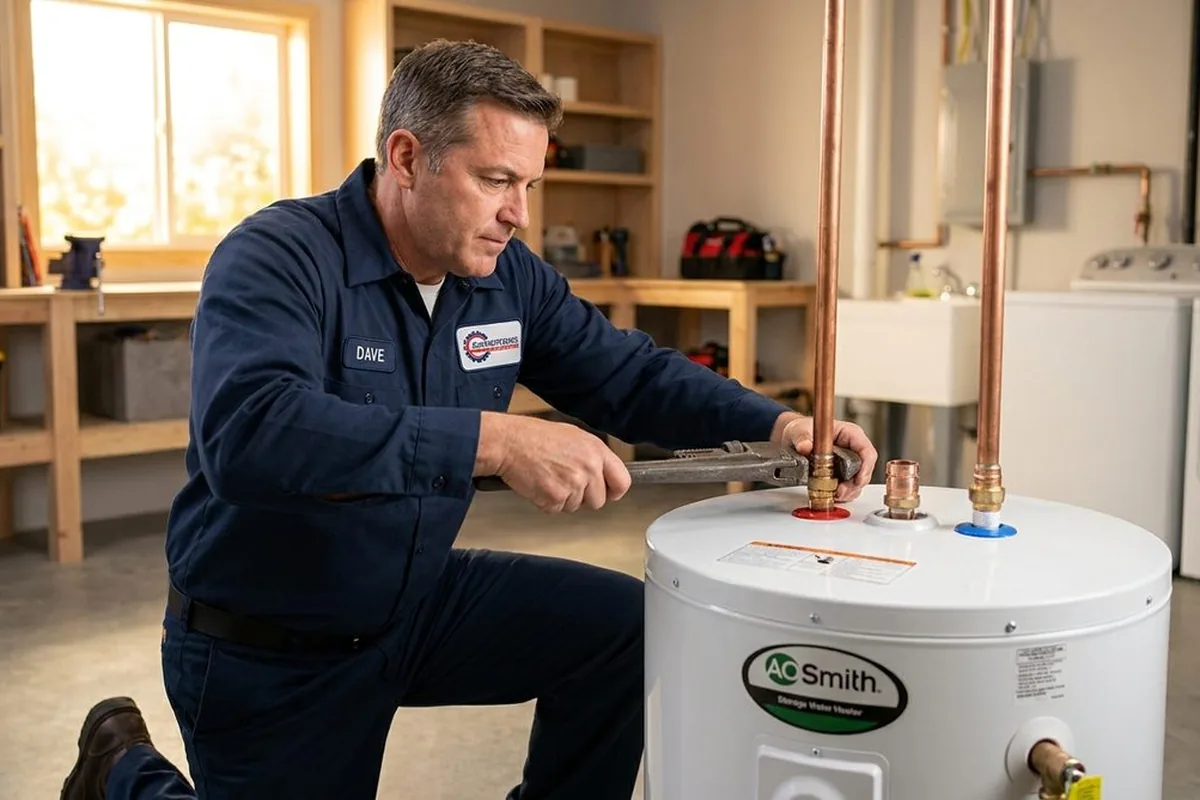
Central Indiana water is famously hard, and your water heater feels it more than any other appliance in the house. Every gallon that enters the tank carries dissolved calcium and magnesium, and every heating cycle leaves a little of it behind. Over months and years, that mineral residue builds into scale and sediment that insulates heating surfaces, overworks components, and eventually helps leaks form. Understanding what hard water does inside your heater is the first step to fighting back.
What Hard Water Does Inside a Tank
When hard water heats, dissolved minerals precipitate out as solid scale. The heaviest particles settle to the tank bottom as sediment, while scale also crusts onto heating elements, the tank walls, and internal fittings. In Westfield, where municipal water runs moderately hard and many homes supplement with wells, a tank can accumulate inches of sediment within a few years if never flushed. That sediment layer acts like insulation between the burner or elements and the water, forcing the heater to run longer and hotter to deliver the same hot water. The result is higher energy use, more wear, and a tank bottom that endures punishing temperature swings.
Signs of Hard Water Damage
- Rumbling, popping, or crackling noises: Water trapped under sediment flashes to steam and bubbles up through the layer. This unmistakable kettling sound means significant buildup.
- Less hot water than you used to get: Sediment displaces water, so a 50-gallon tank may effectively hold far less. Scale on elements also slows heat transfer.
- Longer recovery times: The heater runs and runs after heavy use because heat cannot reach the water efficiently.
- Rising energy bills: An insulated, overheating tank burns more gas or electricity for the same output.
- Rusty or cloudy hot water: Sediment stirs up discoloration, and scale-damaged anode rods let rust take hold faster.
- Clogged aerators and fixtures: Mineral flakes breaking loose travel through the pipes and plug faucet screens and showerheads.
How Scale Leads to Leaks
Scale does not just waste energy — it actively destroys tanks. Sediment piled on the tank bottom creates hot spots where the steel overheats far beyond its design temperature. Repeated overheating weakens the metal and the glass lining, eventually opening pinhole leaks in the tank floor — the classic “leaking from the bottom” failure. Scale also buries lower heating elements in electric units, causing them to overheat and burn out, and it accelerates anode rod depletion, removing the tank's corrosion defense early. In short, hard water shortens every protective margin the tank was built with, and leaks arrive years ahead of schedule.
Tankless Units Are Not Immune
Tankless heaters have no tank to fill with sediment, but hard water attacks them differently: scale coats the narrow passages of the heat exchanger, restricting flow and creating hot spots that can crack the exchanger — a far more expensive failure than a tank leak. Manufacturers typically recommend descaling tankless units annually in hard-water areas like Westfield, and skipping it voids many warranties. If your tankless unit is losing efficiency, throwing error codes, or showing mineral crust on fittings, scale is the likely culprit, and tankless water heater service in Westfield can descale the unit and check for exchanger damage before a leak starts.
Fighting Back Against Hard Water
- Flush the tank annually: Draining sediment before it compacts is the single most effective habit. Homes with very hard water benefit from flushing twice a year.
- Consider a water softener: Softened water dramatically slows scale formation. Note that softeners can deplete anode rods faster, so pair a softener with more frequent anode rod replacement checks.
- Descale tankless units yearly: A vinegar or descaling-solution flush through the service valves keeps the heat exchanger clear.
- Lower the thermostat sensibly: Very high temperature settings accelerate scale formation. Around 120°F is efficient and safer against scalding.
- Schedule professional maintenance: A yearly visit can combine flushing, anode inspection, and a full leak check in one appointment.
If your heater is already rumbling, running out of hot water, or showing any sign of moisture around the base, do not wait for the leak to declare itself. Call (833) 713-2101 and a local representative will connect you with a Westfield professional who can assess the scale damage and tell you honestly whether maintenance will save the unit or replacement is the smarter move.
How to Test Your Water Hardness
You do not need a lab to find out what you are dealing with. Inexpensive test strips from a hardware store give a rough grains-per-gallon reading in a minute: dip, wait, and compare the color. Anything above about 7 grains per gallon counts as hard, and readings above 10 are firmly in the damage zone for water heaters. For a precise number, Westfield's municipal water quality report publishes annual hardness figures, and well owners can order a lab test that also checks iron and pH — both of which affect heater life alongside hardness. Knowing your number turns maintenance from guesswork into a schedule: moderately hard water means annual flushing, while very hard water argues for twice-yearly flushes plus a softener. Whatever your reading, the heater itself will tell the story too — if flushing produces heavy sediment or the drain water runs rusty, your hardness is already taking its toll.