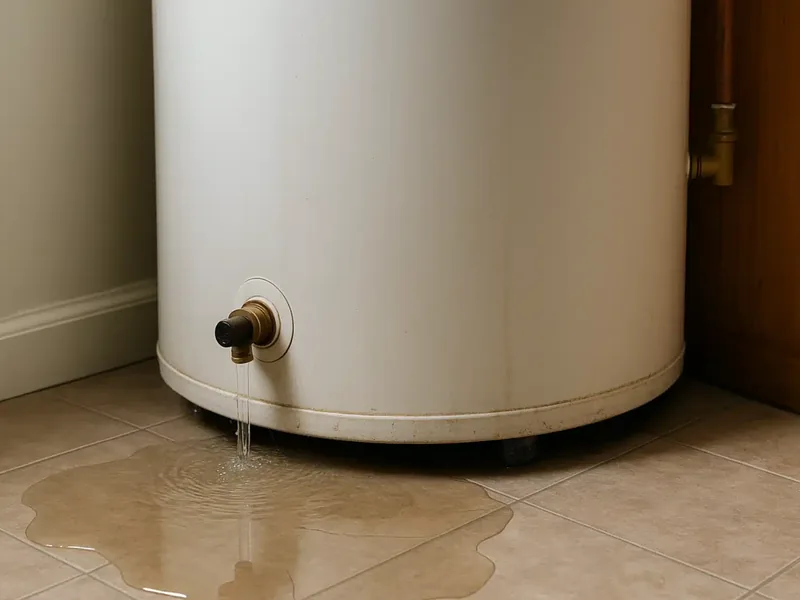
You spot water near the water heater and the first question is always the same: how urgent is this? The honest answer is that it depends on what is leaking, how fast, and what else is going on around it. Some water heater leaks genuinely cannot wait until morning. Others give you time to plan — but none of them fix themselves. Here is how to tell the difference and what to do in each case.
Treat It as an Emergency When...
- Water is flowing, not dripping: A steady stream or spreading pool means the leak is active and growing. Shut off the water and heat source immediately.
- You smell gas: Any rotten-egg odor near a gas heater is an emergency regardless of the water situation. Leave the house and call the gas utility from outside.
- Water is near electricity: Pooling water reaching outlets, the breaker panel, or the heater's electrical connections creates a shock hazard. Stay out of standing water.
- The tank itself is leaking: Water seeping from the tank body, seams, or base means structural failure. These leaks only get worse, sometimes suddenly and catastrophically.
- You cannot stop it: If the shutoff valve is stuck or missing and water keeps coming, you need help now, not tomorrow.
- Ceilings or walls are getting wet: A heater on an upper floor or in an attic leaking into living spaces below causes damage far beyond the utility area.
If any of these apply, call (833) 713-2101 right away — emergency water heater leak repair in Westfield exists precisely for these situations, and fast action limits both water damage and repair cost.
When It Can Wait for a Scheduled Visit
A few situations are urgent-but-not-emergent: a slow drip from a drain valve into a drain pan, slight weeping around a fitting that you have contained, or a TPR valve that drips occasionally during heating cycles. These still need prompt professional attention — within days, not weeks — because small leaks escalate. A weeping fitting corrodes, a dripping valve seat erodes, and pressure keeps working on every weak point around the clock. “It can wait” means you can schedule a visit during normal hours, not that you can ignore it.
Why Leaks Escalate
Water heater leaks rarely stay the same size. Corrosion pits deepen, sediment-scored valve seats erode further, and thermal cycling flexes every joint twice a day. A pinhole leak in a tank can become a split seam with little warning, turning a damp spot into inches of standing water. Pressure is the constant engine: every heating cycle pressurizes the system, and that pressure finds the weakest point. This is why professionals treat even small tank leaks seriously — the leak you see is usually the smallest it will ever be.
What to Do Right Now
- Shut off the cold-water inlet valve to the heater (or the house main if the inlet valve is stuck).
- Turn off the heat: gas control dial to pilot or off, or the electric breaker off.
- Contain the water with towels and move valuables away. Take photos of the leak and damage.
- Decide: active flow, gas smell, or electrical hazard means call immediately. A contained slow drip means call promptly to schedule.
If you are unsure which category your leak falls into, err on the side of calling. Describing what you see to a representative takes two minutes and costs nothing; guessing wrong about an escalating leak can cost far more. A professional leak inspection will identify exactly where the water is coming from and whether the situation is stable or deteriorating, so you are acting on facts instead of worry.
What Emergency Service Looks Like
When you call for emergency help, expect questions about the leak's location and severity, your heater type, and what shutoff steps you have taken. The responding professional will stop the active leak, make the unit safe, and then diagnose the root cause — distinguishing a failed valve or fitting (usually repairable on the spot) from a failed tank (which means replacement). You will get a clear explanation of what happened and what your options are before any repair work begins. The goal is not just to stop today's water but to make sure you are not calling again next month for the same heater.
The Gray Areas: Judgment Calls
Not every leak fits neatly into “emergency” or “wait.” A drain valve dripping steadily into a floor drain is contained, but if the drip is accelerating, treat it as emerging urgency. Moisture around the base of the tank with no visible source deserves same-week attention even if the floor is dry — tank-base moisture is how pinhole leaks announce themselves before they open up. A leak you discovered while away for the weekend has an unknown timeline; assume it is newer than it looks and get it checked promptly. And any leak on a heater past its expected lifespan should be handled as potentially serious, because old tanks fail faster and more completely than young ones. When in doubt, a quick call to (833) 713-2101 costs nothing: describe the leak, and a representative will help you judge whether it needs immediate dispatch or a scheduled visit.