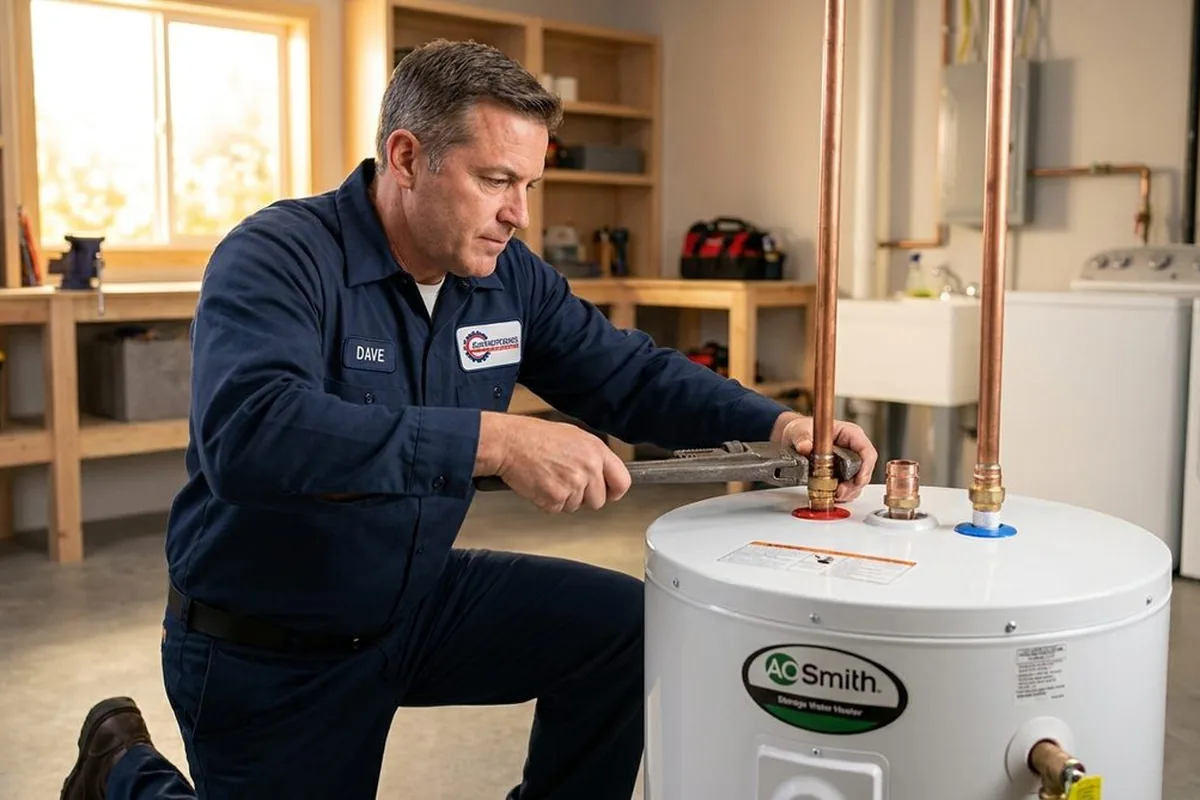
Indiana weather asks a lot of a water heater. Summer humidity feeds corrosion, winter cold threatens pipes and outdoor units, and the shoulder seasons are your best window for maintenance. A seasonal care routine — a few small tasks four times a year — catches problems while they are cheap and keeps the heater running efficiently through whatever the weather brings. Here is a practical checklist tuned for Westfield homes.
Spring: Recover from Winter
- Inspect for winter damage: Look over the heater, pipes, and connections for any weeping, rust streaks, or mineral crust that appeared over winter. Cold-season contraction can open small leaks at fittings.
- Flush sediment: Spring is the ideal annual flush. Draining a year's worth of mineral buildup resets the tank before summer's heavy hot-water use.
- Test the TPR valve: Lift the lever briefly to confirm water discharges and stops cleanly. Replace the valve if it drips afterward or nothing comes out.
- Check the anode rod: If it has been two or more years, pull the rod and inspect. Spring replacement gives the tank fresh protection for the year ahead.
- Look at the venting: On gas units, confirm the vent pipe is secure, unobstructed, and properly sloped. Winter storms and animals can disturb vents.
Summer: Manage Heat and Humidity
- Watch for condensation vs. leaks: Humid Westfield summers make cold-water pipes and tanks sweat. Learn to distinguish harmless condensation from real leaks — condensation dries up, leaks do not.
- Set vacation mode: Leaving for a week or more? Turn a gas heater to pilot or vacation setting, or lower an electric unit's thermostat. You save energy and reduce pressure-cycling wear while away.
- Check the drain pan and alarm: Confirm the pan is clean, the drain line is clear, and the water alarm battery is fresh before vacation season.
- Service tankless condensate lines: High-efficiency units produce acidic condensate year-round; summer is a good time to verify the condensate drain is clear and the neutralizer media is not exhausted.
Fall: Prepare for Winter
- Insulate exposed pipes: Foam sleeves on hot and cold lines in unconditioned spaces — garages, crawlspaces, attics — reduce heat loss and freeze risk.
- Check the expansion tank: Tap-test the tank and verify pre-charge pressure matches house pressure before heating season's heavier use.
- Flush if you skipped spring: A fall flush is your last easy chance before winter makes draining the tank miserable.
- Inspect outdoor tankless units: If your tankless unit is mounted outside, confirm its freeze-protection mode is enabled and the unit has power and gas over winter.
- Know your shutoffs: Make sure everyone in the household knows where the water shutoff, gas control, and breaker are before the season when emergencies spike.
Winter: Protect Against the Cold
- Never cut power to freeze-protected units: Tankless heaters with built-in freeze protection need electricity to run their heaters. Cutting power during a cold snap invites freeze damage.
- Keep garage and utility areas above freezing: Heaters in unconditioned spaces are the most vulnerable. A small thermostatically controlled space heater in the utility room is cheap insurance during polar-vortex weeks.
- Let faucets drip in extreme cold: During severe cold snaps, a trickle from a hot-water tap keeps water moving through vulnerable lines.
- Watch for freeze-related leaks: After any deep freeze, inspect the heater and nearby pipes for new weeping at joints — freeze expansion often shows up as leaks days later.
Year-Round Habits That Matter Most
Beyond the seasonal tasks, two habits do the heaviest lifting: a monthly visual glance at the heater for moisture, rust, or odd sounds, and a standing annual professional maintenance visit that bundles flushing, anode inspection, valve testing, and a full water heater leak inspection into one appointment. Heaters on a maintenance routine fail less often, fail less catastrophically, and live measurably longer than neglected ones. If your anode rod is due or you have skipped a few seasons of care, anode rod service in Westfield is a smart place to restart. For anything on this checklist you would rather not tackle yourself, call (833) 713-2101 and a local representative will connect you with a professional who can handle the seasonal work in a single visit.
Putting the Checklist on Autopilot
The hardest part of seasonal care is remembering to do it. Tie each season's tasks to something you already do: spring flush with gutter cleaning, summer vacation-mode setting with your pre-trip routine, fall winterizing with furnace filter changes, winter freeze checks with the first hard freeze warning. Better yet, a yearly professional maintenance visit in spring or fall covers the technical tasks — flushing, anode inspection, valve testing, pressure checks — leaving you only the simple monthly glance and seasonal awareness. Heaters on a real schedule do not just leak less; they run more efficiently and die of old age instead of neglect, which is exactly the outcome this checklist is designed to produce.