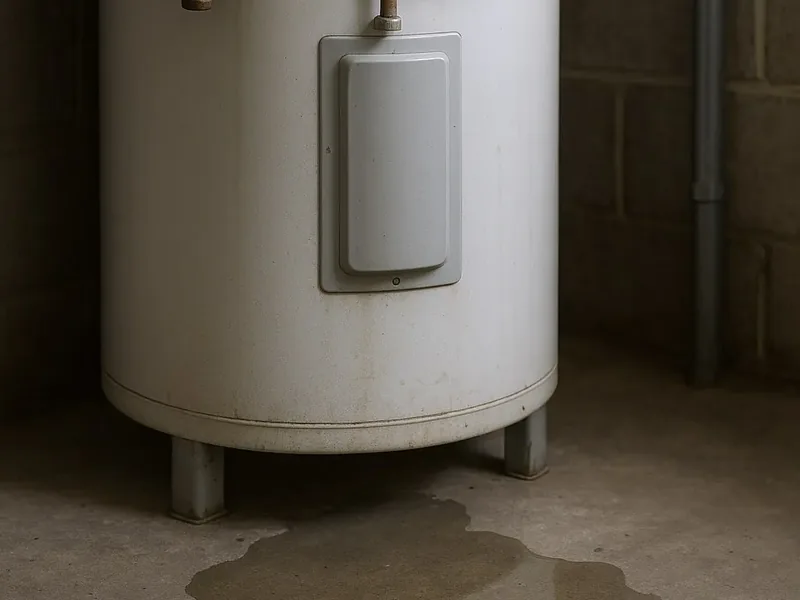
Water heater leaks are masters of disguise. They start as a faint damp spot, a musty smell, or a water bill that creeps up for no reason — easy to dismiss until the day the utility room floor is soaked. Catching a leak in its early stage is the difference between a simple repair and a ruined floor, so it pays to know every sign, obvious and subtle, that your heater is letting water escape.
The Obvious Signs
- Standing water around the base: Any puddle or persistent wetness at the foot of the heater is a leak until proven otherwise. Dry it, watch, and see if it returns.
- Active dripping: Water visibly dripping from the tank, valves, or pipes — even a slow drip — needs attention now, not eventually.
- Rust streaks running down the tank: Rust trails mark where water has been traveling, often from a fitting above or a seam giving way.
- Wet drywall or baseboards nearby: Water wicks into walls fast. Soft, stained, or bulging drywall near the heater means the leak has been going longer than you think.
The Subtle Signs Most People Miss
- A musty or damp smell: Hidden moisture behind or under the heater feeds mildew long before water becomes visible. Trust your nose.
- Unexplained higher water bills: A slow, steady leak can waste surprising amounts of water. Compare usage month to month; a jump without a lifestyle change deserves investigation.
- Rusty or discolored hot water: Rust in the hot water — but not the cold — means the tank interior is corroding, the precursor to tank leaks.
- Warm spots on the floor: A warm patch on the floor near the heater can indicate hot water pooling underneath or under flooring.
- Mold or mildew near the utility area: Chronic dampness grows mold on walls, floors, and stored items around the heater.
- The water meter test: Turn off all water in the house and watch the meter. If it keeps moving, water is going somewhere — and the heater is a prime suspect.
- Reduced hot water capacity: A tank leaking from the bottom loses heated water continuously, so showers run cold sooner than they used to.
Where Leaks Usually Start
Knowing the common failure points helps you look in the right places. Top leaks usually come from loose inlet or outlet fittings, the TPR valve, or the anode rod port — these are often repairable. Side leaks may trace to the drain valve or, on electric units, the heating element gaskets. Bottom and base leaks are the serious ones: water seeping from the tank floor or seams means internal corrosion has breached the steel, and that heater is living on borrowed time. Mineral crust — white or green buildup on a fitting — marks a slow weep that evaporates before it drips, a classic early warning.
Leak or Just Condensation?
Not every drop is a leak. In humid weather, cold water entering the tank makes the exterior sweat, and new installations condense while the tank first heats. The test is simple: dry the area thoroughly and check back in a few hours. Condensation diminishes as conditions stabilize; a leak returns relentlessly. Gas heaters can also produce small amounts of flue-gas condensation at startup. When in doubt, a professional water heater leak inspection settles the question with moisture meters and a trained eye rather than guesswork.
What to Do When You Spot the Signs
Confirm the source before assuming the worst — a leaking supply fitting is a world apart from a leaking tank. Shut off the water and heat source if the leak is active, contain the water, and document what you see. Then get a professional diagnosis: the critical question is always whether the tank itself is sound, because that determines whether you are looking at a repair or a replacement. If water is flowing, you smell gas, or the tank base is wet, treat it as urgent and call (833) 713-2101 immediately for emergency water heater help in Westfield. For slower signs — a musty smell, a creeping water bill, rusty hot water — schedule an inspection within days. Either way, act on what you have noticed; leaks only grow.
Why Early Detection Saves So Much
The cost difference between catching a leak early and catching it late is enormous. A weeping fitting caught during a monthly glance is a minor repair visit. The same fitting ignored for months rots the subfloor, wicks into drywall, and grows mold that needs remediation — turning a small plumbing fix into a multi-trade restoration project. Tank leaks follow the same curve even more steeply: a pinhole caught early means a planned replacement on your schedule, while a ruptured tank means emergency replacement plus water damage repair. Every sign in this guide is an opportunity to stay on the cheap side of that curve. When something looks off, a professional inspection costs far less than the damage it prevents.