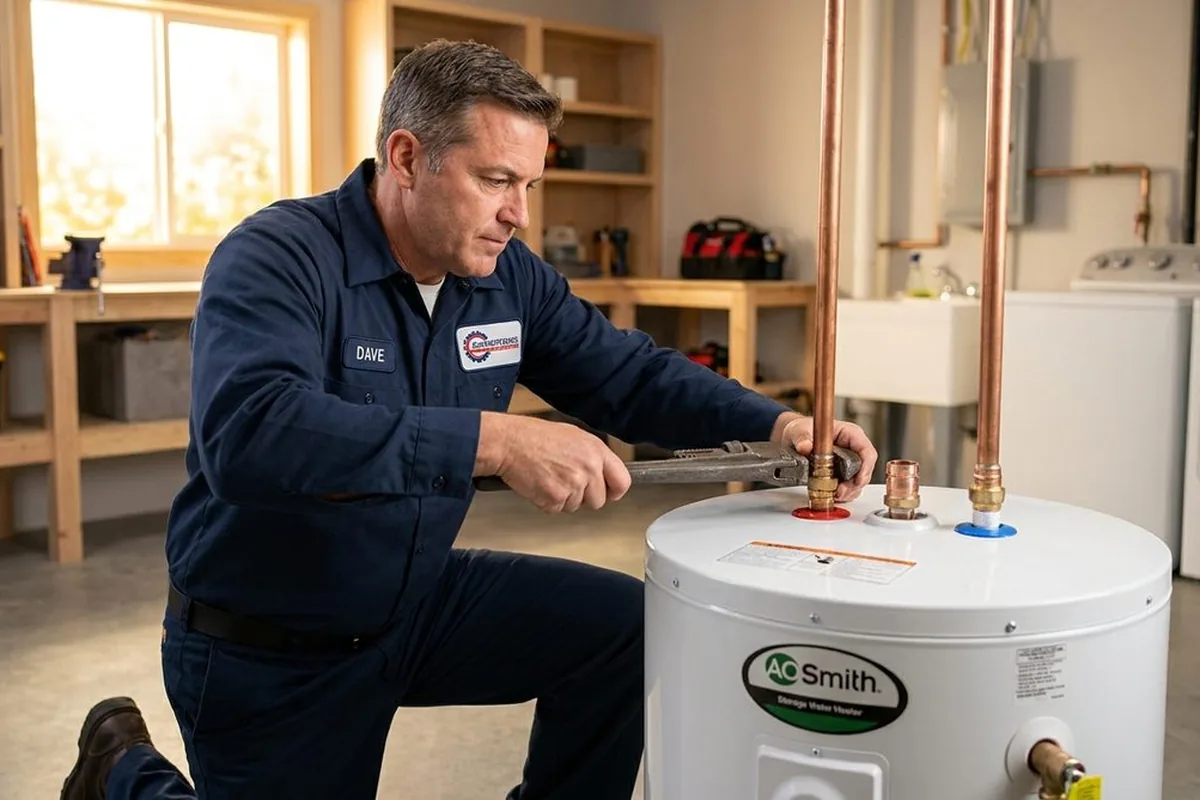
The thermostat is your water heater's temperature brain — the part that decides when to fire the burner or energize the elements, and when to stop. When it fails, the symptoms mimic other problems: no hot water looks like a dead element, scalding water looks like a runaway burner. Knowing how thermostats fail, and how replacement works on gas versus electric units, helps Westfield homeowners get the right fix instead of replacing parts at random.
Signs Your Thermostat Is Failing
- No hot water despite power and fuel: A thermostat stuck open never calls for heat. On electric units, check the high-limit reset button first — a tripped reset mimics thermostat failure.
- Water far too hot: A thermostat stuck closed keeps heating past the setpoint. This is a safety issue, not just a comfort one — scalding risk rises sharply above 140°F.
- Temperature swings: Hot, then lukewarm, then hot again during a single shower suggests the thermostat is losing calibration.
- Heater runs constantly or never runs: Either extreme — endless cycling or complete silence — can trace to thermostat failure.
- Tripped high-limit reset that keeps tripping: The reset button exists to catch overheating. If it trips repeatedly, something — often the thermostat — is letting the tank overheat.
Gas vs Electric: Different Thermostat Worlds
On gas heaters, the thermostat is integrated into the gas control valve — a single sealed unit at the tank's base that combines temperature sensing, gas regulation, and pilot safety. You cannot replace just the thermostat on most gas units; the whole gas control valve gets replaced. On electric heaters, thermostats are separate, inexpensive components — an upper and a lower — clipped against the tank under access panels, each paired with its heating element. Electric thermostat replacement is a common, economical repair; gas “thermostat” replacement means a gas valve job with gas-safety considerations throughout.
Diagnosis Before Replacement
Thermostat symptoms overlap heavily with element failure, so testing matters. With the breaker verified off, a multimeter checks each electric thermostat for proper continuity and switching behavior as tank temperature changes. The high-limit reset gets tested too, since a faulty reset can masquerade as a dead thermostat. On gas units, diagnosis focuses on whether the valve responds to temperature changes and whether the pilot and burner sequence behaves normally. Because misdiagnosis means replacing the wrong part, many homeowners find that professional thermostat diagnosis in Westfield pays for itself by getting the call right the first time.
What Electric Thermostat Replacement Involves
- Switch off the breaker and verify power is dead at the unit with a non-contact tester.
- Remove the access panels and insulation to expose the upper and lower thermostats.
- Label and disconnect the wires, noting exactly which terminal each came from — a phone photo helps.
- Unclip the old thermostat from the tank and clip the new one firmly in place; poor tank contact causes inaccurate sensing.
- Reconnect wires to the matching terminals, replace insulation and panels, and restore power.
- Set both thermostats to the same temperature — 120°F is the recommended balance of comfort, efficiency, and scald safety.
Professionals often replace both thermostats as a pair on older heaters since the labor overlaps and the surviving unit is usually close behind. It is also wise to test the heating elements during the same visit, because element and thermostat failures travel together — sediment that kills an element often stresses its thermostat too.
Setting the Right Temperature
The U.S. Department of Energy recommends 120°F for most households: hot enough for comfortable showers and dishwashing, cool enough to reduce scald risk and slow scale formation. Households with immunocompromised members sometimes run higher on medical advice, paired with mixing valves at taps for safety. Whatever you choose, set both electric thermostats identically — mismatched settings cause the elements to fight each other and produce the temperature swings owners blame on failing parts. If your heater cannot hold a steady temperature even with correct settings and new thermostats, the tank itself may be telling you its service life is ending, and a professional assessment will say so plainly. For thermostat trouble in Westfield, INll (833) 713-2101 and describe the symptoms; a local representative will connect you with a professional who can test and replace the right part.
When Thermostat Trouble Signals a Bigger Problem
Sometimes the thermostat is the messenger, not the problem. Chronic overheating that keeps tripping the high-limit reset can stem from severe sediment burying the lower element, making it overheat no matter what the thermostat commands. Repeated thermostat failures in short succession suggest electrical issues — loose connections, voltage problems, or a failing breaker — rather than bad luck with parts. And on a heater past its expected life, a failing gas control valve or corroded electric thermostats may simply be the first components of a tired unit to give up, with more to follow. A good technician looks past the failed part to ask why it failed; that distinction is what separates a lasting repair from a repeat visit a month later.