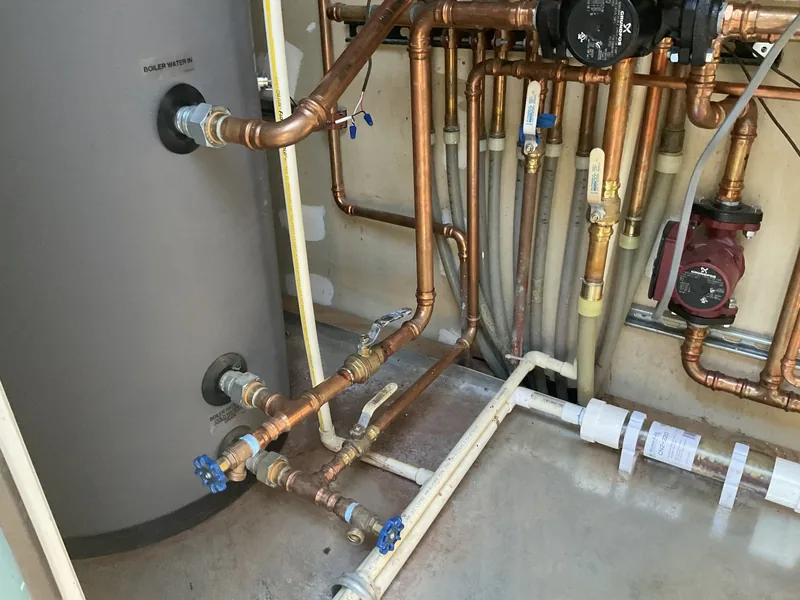
You notice moisture around the water heater and your stomach drops — but before assuming the worst, consider that it might be condensation. Water heaters sweat. Cold water entering a tank in a humid basement, a brand-new installation heating up for the first time, and flue gases cooling in the vent can all produce water that looks alarming and means nothing. Telling condensation from a genuine leak saves unnecessary worry — and, just as importantly, keeps real leaks from hiding behind the “probably just condensation” excuse.
What Causes Condensation on Water Heaters
- Cold water meeting warm air: Incoming cold water chills the tank exterior below the dew point, and humid air condenses on it — the same physics as a cold glass sweating on a summer day. Westfield's humid summers make this common in basements.
- New installations: A fresh tank full of cold water condenses heavily during its first few heating cycles until the tank and surrounding air warm up. This can look dramatic and is completely normal.
- Heavy hot water use: Long showers or back-to-back laundry refills the tank with cold water repeatedly, extending the sweating period.
- Flue gas condensation: On gas heaters, water vapor in exhaust gases can condense in the vent or drip back during startup, especially in cold weather.
- High-efficiency condensing units: These produce condensate by design — if the condensate drain is working, that moisture is expected, not a leak.
Signs It Is Just Condensation
- It comes and goes with conditions: Present on humid days or after heavy use, absent in dry weather. Condensation follows the environment.
- Light, even moisture: A fine film or light sweating across the tank or cold pipes, rather than drips from a specific point.
- It dries up on its own: Once the tank warms or humidity drops, condensation evaporates. Puddles that persist for days are not condensation.
- New heater, first days: Heavy sweating in the first 48 hours after installation is textbook normal.
- No mineral traces: Condensation is essentially distilled water — it leaves no white or green crust, no rust staining.
Signs It Is a Real Leak
- Water from a specific point: Dripping from a fitting, valve, seam, or the tank base — localized sources mean leaks.
- It never dries: The area stays wet regardless of weather, humidity, or usage patterns.
- Mineral crust or rust staining: White, green, or rusty deposits mark where leaking water has been evaporating over time. Condensation does not leave these.
- It is getting worse: A damp spot that grows week over week is a progressive failure, not weather.
- Water on the floor that returns: Mop it up and it comes back in the same place — that is a leak, full stop.
- Accompanying symptoms: Rusty hot water, musty smells, or a rising water bill alongside the moisture all point to a real leak.
The Dry-and-Watch Test
When you genuinely cannot tell, run this simple test: dry the entire area thoroughly — tank exterior, pipes, fittings, and floor — then avoid heavy hot water use for a few hours and check back. If the moisture returns to the same specific spot, you have a leak. If the tank is uniformly dry or only lightly misted in humid conditions, it was condensation. For extra precision, lay dry paper towels around the base and under each fitting; wet spots on the paper identify the exact source. Run the test across different conditions if needed — a real leak is consistent, condensation is not.
When Condensation Masks a Real Leak
The trickiest cases involve both: a tank that sweats normally while also weeping from a fitting, with condensation providing cover for the leak. Do not let visible sweating stop your investigation — the dry-and-watch test still works, because the leak will re-wet its specific spot even as general condensation behaves normally. Also watch for condensation in unusual places: heavy dripping from the top of the tank in dry winter air, or moisture that smells musty, deserves a closer look regardless of the season. And remember that chronic condensation itself is not entirely harmless — persistent dampness corrodes the tank exterior and feeds mold, so improving ventilation or insulating cold pipes is worthwhile even when no leak exists.
If you have run the tests and still are not sure — or if the moisture keeps returning to the same spot — get a professional leak inspection rather than guessing. Moisture meters settle the question definitively, and catching a real leak early is always cheaper than explaining away the evidence. For tank leak evaluation in Westfield or just peace of mind, call (833) 713-2101 and describe what you are seeing.
Reducing Condensation for Good
If condensation is your issue rather than a leak, a few fixes reduce it substantially. Foam insulation on cold-water pipes stops most pipe sweating at the source. Improving basement or utility room ventilation — even a small dehumidifier during Westfield's humid months — lowers the dew point that drives tank sweating. For new installations, patience is the main prescription: the heavy initial condensation fades on its own within a couple of days. And keep an eye on the distinction over time; a basement that used to sweat lightly in August but now drips steadily in October has changed its story, and the dry-and-watch test will tell you whether that story is still condensation.