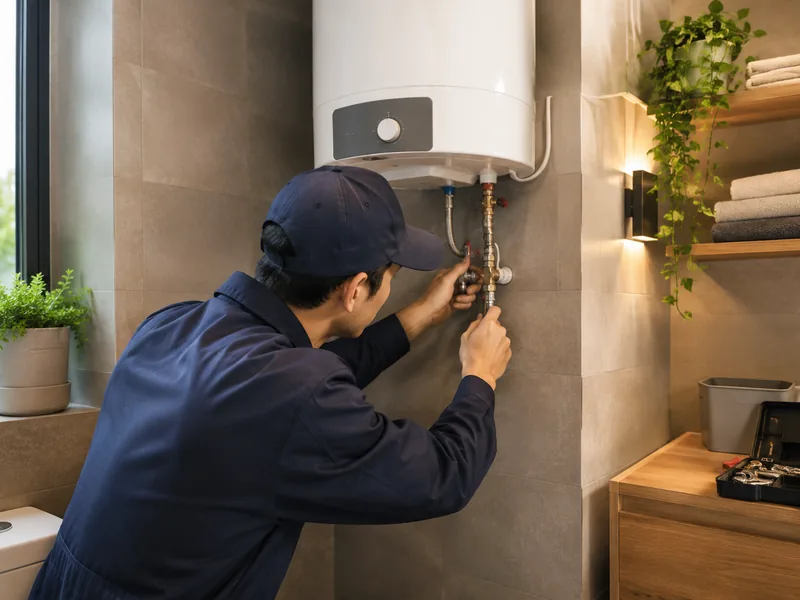
A water heater is the most ignored appliance in most homes — until it floods one. Yet the maintenance it needs is modest: a few minutes monthly, about an hour annually, and a deeper look every few years. Follow this checklist and your heater will run more efficiently, leak less often, and live out its full expected life instead of dying young. Print it, tape it inside the utility room door, and work through it on schedule.
Monthly: The Two-Minute Look-Over
- Check the floor around the heater for dampness, staining, or mineral deposits. Run your hand along the base if lighting is poor.
- Glance at all visible fittings and valves — inlet, outlet, TPR valve, drain valve — for weeping, crust, or rust streaks.
- Listen briefly for new sounds: rumbling, hissing, or dripping that was not there before.
- Confirm the area is clear: no boxes stacked against the heater, no flammables near a gas unit, vent path unobstructed.
- Check the water alarm if you have one — most have a test button; press it monthly.
Annually: The Real Maintenance Visit
- Flush sediment from the tank: Drain several gallons — or the full tank — through the drain valve until water runs clear. In Westfield's hard water, this is the highest-impact task on the list.
- Test the TPR valve: Lift the lever briefly; water should discharge and stop cleanly. Replace the valve if it drips afterward or nothing flows.
- Inspect the anode rod (every 2 to 3 years): pull it and check for heavy corrosion or depletion; replace when worn.
- Check system pressure: a gauge on a hose bibb should read 40 to 80 psi, and the expansion tank should tap-test hollow on top.
- Inspect gas venting (gas units): confirm the vent is secure, properly sloped, unobstructed, and free of rust-through.
- Verify the drain pan and drain line are clean and flowing, and replace the water alarm battery.
- Look over electrical connections (electric units): with the breaker off, check for discoloration or loose terminals at the access panels.
Every Few Years: The Deep Items
- Replace the anode rod when inspection shows it is spent — typically every 3 to 5 years, sooner with a water softener.
- Replace the expansion tank when the tap test goes solid or it passes the 7-to-10-year mark.
- Consider a drain valve upgrade: if the original plastic valve is getting stiff, swap it for a full-port brass valve during a flush — see our drain valve replacement notes for why brass wins.
- Evaluate overall condition past year 8: annual professional assessments become planning tools, telling you how much life the tank likely has left.
Tankless Units: A Different Checklist
Tankless heaters skip the tank chores but add their own: annual descaling through the service valves (non-negotiable in hard water), cleaning the inlet water filter, checking the condensate drain and neutralizer on condensing models, verifying freeze protection before winter, and inspecting the venting annually. No anode rod, no sediment flushing — but the heat exchanger demands its scale kept under control just as faithfully.
Keep Records
Write the installation date on the tank with a marker, and keep a simple log: flush dates, anode inspections and replacements, valve tests, and any service visits. When a problem eventually appears, that history tells a technician exactly what has been done — and when you sell the house, it is proof of care that buyers notice. A photo of the rating plate (model, serial, capacity) stored on your phone saves a trip to the basement every time someone asks.
DIY vs Professional Maintenance
Homeowners comfortably handle the monthly glance, TPR testing, and — with care — tank flushing. The tasks worth handing to a professional include anode rod inspection and replacement (seized rods are common), any gas-side work, electrical testing, and the comprehensive annual visit that combines everything with a trained eye. A yearly professional maintenance and leak inspection catches the things checklists miss — the subtle corrosion, the pressure trend, the valve that is about to fail. To put your heater on a professional maintenance routine in Westfield, INll (833) 713-2101 and a local representative will connect you with someone who does this work every day.
Adjusting the Checklist for Your Situation
No two heaters live the same life, so tune the schedule to yours. Homes on well water with high mineral content should flush twice a year instead of once — the sediment accumulates that much faster. Households with water softeners can relax slightly on flushing but must check the anode rod yearly, since softened water depletes rods aggressively. Large families that run the heater hard benefit from more frequent attention across the board, while a lightly used heater in a vacation home needs the calendar-based checks (valve tests, anode inspections) more than the usage-based ones. Rental properties deserve special mention: tenants rarely report slow drips, so owners should schedule the annual visit themselves rather than hoping someone notices. The checklist is the baseline — your water, your usage, and your heater's age set the real pace.