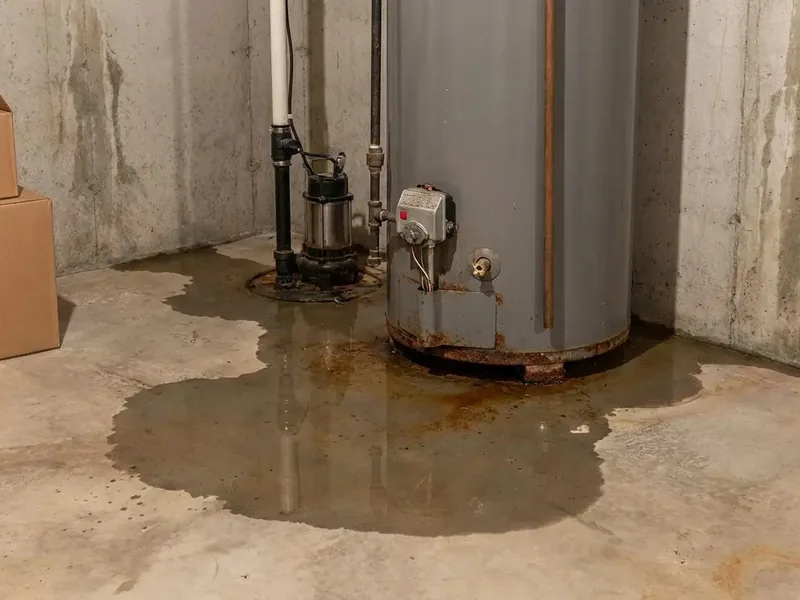
Indiana winters do not negotiate. When a polar vortex drops temperatures into the single digits — or below zero — every water-filled component in an unconditioned space is at risk, and water heaters are no exception. Frozen water expands with irresistible force, splitting pipes, cracking heat exchangers, and rupturing tanks. The damage often stays hidden until the thaw, when leaks appear all at once. Here is how Westfield homeowners protect both tank and tankless heaters through the coldest months.
Why Freezes Destroy Water Heaters
Water expands about 9 percent when it freezes, generating pressures that no residential plumbing component is built to contain. In a tank heater, freezing usually strikes the connected piping first — the cold inlet, hot outlet, or nearby supply lines in exterior walls — but a tank in a truly unheated space can freeze solid enough to split seams. Tankless units are more vulnerable: their compact heat exchangers hold small water volumes in thin copper or stainless tubing that freezes fast and cracks readily. The cruel timing is that freeze damage reveals itself on thaw day, when ice melts and every cracked component starts leaking simultaneously — often while nobody is home to notice.
Highest-Risk Installations
- Outdoor-mounted tankless units: Fully exposed to wind and temperature, dependent entirely on built-in freeze protection.
- Garage installations: Attached garages often sit 20 degrees colder than the house; detached garages can reach outdoor temperatures.
- Crawlspaces and attics: Poorly insulated and rarely checked, these hide freeze damage until spring.
- Vacation homes and rentals: Unoccupied properties with heat turned down or off are the classic freeze-loss scenario.
- Exterior-wall plumbing runs: Pipes in outside walls freeze long before the heater itself does, cutting supply and trapping water in vulnerable spots.
Protecting Tank Water Heaters
- Insulate all exposed piping: Foam pipe sleeves on hot and cold lines in unconditioned spaces are the single highest-value freeze defense. Do not forget the TPR discharge pipe and any exterior runs.
- Keep the space heated: A thermostatically controlled space heater or heat tape in the utility area keeps temperatures above freezing during extreme cold. Never use an open-flame or improvised heater.
- Seal air leaks: Cold drafts through foundation gaps, dryer vents, and missing insulation freeze pipes fast. Seal the utility space against wind intrusion.
- Let faucets drip in extreme cold: A pencil-thin trickle from a hot-water tap keeps water moving through vulnerable lines during the worst nights. Moving water freezes far less readily than standing water.
- Know where your shutoffs are: If a pipe does freeze and burst, fast shutoff limits the flooding. Make sure everyone in the household knows the locations.
Protecting Tankless Units
Tankless freeze protection deserves special attention because it is active, not passive. Most units include electric freeze-protection heaters that cycle the burner to keep internal components above freezing — but they require electrical power. Cutting power to the unit during a cold snap disables the protection entirely, which is exactly when it is needed most. Before winter, verify freeze protection is enabled and the unit has uninterrupted power and gas. For outdoor units, add wind shielding and pipe insulation on all exposed water lines, and consider a professional winterization — draining the unit and adding antifreeze to the condensate trap — for properties that sit vacant. If the forecast shows extreme cold beyond the unit's rated protection, a trickle of hot water through the unit overnight adds meaningful safety margin. For tankless winterization and freeze-damage repair in Westfield, professional help before the deep cold arrives beats emergency calls during it.
Extended Absences: The Right Shutdown
Leaving for weeks in winter requires a decision: keep heat on low, or shut everything down properly. Keeping the thermostat at 55°F or above with the water heater running normally is the safer choice for most homes — it protects pipes, the heater, and everything else. If you must shut down fully, the correct procedure is thorough: turn off the main water, drain the water heater completely, open all faucets, drain toilets and traps (with antifreeze in traps), and winterize the tankless unit per manufacturer instructions. A partial shutdown — heat off but water left on — is the worst option and the source of most vacation freeze disasters. Have someone check the property during extended absences; a quick walkthrough catches furnace failures before pipes do.
After the Freeze: Inspect Before You Relax
When temperatures rebound, do not assume survival. Inspect the heater and all nearby piping for new weeping at joints, drips from the tank base, error codes on tankless units, and any drop in water pressure or flow that suggests a partially split pipe. Freeze damage often appears as leaks days after the thaw, as cracked components shift and seals fail. Run hot water and watch the heater area closely for the first day. If you find any sign of freeze damage — or if an outdoor unit went through extreme cold without power — have it professionally inspected before trusting it: hidden exchanger cracks and stressed fittings fail later under normal pressure. For emergency freeze-damage response in Westfield, call (833) 713-2101 any time; a local representative will connect you with a professional who can assess the damage and get your hot water back safely.