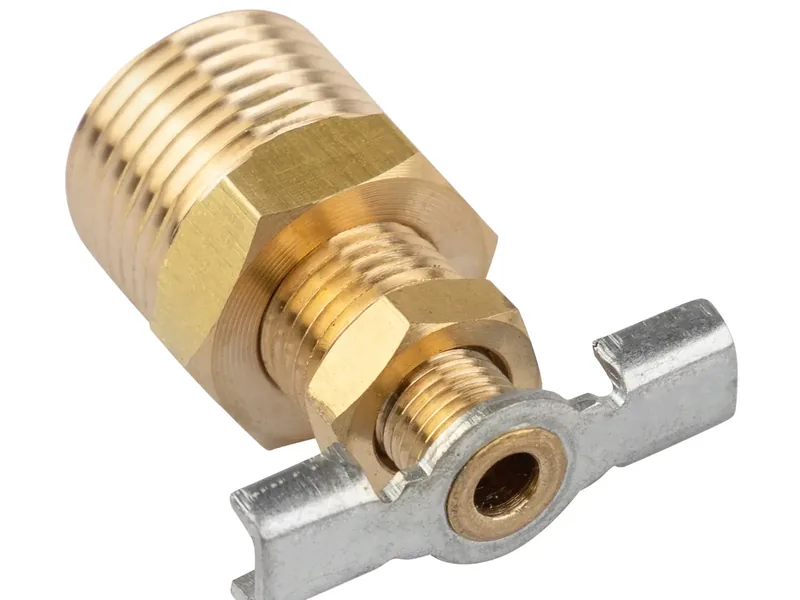
Drain valve replacement in Arcadia, IN 46030 is one of those jobs that looks small and prevents a big mess. The drain valve is the little spigot near the bottom of a tank water heater. It is how the tank gets flushed and drained for maintenance, and on most factory installations it is a cheap plastic part threaded into a steel tank. Heat, mineral sediment, and years of never being touched turn that plastic brittle. When it finally gets used, the handle snaps, the seat leaks, or grit lodges inside and the valve weeps around the clock.
Arcadia sits in northern Hamilton County where town water meets farm country. Homes inside town run on the municipal supply, while plenty of homes just outside the town limits run on private wells, and the two water sources treat a water heater very differently. Town water here is moderately hard, hard enough to lay sediment down in the bottom of a tank year after year. Well water in the surrounding township can carry more iron and fine grit, which packs around the drain valve and turns it into a mineral plug. Either way, the first time someone tries to flush an older tank in 46030, the valve is usually the part that gives up.
IN SHORT
Drain valve replacement in Arcadia, IN 46030 swaps a seized, dripping, or snapped factory valve for a full-port brass ball valve. Call (833) 713-2101, tell us what the valve is doing, and we schedule a same-day visit.
Why Arcadia Drain Valves Seize Instead of Just Dripping
In a lot of suburbs the drain valve story is a slow drip. In Arcadia we see seized valves even more often, and the reason is the housing pattern. Many homes here are 1960s through 1990s ranches and two-stories on their second or even third water heater, and the current tank may have gone a decade without a single flush. Sediment settles to the bottom of the tank, which is exactly where the drain valve lives. Over time that sediment hardens around the valve body like concrete, and the valve's internal washer fuses to its seat. The first twist of the handle after ten idle years is asking a fossil to move.
Well-water homes on the edge of town add a second failure mode. Fine iron sediment and sand do not just sit in the tank, they migrate into the narrow passages of the valve itself. We have opened valves in 46030 that were packed solid with reddish grit, where the handle turned but nothing came out, or where the flow started and then choked off halfway. A valve that will not open is not a minor annoyance, it means the tank cannot be flushed or drained at all, which shortens the heater's life and makes any future repair harder.
The fix is the same in both cases: remove the factory valve and install a full-port brass ball valve. Full-port means the opening through the valve is the same diameter as the pipe, so sediment actually exits instead of bridging across a narrow restriction. Brass does not go brittle with heat the way plastic does, and a quarter-turn ball handle gives a positive open and a positive close with no washer to fuse to a seat. It is the single most cost-effective upgrade you can make to an aging tank.
What the Visit Looks Like in an Arcadia Home
Most drain valve calls in Arcadia start with a phone description: the valve drips, the handle broke off, or the valve will not open. That description tells us what to bring and how to plan the drain. A dripping valve on a working tank is usually a straightforward swap. A seized valve on a tank that has never been flushed needs a slower, more careful drain, because years of sediment can slow the flow to a trickle and we need to keep the water going somewhere safe while we work.
On arrival we shut the heater down, gas or electric, and let the tank cool enough to work on safely. Then we connect a hose to the existing valve, or to the tank drain fitting if the valve is completely blocked, and drain the tank in a controlled way to a floor drain, sump pit, or outside. Arcadia homes vary a lot here: some have a clean floor drain in the utility room, others have the heater tucked in a garage or crawlspace corner, and we plan the hose run before opening anything.
With the tank down, the old valve comes out. Factory valves are often sealed with pipe dope that has hardened over a decade, so removal takes patience and the right leverage, never force that could damage the tank threads. We clean the threads, install the new brass ball valve with fresh sealant, refill the tank, purge air from the lines, relight or re-energize the heater, and then open and close the new valve under full pressure so you can see it operate. Most visits run one to two hours, and you get a valve you can actually use for the next flush.
The 46030 Factor: Small-Town Tanks and Long Service Intervals
Arcadia's housing stock shapes its water heaters. The town has a core of older homes, some dating back many decades, mixed with modest subdivisions from the 60s through the 90s. In older homes the water heater often sits in a basement utility area that has not changed in thirty years, and the tank gets replaced only when it fails outright. That means valves sit untouched for the entire life of a tank, sometimes twelve to fifteen years, and by the time anyone touches the valve it is well past saving.
Out in the township, farmhouses and rural properties add well-water chemistry to the picture. Well systems with iron filters and softeners are common, and each treatment stage changes what reaches the tank. Softened well water is low in calcium but can be more aggressive toward rubber and plastic parts, which is exactly what a factory drain valve is made of. We see washers that have gone soft and distorted, and valve bodies with hairline cracks, on tanks that look fine from the outside.
There is also a practical pattern worth mentioning: in a small town, homeowners tend to be hands-on. We regularly meet Arcadia customers who tried to flush the tank themselves, which is commendable, and discovered the valve problem mid-job. If that happens to you, do not force a stuck valve with pliers until the handle snaps off. Shut the water feed to the heater, call (833) 713-2101, and we will take it from there. A valve with an intact handle is always easier, and cheaper, to replace than one that has been twisted off at the stem.
Reading the Warning Signs Before the Valve Fails
The drain valve rarely fails without warning, but the warnings are easy to miss because the valve sits low on the tank where nobody looks. The classic early sign is a slow drip from the valve spout or a damp ring on the floor directly beneath it. Another is a valve handle that feels crunchy or gritty when turned, which means sediment has worked into the mechanism. If the handle spins without changing the flow, the internal stem has already broken, and the valve is living on borrowed time.
Pay attention during any flush attempt. If you open the valve and the water starts brown and chunky and then slows to nothing, sediment has bridged across the valve opening. If you close the valve and it keeps weeping, grit is lodged in the seat. Both are signals to stop and call rather than keep working the valve, because every extra twist on a compromised plastic valve risks snapping it. A snapped valve on a full, pressurized tank turns a maintenance task into an emergency drain.
Age is the other warning sign. If your tank is over eight years old and the drain valve has never been opened, assume the valve is seized until proven otherwise. That does not mean the tank is bad, plenty of 46030 tanks run fine for years with a valve that has never moved. It just means that when service time comes, plan on a valve replacement as part of the job rather than discovering it mid-flush. Calling (833) 713-2101 before you start a flush lets us check the valve first and replace it proactively if needed.
What Happens When You Call (833) 713-2101
Tell us what the valve is doing. Dripping, stuck shut, handle snapped, or weeping at the threads, plus the tank's approximate age. That tells us whether to plan a simple swap or a swap with a careful full flush, and we schedule a same-day visit in Arcadia. We drain and swap on site. We shut the heater down, drain the tank in a controlled way to a safe drain point, remove the old factory valve, and install a full-port brass ball valve with fresh sealant. You watch it work. We refill, purge the air, bring the heater back online, and cycle the new valve open and closed under pressure so you can see it operate before we leave.