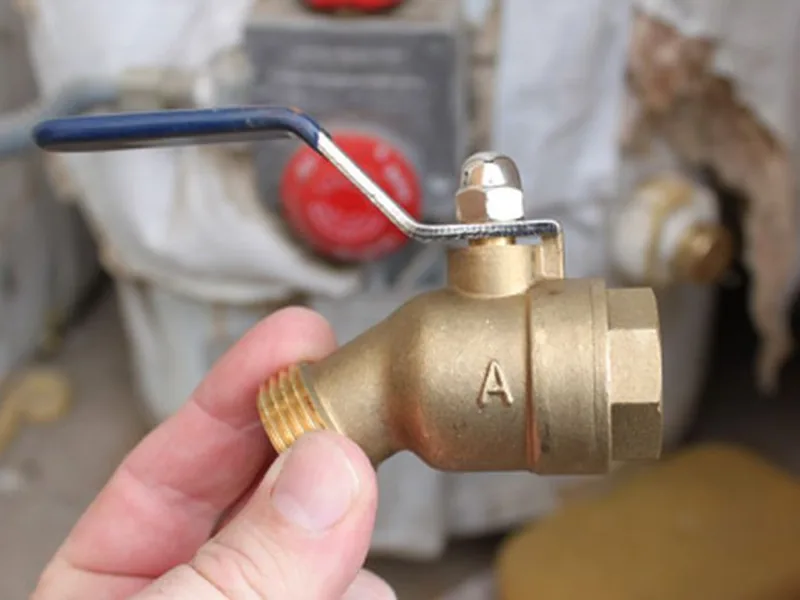
In Avon, the drain valve conversation almost always starts with a subdivision water heater. The town grew fast from the 1990s onward, and thousands of homes got their original tanks during construction, complete with the cheapest plastic drain valve the manufacturer could source. Those tanks are now fifteen to twenty-five years into service. Some have been replaced once; many have not. And the valve, untouched since installation day, is the component most likely to fail the next time anyone needs to drain the tank.
The drain valve sits at the bottom of the tank and controls flushing and draining. Avon's water is hard by national standards, in the low-to-mid teens of grains per gallon, which means every tank here builds sediment steadily. Whole-house softeners are extremely common in Avon, and softeners change the chemistry without eliminating the problem: the old sediment stays put, and softened water can be harder on the plastic and rubber parts of a factory valve. The valve sits at the intersection of all of it.
IN SHORT
Drain valve replacement in Avon, IN 46123 upgrades a failing plastic factory valve to a full-port brass ball valve. One visit, same-day scheduling. Call (833) 713-2101.
The Subdivision Heater Pattern in Avon
Avon's dominant housing story is the 1990s and 2000s subdivision, and those homes share a water heater biography. The original tank went in during construction. If the home is on its first tank, that tank is now approaching or past its expected life, and its drain valve has never been operated. If the home is on its second tank, the replacement was often a like-for-like install that reused the same style of plastic valve, resetting the clock on the tank but not on the valve problem.
We see the consequences during the two most common service moments: the attempted flush and the pre-sale inspection. The attempted flush goes like this, a homeowner reads that tanks should be flushed yearly, attaches a hose, opens the valve, and discovers it will not close again. Grit in the seat, every time. The inspection version is quieter: an inspector notes a corroded or weeping valve, and the seller needs it resolved before closing. Both end with the same solution, and the proactive version is always cheaper and calmer.
Softeners deserve special attention in Avon because they are so widespread. Softened water keeps new calcium scale down, which genuinely helps the tank, but it does not dissolve the sediment already mounded at the bottom, and it can accelerate wear on the cheap plastic and rubber of a factory valve. We regularly pull valves from softened-water homes in 46123 that look clean outside and are perished inside, washers gone soft, seats distorted. The brass ball valve we install does not care which chemistry it faces.
Full-Port Brass: What Changes and Why It Matters
The replacement we install in Avon is a full-port brass ball valve, and each of those words earns its place. Full-port means the waterway through the valve matches the pipe diameter, so when you flush, sediment actually leaves the tank instead of bridging across a narrow valve throat. Standard-port valves, and especially the tiny passages in plastic factory valves, are where flushes go to die: flow starts, sediment bridges, flow stops, and the tank keeps its sediment.
Brass matters because of heat and time. The valve threads into the bottom of a tank that runs at 120 to 140 degrees for decades. Plastic embrittles under that sustained heat; brass does not. A brass valve installed today will still have a working handle and a sealing ball ten years from now, which is exactly the interval at which most Avon homeowners actually think about their water heater.
Ball valve matters because of the seal. A quarter-turn lever rotates a polished ball with a hole through it: aligned with the pipe, water flows; turned ninety degrees, it seals positively against its seats. There is no washer to fuse, no stem packing to weep, no threads to strip inside the valve. When we finish the job, we open and close the new valve under full line pressure while you watch, because a valve you have seen work is a valve you will trust at the next flush.
How the Service Visit Runs
When you call (833) 713-2101, we ask three things: what the valve is doing, how old the tank is, and where the heater sits. Dripping, stuck, broken handle, or weeping at the threads each point to a slightly different plan. Tank age tells us how much sediment to expect. Location, garage, basement, utility closet, tells us how to route the drain hose. Then we schedule, usually same-day for Avon.
On arrival we shut the heater down and allow a safe cool-down. Then comes the controlled drain. Avon utility rooms and garages vary, but most have a workable drain point: floor drain, sump pit, utility sink, or a hose run outside or to a driveway. We connect to the existing valve if it still flows, or work around it if it is fully seized, and drain the tank completely. A tank that has never been flushed drains slowly and discolored; we allow the time it needs rather than rushing it.
Valve extraction is the skilled part. The old valve's sealant has hardened over a decade-plus, and mineral has fused it to the tank fitting. We remove it with controlled leverage, protecting the tank threads, then clean and prep the fitting, install the brass ball valve with fresh sealant, refill the tank, purge air from the hot water lines, restart the heater, and cycle the new valve. One to two hours, and the tank leaves with a drain valve that actually works.
Avon Water Chemistry and Your Valve's Lifespan
Avon homes are served by municipal water that runs hard, typically low-to-mid teens in grains per gallon, and hardness is the metronome of drain valve failure. Each heated gallon deposits a trace of calcium, all of it settling to the tank bottom where the valve lives. In unsoftened homes, which still include many of Avon's older properties, that accumulation is relentless, and a valve that has never been exercised becomes a mineral artifact within a decade.
The softener wrinkle is worth understanding because most Avon homeowners have one. A softener exchanges calcium for sodium, which stops new scale, but the legacy sediment from before the softener, or from the years the softener ran low on salt, remains. Meanwhile softened water is slightly more aggressive toward elastomers and cheap plastics. Net effect: softened-water valves fail differently, perished seals and cracked bodies rather than cemented-shut, but they fail just as surely. Brass is indifferent to both chemistries, which is why it is our standard.
There is also the simple matter of tank size. Avon's larger homes often run 50-gallon tanks, and some run 75-gallon units, which means more water, more sediment, and more thermal cycling on the valve. Bigger tanks also drain longer, which is worth knowing when scheduling: we allow extra time for large tanks with heavy sediment so the job is done right, not fast.
What Happens When You Call (833) 713-2101
Tell us the symptoms. What the valve is doing, the tank's age, and where the heater is located. We plan the drain approach from that and book a same-day visit in Avon. We do the full service. Shutdown, controlled drain to a safe point, careful extraction of the old valve, installation of a full-port brass ball valve with fresh sealant. We verify in front of you. Refill, air purge, heater restart, then open-and-close cycling of the new valve under pressure so you see it seal.