Frankfort, the Clinton County seat, is a working town with a housing stock to match: pre-war bungalows, mid-century ranches, farmhouses on the outskirts, and a downtown of genuine historic character. Water heaters here tend to be veterans. A tank installed fifteen years ago and never flushed is unremarkable in 46041, and its drain valve has spent that entire span sitting in hot, hard water without moving once.
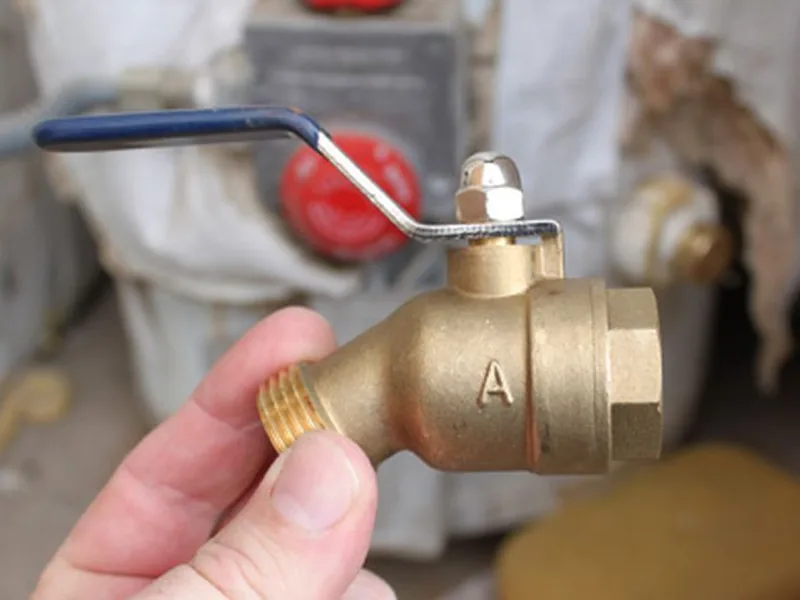
The drain valve is the small spigot at the tank's base that makes flushing and draining possible. From the factory it is plastic, and plastic plus heat plus mineral sediment plus a decade of neglect is a failed valve waiting for its moment. In Frankfort that moment usually arrives during a DIY flush, a repair that requires draining, or the discovery of a slow weep on the basement floor. The fix is permanent and affordable: a full-port brass ball valve installed in one visit.
IN SHORT
Drain valve replacement in Frankfort, IN 46041 swaps a failed plastic valve for a full-port brass ball valve at an honest price. Call (833) 713-2101, same-day service.
Older Tanks, Honest Math
In Frankfort we have a direct conversation with homeowners that the suburbs rarely need: the tank is old, the valve has failed, and the question is whether the valve job is worth it. Here is the honest math. If the tank heats well, holds pressure, and shows no sign of body leakage, a drain valve replacement is a small fraction of a new heater and buys meaningful additional service life, especially when paired with the first real flush the tank has had in years.
If the tank is showing its age in other ways, rust at the base, rumbling from deep sediment, inconsistent temperature, we say so plainly. We do not install valves on dying tanks to run up a bill. Part of every visit is an honest read of the heater's overall condition, and in a town where many households weigh every repair dollar, that candor matters.
The value proposition is strongest on mid-life tanks: eight to twelve years old, heating fine, valve failed. A brass valve plus a flush in that situation is one of the highest-return services in home plumbing. The tank gets maintainable again, the sediment comes out, efficiency improves, and the homeowner gets years, not months, of additional service.
Farmhouses, Wells, and Iron Sediment
Frankfort's outskirts are farm country, and farmhouses on private wells bring a valve failure mode all their own: iron. Well water in this part of central Indiana commonly carries dissolved iron and fine sand, and iron sediment is the drain valve's worst enemy. It is coarse, abrasive, and packs into valve passages like mortar. The signs are familiar: orange staining in fixtures, metallic taste, and a water heater valve that will not open because its passages are plugged solid with reddish grit.
Iron-fouled valves fail differently from calcium-fouled ones. Calcium cements and locks; iron plugs and abrades. A calcium-seized valve might still weep; an iron-plugged valve often passes nothing at all. Both require replacement, but the iron case sometimes needs us to drain through alternate fittings because the valve is a solid plug. We handle that routinely in 46041's well-water homes.
Well owners should also know that treatment equipment changes the picture. Iron filters and softeners are common, and each stage alters what reaches the tank. Softened well water, low in calcium but aggressive toward rubber and plastic, produces the perished-washer failure: valves that look fine and seal nothing. Whatever your well setup, the brass ball valve is the answer, because brass is indifferent to all of these chemistries.
The Visit: What to Expect
Call (833) 713-2101 and tell us what the valve is doing and how old the tank is. Dripping, stuck, broken handle, seeping threads. Tank age tells us the sediment story; location, basement, crawlspace, garage, utility room, tells us the drain plan. We schedule same-day for Frankfort in most cases.
On site: shutdown, cool-down, controlled drain. We connect a hose to the existing valve if it flows, route it to a floor drain, sump, sink, or outside, and drain the tank fully. Frankfort's older tanks with deep sediment drain slowly and discolor heavily; we budget the time honestly rather than rushing. If the valve is fully plugged, we drain through alternate fittings.
Then extraction, done with patience. Old sealant, mineral cementing, sometimes corrosion: the old valve comes out with controlled leverage that protects the tank threads. The brass ball valve goes in with fresh sealant. Refill, air purge, restart, and the demonstration, open and close under pressure while you watch. One to two hours, priced honestly, and confirmed before we start.
Frankfort's Municipal Water and Valve Life
In town, Frankfort's municipal supply is hard, consistent with central Indiana groundwater, and hardness sets the baseline for every tank in 46041. Calcium scale accumulates at the tank bottom year after year, entombing the drain valve. In homes without softeners, and many of Frankfort's older homes run unsoftened, a decade is enough to convert a working valve into a mineral artifact.
The town's older housing adds the neglect multiplier. When a tank goes twelve or fifteen years without a flush, which is normal here rather than exceptional, the valve does not just get stiff, it becomes structurally part of the sediment mound. The first attempt to operate it is the moment of failure. This is why we urge Frankfort homeowners with aging tanks: have the valve assessed before you need it, not during the emergency it creates.
After replacement, the maintenance program is simple and cheap: operate the new brass valve once a year during a flush. Five minutes, a hose, a lever. In Frankfort's water, that single habit is the difference between a tank that dies at ten years and one that serves fifteen or more.
What Happens When You Call (833) 713-2101
Call (833) 713-2101 and describe the valve and tank. We give you honest guidance, including whether the tank is worth the valve job, and schedule a same-day visit. We do the work carefully. Shutdown, controlled drain, patient extraction that protects your tank's threads, and a full-port brass ball valve installed with fresh sealant. We show you the result. Refill, purge, restart, and pressure-cycling the new valve while you watch, with an honest read on your tank's overall condition.
The Extraction Risk on Frankfort's Oldest Tanks
On a twenty-year-old farmhouse tank, the hardest part of a drain valve replacement is not the new valve — it is getting the old one out. Years of heat cycles and mineral cement weld the plastic valve's threads into the tank spud, and the wrong move snaps the valve body off flush with the tank, leaving a threaded stub that resists every extractor. We carry the tools for this — controlled heat, patience, and internal extractors — but honesty matters more than tools: on a tank already past its expected life, a broken extraction can be the moment the tank itself is done.
That is why we assess before we wrench. If the tank is young enough to deserve the repair, we extract carefully and it goes fine. If the tank is on borrowed time — rust streaks, a rumbling burner, previous repairs — we will tell you straight that a valve swap is good money after bad, and quote the replacement instead. Either way you get the truth on arrival, not a surprise halfway through the job. Call (833) 713-2101 and tell us the tank's age; we will give you the honest read before we touch a wrench.
Rentals and Turnover: The Valve Nobody Checks
Frankfort has a solid stock of rental houses — older single-family homes cycling tenants every few years — and the drain valve is the maintenance item that never survives turnover. Landlords rarely flush between tenants; tenants never touch the valve at all. The result is predictable: a valve seized solid by the time anyone needs it, usually discovered during an emergency repair when the technician cannot drain the tank to fix something else.
If you own rental property in 46041, add the valve to your turnover checklist alongside the smoke detectors and the furnace filter. A working brass valve means the next technician can actually service the tank instead of fighting it, and the visit costs a fraction of an emergency call. We work with local landlords on exactly this — a quick valve check and flush between tenants, scheduled around your turnover dates, so the next vacancy does not begin with a plumbing surprise. One call to (833) 713-2101 a week before move-out is all it takes.