Greenfield, the Hancock County seat, has a split personality that shows up in its water heaters. Downtown and along US-40, the National Road, stand historic homes with veteran tanks in basements that have not changed in decades. Out by I-70 and on the town's edges, newer subdivisions hold younger tanks with the same old problem: a factory plastic drain valve that has never been operated in hard water.
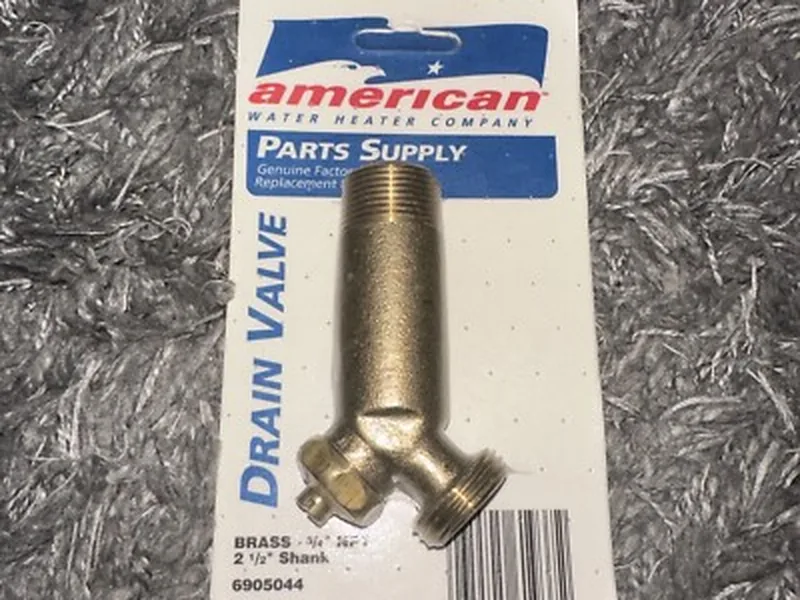
The drain valve is the small spigot at the tank's base, the part that makes flushing and draining possible. Municipal water serves Greenfield and runs hard, roughly 12 to 16 grains per gallon in this region, and that hardness is the slow author of every valve failure in 46140. Sediment settles to the tank bottom, entombs the valve, fouls its seal, and embrittles its handle. When the valve is finally needed, it fails, and replacement with brass is the permanent answer.
IN SHORT
Drain valve replacement in Greenfield, IN 46140 upgrades failed plastic valves to full-port brass ball valves. Same-day visits. Call (833) 713-2101.
Two Greenfields, One Valve Problem
Downtown Greenfield's historic homes produce the veteran-valve failure. Tanks installed during renovations in the 1990s or 2000s, never flushed since, with valves that have not moved in twenty years. The failure modes are the classics: the post-flush weep that never stops, the handle that snaps instead of turning, the valve seized so thoroughly the tank cannot be drained at all. In these homes the valve replacement is often paired with the tank's first real flush in decades, and the amount of sediment that comes out surprises everyone.
The I-70 corridor subdivisions produce the young-tank variant. A six-year-old heater feels too new to need attention, but in 12-to-16-grain water, six years is plenty of time for a plastic valve to become gritty and unreliable. The discovery moment is usually the first attempted flush, undertaken by a conscientious homeowner who read that annual flushing is recommended. The valve opens, sediment surges, and then it will not seal. The homeowner did everything right except checking the valve first.
Both Greenfields converge on the same solution. The factory plastic valve is a consumable part that fails on first real use; the full-port brass ball valve is a permanent part that works every time. Whether your 46140 tank is twenty years old or six, the upgrade pays for itself the first time you flush with confidence.
The National Road Housing Mix
US-40 runs through Greenfield as the town's historic spine, and the housing along it spans more than a century: Victorian-era homes, early-1900s foursquares, postwar cottages, and infill construction. Many of these homes have basements with the water heater in a corner utility area, sometimes sharing space with a furnace and a softener in a genuinely tight arrangement. Access varies, and we plan for it when you call.
Older homes along the corridor sometimes carry plumbing quirks from their era, galvanized supply lines, older shutoff valves, original floor drains, and the drain valve replacement has to coexist with all of it. We work around existing conditions without disturbing them: the valve threads into the tank's own fitting, so no supply-line surgery is involved. But we do check the tank's shutoff valve during the visit, because a heater shutoff that does not shut off is its own problem worth knowing about.
For Greenfield's historic homeowners, there is also the inspection angle. The town's older homes change hands regularly, and inspectors test drain valves as a matter of course. A weeping or seized valve becomes a line item in the inspection report. Proactive replacement with a brass ball valve before listing is inexpensive, installs in about an hour, and turns a potential negotiation point into a non-issue.
How We Do the Job
It begins with your call to (833) 713-2101. Describe the valve, dripping, stuck, broken, seeping, and tell us the tank's age and where the heater sits. Basement, garage, crawlspace, or closet each suggest a drain routing plan. We schedule from that conversation, typically same-day in Greenfield.
On site we shut the heater down and let the tank cool to a safe temperature. Then the controlled drain: hose on the existing valve if it still flows, routed to a floor drain, sump pit, utility sink, or outside. Greenfield's older basements usually offer a floor drain; newer homes may need a longer hose run. Tanks with deep sediment drain slowly and run brown and gritty, and we give them the time they need.
Extraction follows, with the patience this step demands. Hardened sealant and mineral cementing mean the old valve comes out with steady, controlled leverage, protecting the tank's steel threads. The full-port brass ball valve threads in with fresh sealant. Then refill, air purge at the hot taps, heater restart, and the demonstration: we cycle the new valve open and closed under full pressure while you watch. One to two hours, start to finish.
Hancock County Water and Your Valve
Greenfield's municipal water is hard, roughly 12 to 16 grains per gallon, which puts it firmly in the range where drain valves fail on schedule. Every heated gallon leaves calcium behind, all of it settling to the tank bottom where the valve lives. In unsoftened homes, and many of Greenfield's older homes run without softeners, the sediment accumulates relentlessly, and a valve that is never exercised becomes nonfunctional within a decade.
Subdivision homes with softeners face the subtler version. The softener slows new scale, but legacy sediment remains, and softened water wears faster on the plastic and rubber internals of a factory valve. We remove valves from softened Greenfield homes that look clean and are ruined inside. Brass does not care about either chemistry, which is why every replacement we install is brass.
The maintenance prescription after replacement is the same across all of 46140: flush annually through the new valve. Hose on, lever open, run until clear, lever closed. Five minutes, once a year, and the sediment never rebuilds to valve-killing depth. In Greenfield's water, that habit is worth years of tank life.
What Happens When You Call (833) 713-2101
Call (833) 713-2101 with the details. Valve behavior, tank age, and heater location let us plan the drain and schedule a same-day Greenfield visit. We perform the replacement. Shutdown and cool-down, controlled drain to a safe point, careful extraction of the old valve, and a full-port brass ball valve installed with fresh sealant. We prove it under pressure. Refill, air purge, restart, then open-close cycling of the new valve while you watch it seal completely.
Historic-District Tanks: Tight Spaces, Old Plumbing
The homes along Greenfield's National Road historic corridor were not designed around modern water heaters. Basements with six-foot ceilings, utility nooks carved out of crawlspaces, heaters wedged behind the furnace with eighteen inches of working room — we see it all in the older housing stock. A drain valve replacement in a tight space takes more planning, not more force: hose routing through a window well, a pump-assisted drain when there is no floor drain nearby, and careful wrench work where a slip means a skinned knuckle or worse.
Old galvanized nipples and corroded dielectric unions are common companions in these homes, and we check them while we are there — a valve job is a poor time to ignore the fitting right above it. If your heater sits somewhere that makes you nervous just looking at it, that is exactly the call we handle weekly. When you call (833) 713-2101, describe the access: stairs, ceiling height, what is around the heater. We will bring the compact drain setup and allow the extra time, so the visit is one trip, not two.
The Builder-Warranty Window on New Greenfield Tanks
Greenfield's growth means plenty of homes with water heaters still inside their first year — and most homeowners do not realize the factory drain valve is the weakest part of a brand-new tank. Builder warranties typically cover defects for a year, and a valve that will not seal or will not turn qualifies as a defect. The smart move is to test the valve during your eleventh-month warranty inspection: attach a hose, open it briefly, close it firmly, and watch the outlet for ten minutes.
A weep, a drip, or a handle that will not fully close is a warranty claim — document it with a photo and call your builder, or call us at (833) 713-2101 and we will document it for you. Even if the valve passes, you have now operated it once, which is more than most valves get in their first decade. Valves that move stay working; valves that sit for ten years seize. That single test in month eleven does more for your heater's future than any other five-minute task in the house.