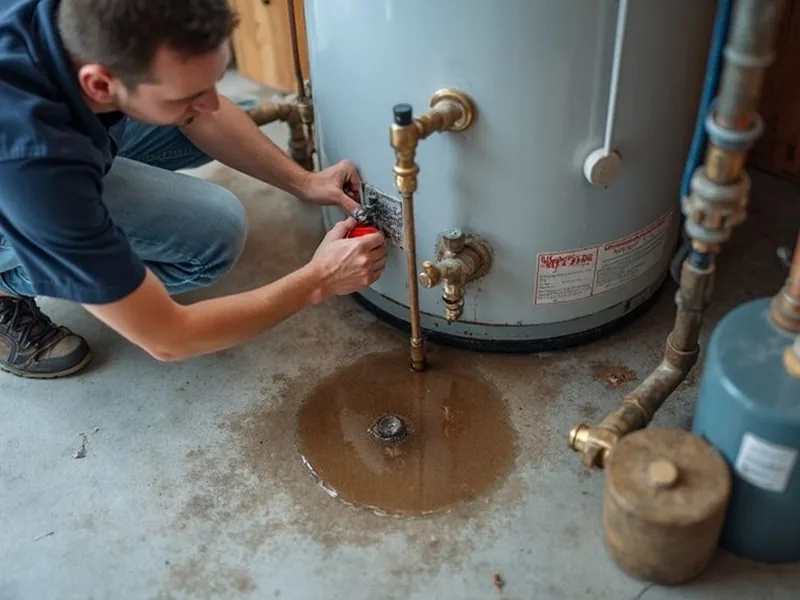
Emergency water heater leak repair in Indianapolis, IN 46260 starts with a phone call and ends with the water stopped, the source found, and a clear plan. Whether it is a burst fitting at midnight or a slow seep discovered on a Saturday morning, we respond across the 46260 area days, nights, weekends, and holidays. In Indianapolis's older homes, heaters often sit in basements below living space, so a leak found early is a mop-up and a leak found late is a ceiling repair. Speed is the difference, which is why we treat every leak call as urgent.
ZIP 46260 covers northwest Indianapolis, a patchwork of midcentury neighborhoods, apartment complexes, and commercial corridors inside the I-465 loop. Housing here is a genuine mix of owner-occupied ranches and rental properties. Much of the housing in 46260 dates from the 1950s through the 1980s: brick ranches, split-levels, and garden apartments. Rental turnover means some heaters get replaced on failure only, while owner-occupied blocks have a steadier maintenance history. Tanks from the early 2000s are common.
IN SHORT
Emergency water heater leak repair in Indianapolis, IN 46260 stops active leaks fast, day or night. When you call (833) 713-2101, we first walk you through shutting off the cold-water inlet and power or gas to the heater, then dispatch a technician to find the leak source and stabilize the situation.
How Emergency Leak Repair Works in Indianapolis, IN 46260
Not every water heater leak is the same emergency, and the first job is telling them apart. A drip from the drain valve, a weeping supply fitting, or a T and P valve discharging because of thermal expansion are all fixable problems on the existing tank. A leak from the tank seam or the base, rust-colored water pooling under the jacket, means the steel has failed and the tank needs replacement. In Indianapolis, where much of the housing in 46260 dates from the 1950s through the 1980s: brick ranches, split-levels, and garden apartments, we see the full spectrum, and the phone triage is designed to sort it before we roll the truck.
The triage follows the same order every time. First, stop the water: the cold-water inlet valve on top of the heater, clockwise to close. If that valve is seized, and in Indianapolis's housing stock it sometimes is, the main house shutoff is the backup. Second, kill the heat source: breaker off for electric, gas control to pilot or off for gas. Third, contain: towels, a drain pan, and a hose on the drain valve directing water to a floor drain if the leak is heavy. Our dispatcher walks 46260 callers through all three steps on the initial call, because the ten minutes before we arrive are when most water damage happens.
On arrival, the diagnostic sequence is methodical. We dry the area and watch where water reappears: top fittings and the T and P discharge line point to connections or pressure issues, the drain valve points to a valve failure, and water seeping from under the jacket or the base seam points to tank failure. Thermal expansion gets special attention in Indianapolis, because closed plumbing systems with check valves or pressure regulators need an expansion tank, and a missing or waterlogged expansion tank will make the T and P valve weep every heating cycle, which looks exactly like a leak to a worried homeowner.
What the emergency visit includes
- Phone triage first: shutoff guidance for the inlet valve, power or gas, and well pump where applicable, before the truck rolls.
- Leak isolation on arrival: water stopped at the closest working valve, tank safed, and the area dried so the true source can be seen.
- Source diagnosis: fittings, valves, T and P and expansion issues, versus tank seam or base failure, identified by watching where water reappears.
- Stabilization: repairable leaks are repaired on the spot where possible; failed tanks are drained down and made safe, with clear next steps for replacement.
- Prevention notes for the home: shutoff locations labeled, and recommendations like drain pans or alarms where Indianapolis homes typically lack them.
Local Factors That Change Emergency Response in 46260
Water chemistry drives failure timing. Citizens Energy Group supplies this area, and regional water quality reports put Indianapolis system hardness around 300 parts per million, over 17 grains per gallon, classified as extremely hard. That is among the hardest municipal water in the region, and it builds sediment in tanks fast. Hard water plus age is the combination that produces sudden tank failures, and Indianapolis has both in abundance. The leaks we answer here are rarely mysterious; they are the predictable end of a corrosion story the local water has been writing for a decade.
Housing layout decides the damage. Heaters sit in basements, crawlspaces, and utility closets depending on the building. Apartment and duplex utility closets can be extremely tight, and in rental properties the shutoff valves are sometimes painted over or inaccessible, which slows emergency response. Where the heater sits determines whether a leak is an inconvenience or an insurance claim, and our triage questions are tuned to figure out your layout fast.
Shutoff condition is the wild card. Much of the housing in 46260 dates from the 1950s through the 1980s: brick ranches, split-levels, and garden apartments. In Indianapolis we regularly find inlet valves that have not been turned in a decade or more. Testing yours twice a year, just closing and reopening it, is a five-minute habit that pays off enormously when a real leak starts at an inconvenient hour.
Common leak sources we find in Indianapolis
- Drain valve failures: cracked plastic or sediment-fouled seats, the most common slow leak.
- Supply fittings and dielectric unions corroded by years of condensation and hard-water weeping.
- T and P valve discharge from thermal expansion where no working expansion tank is installed.
What Happens When You Call (833) 713-2101
Answer, and we go straight to triage: where is the water coming from, can you reach the cold-water inlet valve, is the heater gas or electric. We talk you through shutting the water and heat source down before anything else, then dispatch to your Indianapolis address. On arrival we isolate, diagnose, and stabilize, and you get a plain-English explanation of what failed and what comes next. Day, night, weekend, or holiday.