Atlanta, IN 46031 — a tiny rural crossroads community in northern Hamilton County — is where we handle some of our most frequent heating element replacement calls. Atlanta is mostly farmhouses, manufactured homes, and scattered newer builds on large lots, with housing stock ranging from century-old farm homes to 1990s modulars. Water heaters typically live in basements, enclosed porches converted to utility rooms, or crawl spaces.
Nearly every home around Atlanta is on a private well. The water is very hard with iron — often the hardest water our technicians see in the county — and untreated wells can send visible sediment straight into the tank with every fill. Rural utility rooms are improvised: low crawl spaces, converted porches, and sheds. We bring work lighting and plan extra time for access, and we always check for freeze exposure in unconditioned spaces before touching a gas or electric heater. This page walks through exactly how Water Heater Leak Repair Co. approaches heating element replacement in Atlanta: the signs to watch for, our step-by-step process, and the local factors that change the job. Ready now? Call (833) 713-2101.
In Short: Heating Element Replacement in Atlanta, IN 46031
If your electric water heater in Atlanta, IN 46031 runs out of hot water fast or has gone cold, a burned-out heating element is the likely cause. Water Heater Leak Repair Co. tests both elements, flushes the sediment, and replaces the failed part in one visit. Call (833) 713-2101.
How Heating Element Replacement Works in Atlanta, IN 46031
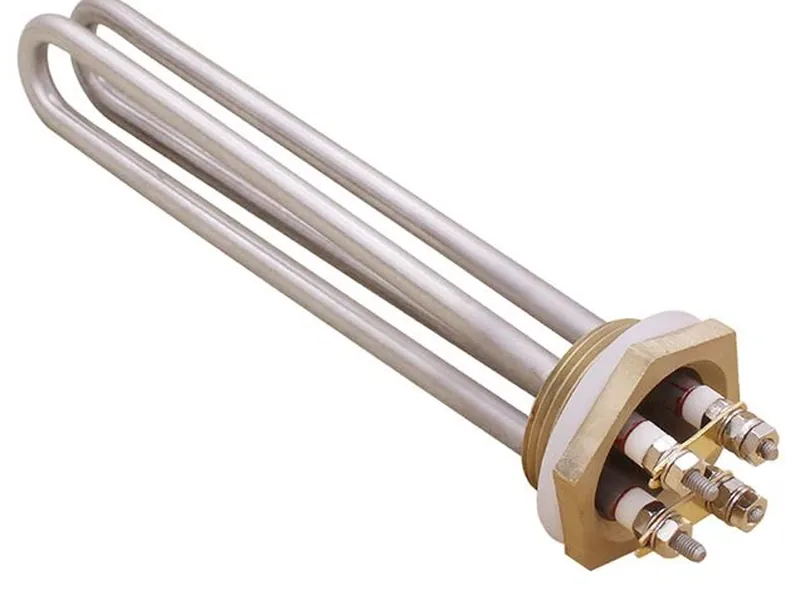
In Atlanta, Atlanta is mostly farmhouses, manufactured homes, and scattered newer builds on large lots, with housing stock ranging from century-old farm homes to 1990s modulars. Water heaters typically live in basements, enclosed porches converted to utility rooms, or crawl spaces. That shapes element work directly: the lower element is almost always the one buried in sediment, and in homes where the heater has not been flushed in years, we plan for a serious sediment cleanout alongside the element swap.
Hard water is the number one killer of heating elements. Nearly every home around Atlanta is on a private well. The water is very hard with iron — often the hardest water our technicians see in the county — and untreated wells can send visible sediment straight into the tank with every fill. Sediment settles over the lower element like insulation, the element overheats trying to push heat through, and it burns out — sometimes in just a few years on well water. A new element without a flush is a short-lived element here.
Rural utility rooms are improvised: low crawl spaces, converted porches, and sheds. We bring work lighting and plan extra time for access, and we always check for freeze exposure in unconditioned spaces before touching a gas or electric heater. Element replacement needs the tank drained and the element ports accessible with an element wrench — we plan the drain path and the wrench swing around your actual utility space before we start.
Signs Your Atlanta Home Needs Heating Element Replacement
Failed elements announce themselves clearly once you know what to listen and look for in your Atlanta home:
- No hot water at all: If both elements have failed — or the upper element plus its thermostat — the tank goes completely cold. Check the breaker first; if it is fine, element failure is the leading suspect.
- Hot water runs out unusually fast: A dead lower element leaves only the upper element working, which heats just the top of the tank. Showers go lukewarm halfway through — the textbook symptom of lower-element failure.
- Lukewarm water that never gets hot: An element coated in scale still draws power but cannot transfer heat efficiently. The water plateaus at lukewarm no matter how long you wait.
- Breaker tripping repeatedly: A failing element can short to ground internally, tripping the breaker. If the breaker trips again right after resetting, stop resetting it and have the elements tested — repeated trips stress the whole circuit.
- Rumbling, popping, or crackling from the tank: That noise is water boiling through sediment layered over the lower element. It is both a warning that the element is overheating and a sign the tank needs flushing with the replacement.
- Rusty or gritty hot water: Sediment stirred up around a failing element — or a depleted anode letting the tank corrode — shows up as discolored hot water. We determine whether it is sediment, anode, or tank corrosion before replacing anything.
Our Heating Element Replacement Process in Atlanta, IN 46031
Here is our step-by-step process for heating element replacement in Atlanta:
Step 1: Power off and verify dead
We switch off the water heater's dedicated breaker and verify zero voltage at the heater with a meter — not just at the panel, but at the elements themselves. Electric heaters run on 240 volts, and we never trust a label alone.
Step 2: Test, don't guess
We test both elements and both thermostats with a multimeter. Elements should read a specific resistance; thermostats should show continuity when calling for heat. This tells us exactly which part failed — and whether the ‘dead element’ is actually a dead thermostat.
Step 3: Drain and assess sediment
We shut off the cold-water supply and drain the tank, measuring sediment volume as it flushes. Heavy sediment here usually explains the failure, and we flush thoroughly so the new element does not inherit the same burial.
Step 4: Remove and replace the element
We unthread the failed element with an element wrench, clean the port threads, and install the new element with a fresh gasket, torqued to spec. We match wattage and voltage exactly to the heater's rating plate.
Step 5: Refill completely before power
This step is non-negotiable: the tank must be completely full — verified by steady water at an open hot tap — before the breaker goes back on. An element energized in a partially filled tank ‘dry-fires’ and destroys itself in seconds.
Step 6: Restore power and verify
We restore power, confirm both elements draw correct amperage, verify the thermostats cycle properly, and run hot water to confirm full-temperature recovery. We also recheck the breaker and wiring for heat or distress before leaving.
Atlanta Factors That Change Heating Element Replacement in 46031
Heating Element Replacement is never one-size-fits-all in Atlanta. These local conditions shape how we diagnose and perform the work:
- Very hard, iron-heavy well water: Atlanta-area wells produce some of the hardest water in central Indiana, and the iron leaves thick rust sediment inside tanks. We check sediment depth on every visit because it is the leading cause of burned-out lower elements and overheated gas valves here.
- Manufactured and modular homes: Many manufactured homes around Atlanta have compact utility closets with side-access heaters and tight clearances. We confirm the replacement part matches the footprint before disassembly so the job finishes in one visit.
- Unconditioned utility spaces: Heaters in converted porches, sheds, and crawl spaces see wide temperature swings. We inspect for freeze damage, check insulation, and verify venting is intact on gas units exposed to cold air.
- Older electrical panels: Farmhouses and older modulars often have panels that are full or use outdated breakers. On electric heater calls we verify the circuit can safely carry the element load before restoring power.
- Sediment-heavy supply: Visible grit in Atlanta well water means inlet screens, dip tubes, and drain valves clog faster. We flush sediment as part of element and valve service so the new part is not fighting the same debris.
Safety Notes for Heating Element Replacement in Atlanta
Electric water heaters run on 240 volts — enough to injure or kill. Always switch off the dedicated breaker before touching anything on the heater, and verify with a meter if you have one. Never restore power to a tank that is not completely full; dry-firing destroys a new element in seconds and can damage wiring. If your breaker trips repeatedly, stop resetting it — that is the circuit telling you something is wrong. For anything beyond a breaker check, call Water Heater Leak Repair Co. at (833) 713-2101 rather than opening access panels yourself.