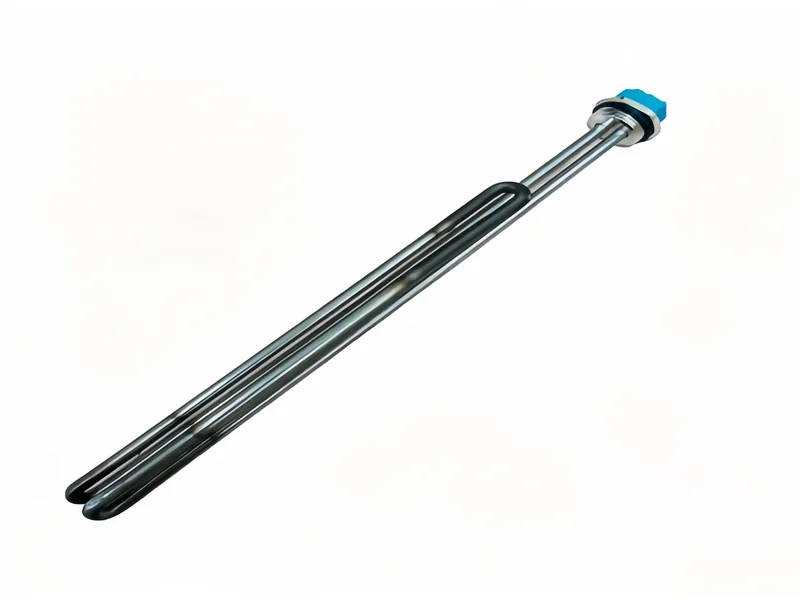
When Avon homeowners need heating element replacement, the job comes with local context that a generic guide will not cover. Avon is a fast-growing suburb strung along U.S. 36 (Rockville Road) in Hendricks County. Avon's housing is dominated by 1990s-to-2010s subdivisions — two-story colonials and roomy ranch homes — with a fresh wave of 2020s builds filling the remaining corridors. Water heaters in these homes usually sit in the garage or a first-floor utility closet, and two-story builds sometimes hide the unit in the attic.
Avon homes are served by municipal and regional water systems that draw from central Indiana's limestone aquifers. The water is reliably hard — typically in the 12 to 18 grains-per-gallon range — which keeps sediment building steadily inside every tank in town. At Water Heater Leak Repair Co., we handle heating element replacement across Avon (46123) every week, and this page explains how the service works here — what we check, how we do it, and what Avon conditions change the approach. If you need help now, call (833) 713-2101.
In Short: Heating Element Replacement in Avon, IN 46123
If your electric water heater in Avon, IN 46123 runs out of hot water fast or has gone cold, a burned-out heating element is the likely cause. Water Heater Leak Repair Co. tests both elements, flushes the sediment, and replaces the failed part in one visit. Call (833) 713-2101.
How Heating Element Replacement Works in Avon, IN 46123
In Avon, Avon's housing is dominated by 1990s-to-2010s subdivisions — two-story colonials and roomy ranch homes — with a fresh wave of 2020s builds filling the remaining corridors. Water heaters in these homes usually sit in the garage or a first-floor utility closet, and two-story builds sometimes hide the unit in the attic. That shapes element work directly: the lower element is almost always the one buried in sediment, and in homes where the heater has not been flushed in years, we plan for a serious sediment cleanout alongside the element swap.
Hard water is the number one killer of heating elements. Avon homes are served by municipal and regional water systems that draw from central Indiana's limestone aquifers. The water is reliably hard — typically in the 12 to 18 grains-per-gallon range — which keeps sediment building steadily inside every tank in town. Sediment settles over the lower element like insulation, the element overheats trying to push heat through, and it burns out — sometimes in just a few years on well water. A new element without a flush is a short-lived element here.
Garage installations are the norm, which means easy access but real freeze exposure during polar-vortex cold snaps. Attic units in two-story homes need drain pans and careful leak containment, since a failed tank upstairs soaks ceilings below. Element replacement needs the tank drained and the element ports accessible with an element wrench — we plan the drain path and the wrench swing around your actual utility space before we start.
Signs Your Avon Home Needs Heating Element Replacement
Failed elements announce themselves clearly once you know what to listen and look for in your Avon home:
- No hot water at all: If both elements have failed — or the upper element plus its thermostat — the tank goes completely cold. Check the breaker first; if it is fine, element failure is the leading suspect.
- Hot water runs out unusually fast: A dead lower element leaves only the upper element working, which heats just the top of the tank. Showers go lukewarm halfway through — the textbook symptom of lower-element failure.
- Lukewarm water that never gets hot: An element coated in scale still draws power but cannot transfer heat efficiently. The water plateaus at lukewarm no matter how long you wait.
- Breaker tripping repeatedly: A failing element can short to ground internally, tripping the breaker. If the breaker trips again right after resetting, stop resetting it and have the elements tested — repeated trips stress the whole circuit.
- Rumbling, popping, or crackling from the tank: That noise is water boiling through sediment layered over the lower element. It is both a warning that the element is overheating and a sign the tank needs flushing with the replacement.
- Rusty or gritty hot water: Sediment stirred up around a failing element — or a depleted anode letting the tank corrode — shows up as discolored hot water. We determine whether it is sediment, anode, or tank corrosion before replacing anything.
Our Heating Element Replacement Process in Avon, IN 46123
Here is our step-by-step process for heating element replacement in Avon:
Step 1: Power off and verify dead
We switch off the water heater's dedicated breaker and verify zero voltage at the heater with a meter — not just at the panel, but at the elements themselves. Electric heaters run on 240 volts, and we never trust a label alone.
Step 2: Test, don't guess
We test both elements and both thermostats with a multimeter. Elements should read a specific resistance; thermostats should show continuity when calling for heat. This tells us exactly which part failed — and whether the ‘dead element’ is actually a dead thermostat.
Step 3: Drain and assess sediment
We shut off the cold-water supply and drain the tank, measuring sediment volume as it flushes. Heavy sediment here usually explains the failure, and we flush thoroughly so the new element does not inherit the same burial.
Step 4: Remove and replace the element
We unthread the failed element with an element wrench, clean the port threads, and install the new element with a fresh gasket, torqued to spec. We match wattage and voltage exactly to the heater's rating plate.
Step 5: Refill completely before power
This step is non-negotiable: the tank must be completely full — verified by steady water at an open hot tap — before the breaker goes back on. An element energized in a partially filled tank ‘dry-fires’ and destroys itself in seconds.
Step 6: Restore power and verify
We restore power, confirm both elements draw correct amperage, verify the thermostats cycle properly, and run hot water to confirm full-temperature recovery. We also recheck the breaker and wiring for heat or distress before leaving.
Avon Factors That Change Heating Element Replacement in 46123
Heating Element Replacement is never one-size-fits-all in Avon. These local conditions shape how we diagnose and perform the work:
- Garage installations and freeze exposure: Garage heaters are easy to reach but sit in the coldest room of the house. During hard freezes we see cracked drain valves and split supply lines in Avon garages, so winter calls always include a freeze-damage check.
- Attic units in two-story homes: A leaking tank in an attic rains through drywall and insulation. We verify drain pans, pan drains, and shutoff access on attic installs, and we treat any attic leak as urgent because of the damage path.
- Builder-grade components in new subdivisions: The 2020s builds going up around Avon often use builder-grade valves and elements. They work, but they fail earlier under hard water — we commonly replace original parts in heaters less than eight years old.
- HOA neighborhoods and scheduling: Many Avon subdivisions have HOA rules about work vehicles and noise. We schedule within community guidelines and keep the work area clean, which matters on driveways shared with neighbors.
- High-demand households: Avon's large family homes run dishwashers, laundry, and multiple showers daily. Heavy hot-water use cycles elements and gas valves harder, so we size replacement parts for the household's real demand, not just the tank's label.
Safety Notes for Heating Element Replacement in Avon
Electric water heaters run on 240 volts — enough to injure or kill. Always switch off the dedicated breaker before touching anything on the heater, and verify with a meter if you have one. Never restore power to a tank that is not completely full; dry-firing destroys a new element in seconds and can damage wiring. If your breaker trips repeatedly, stop resetting it — that is the circuit telling you something is wrong. For anything beyond a breaker check, call Water Heater Leak Repair Co. at (833) 713-2101 rather than opening access panels yourself.