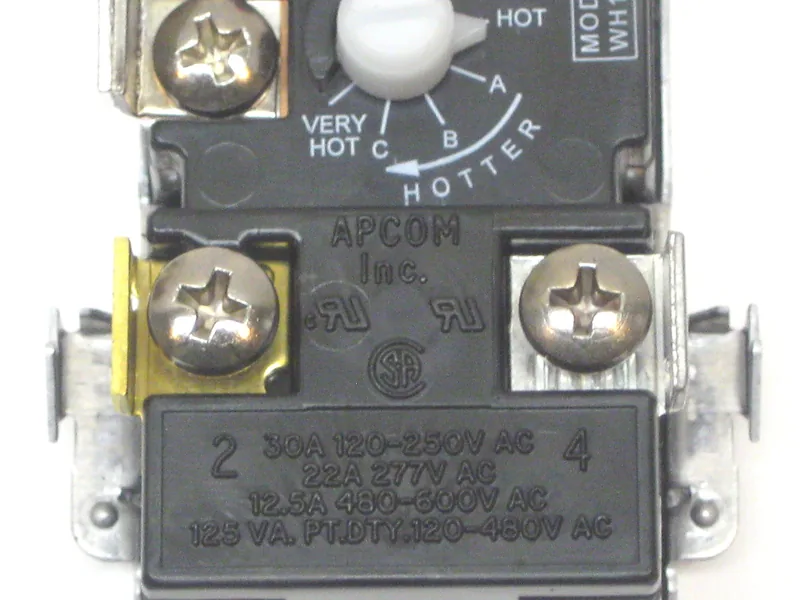
Lebanon, IN 46052 anchors Boone County with a housing stock that runs from historic downtown homes to I-65 corridor subdivisions — and electric water heaters to match, from 20-year-old workhorses to units installed last year. Thermostat failure in Lebanon shows the familiar signs: lukewarm water, hot water that runs out too fast, scalding delivery, or the ECO reset button tripping repeatedly. But Lebanon's hard water and well-fed rural properties mean thermostats are never the only suspects — elements, sediment, and wiring all produce identical symptoms.
Water Heater Leak Repair Co. provides thermostat replacement in Lebanon, IN 46052 for electric tank water heaters. We diagnose electrically — both thermostats and both elements tested with a multimeter, sediment and wiring assessed — then replace failed parts with correctly rated components, matched 120°F settings, and full-cycle verification. Call (833) 713-2101 and describe your symptoms.
In Short: In Lebanon, IN 46052, thermostat failure appears as lukewarm water, rapid depletion, scalding, or repeated ECO trips — with Lebanon's hard water and rural wells making element burnout and sediment common mimics. We prove the failure electrically before replacing anything, install correctly rated thermostats with matched settings, and verify through a full heating cycle in one visit.
How Thermostat Replacement Works in Lebanon, IN 46052
Lebanon's electric tanks use the dual-thermostat changeover design: upper thermostat and element heat the top first, then control passes to the lower pair, with the ECO reset as overheat guard. Our Lebanon diagnostic is electrical proof tuned to the town-to-country split — municipal homes with hard water and aging tanks in town, well-fed farmhouses with heavy mineral loads outside it.
Breaker off and verified, panels open — then systematic testing: thermostat switching behavior, element resistance against nameplate values. In-town Lebanon tanks show the classic sediment story: lower elements buried and burned out, thermostats testing good, "runs out fast" explained by the element. Rural well-fed heaters show heavier compound failures: sediment-buried elements plus pitted thermostat contacts plus corroded terminals, the mineral load attacking everything at once. The meter sorts each case; we replace what it condemns in a single visit.
Sediment assessment runs with the electrical work. Drain-valve flow checks reveal bottom buildup; in Lebanon's unflushed tanks — town and country alike — sediment buries elements, corrupts thermostat sensing, and drives ECO-tripping overheating. When sediment is the engine, we recommend flushing with the service and explain why: new controls on a mineral-choked tank are a short-lived repair.
Failure signatures read electrically and replaced precisely: upper stuck-open (lukewarm), upper stuck-closed (overheat, ECO trips), lower stuck-open (shrunken capacity), lower stuck-closed (bottom overheating). The meter decides; symptoms merely suggest.
Installation is exacting: wires labeled and restored exactly, replacements matched to voltage and wattage per the data plate, sensing discs flat against clean tank steel under firm brackets with mounting surfaces cleaned of scale. Both thermostats to 120°F, matched, verified at the tap. Then the full-cycle proof: upper heats, changeover clicks, lower heats, both cut out at set point, ECO armed — demonstrated during your thermostat replacement in Lebanon, IN 46052.
Lebanon's Well-Water Factor
The farmhouses and rural homes around Lebanon run on private wells with mineral content that dwarfs municipal supplies. Well water does triple damage to electric heater controls: heavy sediment buries lower elements fast, dissolved minerals plate onto elements and overheat them, and iron compounds corrode terminals. Well-fed Lebanon heaters see control failures years earlier than in-town equivalents. Our rural diagnostic weights sediment and terminal condition heavily, and our maintenance advice is blunt: annual flushing is not optional on well water — it is the difference between 8-year and 14-year control life.
Local Factors That Matter for Thermostats in Lebanon, IN 46052
The town-country water split is Lebanon's defining factor: municipal hard water in town, mineral-heavy well water outside it — with the rural diagnostic weighted toward sediment and corrosion.
Heater age spans the full range: historic-core veterans with contact wear and deep sediment, corridor-subdivision young units with early drift. The diagnostic adapts; the honest repair-or-replace read comes standard on tanks past 15 years.
Agricultural sediment — fine silt in well systems — loads tank bottoms and forces longer, hotter cycles that wear controls faster. Flushing recommendations follow the sediment assessment.
Older electrical infrastructure in Lebanon's historic homes can mimic control failure with weak breakers and voltage sag; we check supply under load.
Scalding Water: The Priority Pattern
A stuck-closed thermostat producing scalding water is the one failure with a safety dimension — burn risk at every tap, plus overheating toward ECO trip and TPR discharge. If your Lebanon water is suddenly much hotter than normal, use taps cautiously and call (833) 713-2101 promptly. We prioritize these calls.
Lebanon Well Owners' Control-Care Routine
Private wells demand a stricter control-care routine for electric water heaters, and Lebanon's rural owners should know the drill. First, flush twice a year, not once — well water's silt and mineral load buries lower elements in half the time of municipal sediment, and the spring and fall flushes bracket the heavy-use seasons. Second, check the inlet and drain valves during each flush: silt clogs drain valves, and a clogged drain valve turns the next flush into a struggle.
Third, inspect thermostat terminals annually for the green-white corrosion that well-water minerals encourage — corrosion adds resistance, drops voltage to elements, and mimics control failure. Fourth, watch the pressure tank's air charge (pump off, system drained, tire gauge — 2 PSI below cut-in), because pressure swings do not harm thermostats directly but the waterlogged-tank hammering loosens electrical connections over time. Fifth, note delivered water temperature seasonally with a thermometer at the tap — well-water sediment corrupts sensing faster, and the temperature check catches it months before the shower does. This routine is more work than town-water maintenance, but it is the price of well water — and it keeps Lebanon's rural heaters out of the emergency column.
Lebanon's Fall Flush Reminder
Fall is Lebanon's flush season — and the reminder is worth heeding for reasons beyond sediment. Draining a third of the tank each fall removes the summer's accumulated mineral before heating season raises demand; the heater enters winter with clean elements and accurate sensing, when hot-water reliability matters most. For well owners, the fall flush is doubly important: summer's heavy water usage (irrigation, guests, gardens) loads the tank with the season's maximum sediment, and flushing before winter prevents that load from baking on through months of heating cycles.
Pair the flush with the fall checks: ECO reset status, delivered-temperature verification at the tap, TPR discharge pipe glance, and — for well owners — the pressure-tank air charge check. This combined fall routine takes under an hour (plus our professional visit for the electrical side) and it is the highest-value hour a Lebanon homeowner spends on the water heater all year. The heaters that get fall attention do not fail in January; the ones that fail in January are, with remarkable consistency, the ones that skipped fall. Put it on the calendar with the furnace filter — the two systems share the season, and they share the wisdom of preventive care.
What Happens When You Call (833) 713-2101
Describe the symptoms — what the water does, when it changed, reset behavior — and mention well versus municipal water; it shapes our diagnostic. We will give a preliminary read and precautions.
On site: breaker-verified electrical diagnosis, sediment/wiring/supply assessment, correctly rated replacements, matched 120°F settings, full-cycle verification — usually one visit. Failed parts and readings shown and explained.
For thermostat replacement in Lebanon, IN 46052, Water Heater Leak Repair Co. proves the failure first. Call (833) 713-2101 today.