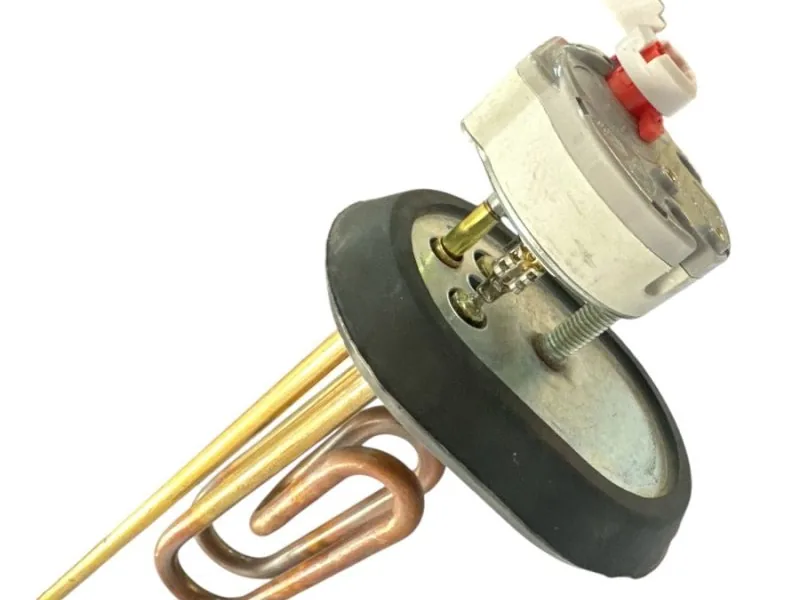
Thorntown, IN 46071 is a small Boone County town where electric water heaters tend to be veterans — farmhouse and older-home tanks run on a when-it-breaks schedule, accumulating two decades of sediment and contact wear. Thermostat failure in Thorntown arrives with the full weight of that neglect: pitted contacts, fouled sensing, corroded terminals, and the sediment that drives half the symptoms. Homeowners call about lukewarm water, hot water that vanishes in minutes, scalding delivery, or the ECO reset tripping repeatedly.
Water Heater Leak Repair Co. provides thermostat replacement in Thorntown, IN 46071 for electric tank water heaters. We diagnose electrically — both thermostats and both elements tested, sediment and wiring assessed — then replace failed parts with correctly rated components, matched 120°F settings, and full-cycle verification. Call (833) 713-2101 and describe your symptoms.
In Short: In Thorntown, IN 46071, thermostat failure on long-neglected tanks shows as lukewarm water, rapid depletion, scalding, or repeated ECO trips — though elements, deep sediment, and wiring are equally likely culprits. We prove the failure electrically before replacing, install correctly rated thermostats with matched settings, and verify through a full heating cycle in one visit.
How Thermostat Replacement Works in Thorntown, IN 46071
Thorntown's electric tanks use the dual-thermostat changeover design: upper thermostat and element heat the top first, then control passes to the lower pair, with the ECO reset as overheat guard. Our Thorntown diagnostic is electrical proof built for neglected veterans — the failure is almost never a single clean component here.
Breaker off and verified, panels open — then systematic testing: thermostat switching behavior, element resistance against nameplate values. Thorntown's unflushed tanks deliver the compound verdict routinely: lower elements open from sediment burial, thermostats with heavily pitted contacts, terminals corroded green. We replace what the meter condemns and rehabilitate what cleaning fixes, in a single visit.
Sediment assessment is the core of the Thorntown diagnostic. Tanks never flushed in 18-plus years hold inches of hardened mineral; drain valves often fail when tested. Sediment buries elements until they burn out, corrupts sensing so good thermostats misread, and drives chronic overheating behind ECO trips. When sediment is the engine — the Thorntown norm — we recommend flushing with the service and state the economics plainly: new controls on a mineral-choked tank are short-lived, and a rumbling tank may be near its end regardless.
Failure signatures read electrically and replaced precisely: upper stuck-open (lukewarm), upper stuck-closed (overheat, ECO trips), lower stuck-open (shrunken capacity), lower stuck-closed (bottom overheating). The meter decides.
Installation is exacting: wires labeled and restored exactly, replacements matched to voltage and wattage per the data plate, sensing discs flat against clean tank steel under firm brackets with mounting surfaces scraped clean and brackets re-tensioned. Both thermostats to 120°F, matched, verified at the tap. Then the full-cycle proof: upper heats, changeover clicks, lower heats, both cut out at set point, ECO armed — demonstrated during your thermostat replacement in Thorntown, IN 46071.
The Thorntown Honest Math
On Thorntown's 20-year-old tanks, we do the repair-or-replace math out loud: sound tank (no leaks, no rust, no rumbling, dry base) with confined control failure gets repaired — controls cost a fraction of a tank and buy real years. Rumbling sediment, rusty water, base moisture, or prior patches get an honest recommendation toward tank replacement. We have talked Thorntown homeowners both directions based on what the meter and the tank inspection show — the counsel follows the evidence, not a script.
Local Factors That Matter for Thermostats in Thorntown, IN 46071
Deferred maintenance defines Thorntown's thermostat work: unflushed tanks, untested ECOs, controls run to failure. Our service is a reset — diagnosed controls, sediment addressed, settings verified — plus the simple annual habits that prevent recurrence.
Veteran tanks bring contact wear, deep sediment, tired wiring, and the honest repair-or-replace read as standard on every aging unit.
Well water around Thorntown loads tanks with minerals and silt, accelerating every sediment-driven failure; flushing matters most on wells.
Outbuilding heaters in barns and shops suffer maximal neglect; mention yours and we will assess both in one visit.
End the Reset Cycle
Thorntown homeowners sometimes reset the ECO for a year before calling. Each reset without diagnosis gambles — the overheat source persists, risking scalding or TPR discharge, while the safety device degrades. We find the source electrically and repair it properly.
Thorntown's Farm-Property Heater Rounds
Thorntown farm properties often run two or three water heaters — house, tenant house, shop — and the outlying units fail silently because nobody monitors them. The farm-property routine is a quarterly round: at each heater, run hot water and confirm temperature, check the ECO reset status, look for base moisture, and listen for rumbling. The shop heater, usually the most neglected, deserves the closest look — wide temperature swings and long idle periods corrode terminals and film contacts.
Well water makes the rounds more urgent: check pressure-tank air charge quarterly on farm systems, since waterlogged tanks hammer every heater's connections. Keep a simple log — heater location, date, temperature reading, observations — on a clipboard in the barn office; patterns across quarters reveal drift long before failure. And when the house heater needs thermostat service, have us assess the outlying units in the same visit — the trip charge is already paid, and catching the shop heater's drifting thermostat during a scheduled round beats discovering it when the tenant house goes cold in January. Farm properties reward systematic attention the way town homes reward annual checks: same principle, wider territory.
Thorntown's Tenant-House Heater Basics
Thorntown farm properties with tenant houses carry a responsibility that absentee monitoring cannot meet: the tenant-house water heater needs the same attention as the main house. The basics for owners: inspect the tenant-house heater quarterly — temperature at the tap, ECO status, base moisture, rumbling — the same round as the farm's other heaters. Respond to tenant hot-water complaints as potential safety issues, not comfort gripes: "water is scalding" means a possibly stuck thermostat (urgent), "no hot water" may mean a tripped ECO from overheating (diagnose, don't just reset).
Keep thermostats at 120°F in tenant houses without exception — tenants cannot be expected to manage scald risk from overheated water, and the liability for scald injuries follows the property owner. Document every inspection and every complaint response with dates; the log demonstrates diligence that matters enormously if an incident ever becomes a dispute. When the main-house heater needs professional service, have the technician assess the tenant-house unit in the same visit — the trip is already paid, and the tenant-house heater is invariably the more neglected of the two. Responsible tenant-house heater care is not generosity; it is the owner's safety obligation, discharged quarterly in fifteen minutes.
What Happens When You Call (833) 713-2101
Describe the symptoms — what the water does, when it changed, reset behavior. We will give a preliminary read and scalding precautions if needed.
On site: breaker-verified electrical diagnosis, sediment/wiring assessment, correctly rated replacements, matched 120°F settings, full-cycle verification — usually one visit, with the honest controls-vs-tank conversation on veterans. Failed parts and readings shown and explained.
For thermostat replacement in Thorntown, IN 46071, Water Heater Leak Repair Co. diagnoses honestly and fixes completely. Call (833) 713-2101 today.