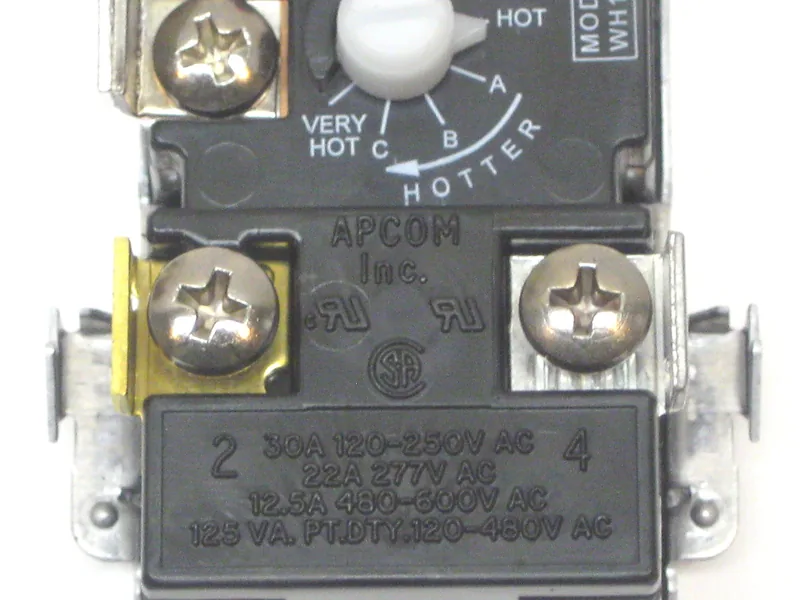
Tipton, IN 46072 — seat of Tipton County — is agricultural country where electric water heaters work in hard well water and maintenance waits for breakdowns. Thermostat failure in Tipton arrives compounded: contacts worn from years of cycles, sensing fouled by sediment and silt, terminals corroded by mineral-heavy water. Tipton homeowners call about the familiar signs — lukewarm water, hot water gone in minutes, scalding delivery, or the ECO reset button tripping over and over.
Water Heater Leak Repair Co. provides thermostat replacement in Tipton, IN 46072 for electric tank water heaters. We diagnose electrically — both thermostats and both elements tested, sediment and wiring assessed — then replace failed parts with correctly rated components, matched 120°F settings, and full-cycle verification. Call (833) 713-2101 and describe your symptoms.
In Short: In Tipton, IN 46072, thermostat failure shows as lukewarm water, rapid depletion, scalding, or repeated ECO trips — with Tipton's agricultural well water making element burnout, heavy sediment, and terminal corrosion equally likely causes. We prove the failure electrically before replacing, install correctly rated thermostats with matched settings, and verify through a full heating cycle in one visit.
How Thermostat Replacement Works in Tipton, IN 46072
Tipton's electric tanks use the dual-thermostat changeover design: upper thermostat and element heat the top first, then control passes to the lower pair, with the ECO reset as overheat guard. Our Tipton diagnostic is electrical proof weighted for well-water realities — mineral load attacks every component at once here.
Breaker off and verified, panels open — then systematic testing: thermostat switching behavior, element resistance against nameplate values. Tipton's well-fed tanks produce the compound verdict as standard: lower elements open from sediment and silt burial, thermostat contacts pitted, terminals corroded by iron and minerals. The meter sorts it; we replace what it condemns and rehabilitate what cleaning fixes, in one visit.
Sediment and silt assessment is central in Tipton. Agricultural well water loads tank bottoms with fine silt plus mineral scale; drain valves clog, elements bury fast, sensing corrupts early. When sediment is the engine — the Tipton norm on wells — we recommend flushing with the service and explain the economics directly: controls on a silt-choked tank are short-lived without it, and annual flushing on well water is the difference between 6-year and 12-year control life.
Failure signatures read electrically and replaced precisely: upper stuck-open (lukewarm), upper stuck-closed (overheat, ECO trips), lower stuck-open (shrunken capacity), lower stuck-closed (bottom overheating). The meter decides.
Installation is exacting: wires labeled and restored exactly, replacements matched to voltage and wattage per the data plate, sensing discs flat against clean tank steel under firm brackets with mounting surfaces cleaned. Both thermostats to 120°F, matched, verified at the tap. Then the full-cycle proof: upper heats, changeover clicks, lower heats, both cut out at set point, ECO armed — demonstrated during your thermostat replacement in Tipton, IN 46072.
Tipton's Well-Water Multiplier
Well water does not just add sediment — it multiplies every thermostat failure mode. Silt buries lower elements in half the time of municipal sediment; dissolved iron plates elements and corrodes terminals; hardness scales sensing surfaces. The result: Tipton well-fed heaters need control attention years earlier than town equivalents, and the diagnostic must weight sediment, silt, and terminal condition as heavily as the electrical tests. Our maintenance counsel is blunt because the water demands it: flush annually, test the ECO yearly, and watch delivered temperature — the three habits that keep well-water heaters alive.
Local Factors That Matter for Thermostats in Tipton, IN 46072
Agricultural well water is Tipton's defining factor: silt plus minerals attacking elements, sensing, and terminals simultaneously — with annual flushing as the non-negotiable habit.
Deferred maintenance compounds the water's effects: unflushed tanks, untested ECOs, controls run to failure. Our service resets all of it in one visit.
Veteran tanks bring contact wear and the honest repair-or-replace read on every aging unit — done out loud, driven by evidence.
Outbuilding heaters in barns and shops get maximal neglect; mention yours and we will assess both in one visit.
Rentals and Farm Tenants
Tipton County's farm and rental properties cycle tenants through heaters nobody monitors. A tripping ECO or scalding water in a rental is a safety-relevant failure deserving prompt reporting — not repeated resets. We document findings clearly for owners and prioritize scalding-water calls.
Tipton's Iron Water and Thermostat Terminals
Dissolved iron in Tipton County well water attacks water heater controls through a mechanism homeowners rarely suspect: terminal and connection corrosion. Iron compounds in the water do not directly touch the electrical terminals — but the damp, mineral-laden environment around a well-water heater, combined with years of tiny condensation cycles in basements and utility rooms, grows corrosion on every exposed connection. Corroded terminals add electrical resistance, and resistance in a 240-volt, 18-amp heater circuit becomes heat: terminals discolor, wire insulation hardens, voltage to the elements sags.
The symptoms — slow recovery, lukewarm water, eventual element or thermostat failure — look exactly like control failure, and indeed the controls do eventually fail, cooked by their own connections. Our Tipton diagnostic therefore treats terminal condition as a primary inspection point, not an afterthought: we remove, clean, and re-torque every connection during thermostat service, and we replace terminals and wire ends that show heat damage rather than reusing them. For well owners, the preventive habit is an annual terminal inspection — five minutes with the breaker off, looking for the green-white crust and brown discoloration that precede failure. In Tipton's iron water, the terminals are the canary: when they start corroding, the controls are next.
Tipton's Annual Terminal Inspection
Tipton well owners should inspect water-heater terminals annually — the five-minute check that prevents the corrosion failures our diagnostic keeps finding. The procedure, with the breaker OFF and verified: remove the access panels, fold back the insulation, and look at every terminal screw and wire connection. Healthy connections are clean and tight, with bright metal and intact insulation. Warning signs: green-white crust (mineral corrosion), brown or black discoloration (heat damage from resistance), brittle or hardened insulation near terminals, and any screw that turns loosely.
Clean light corrosion with a wire brush and re-torque the screws firmly — but not brutally, since over-torquing cracks thermostat terminals. Heat-damaged terminals and wire ends get replaced, not reused: a terminal that has been hot enough to discolor has lost its temper and will loosen again. If more than one connection shows heat damage, call us — it indicates a systemic issue (voltage, element mismatch, or failing breaker) beyond terminal maintenance. This annual inspection is the canary check for Tipton's iron water: terminals corrode first, controls fail next, and the five minutes with the panels off keeps the sequence from completing. Never work inside the panels with power on — the 240 volts inside does not forgive curiosity.
What Happens When You Call (833) 713-2101
Describe the symptoms — what the water does, when it changed, reset behavior — and mention well versus town water. We will give a preliminary read and precautions.
On site: breaker-verified electrical diagnosis, sediment/silt/wiring assessment, correctly rated replacements, matched 120°F settings, full-cycle verification — usually one visit. Failed parts and readings shown and explained.
For thermostat replacement in Tipton, IN 46072, Water Heater Leak Repair Co. diagnoses completely and fixes honestly. Call (833) 713-2101 today.