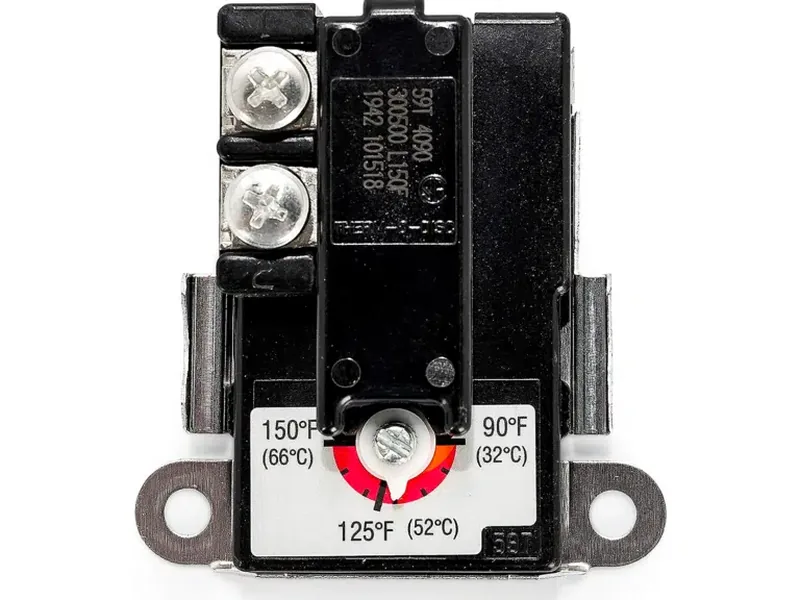
Zionsville, IN 46077 is known for its brick village streets, upscale homes — and famously hard water. The limestone geology underlying Zionsville produces some of the hardest water in central Indiana, and that hardness dominates electric water heater thermostat life: sediment buries lower elements in record time, sensing surfaces scale over, and terminals corrode. In Zionsville's historic village homes, subdivisions, and rural estates on wells, thermostat failure shows the familiar signs — lukewarm water, shrinking capacity, scalding, tripped ECO — accelerated by the water itself.
Water Heater Leak Repair Co. provides thermostat replacement in Zionsville, IN 46077 for electric tank water heaters. We diagnose electrically — both thermostats and both elements tested, sediment and wiring assessed, hardness effects evaluated — then replace failed parts with correctly rated components, matched 120°F settings, and full-cycle verification. Call (833) 713-2101 and describe your symptoms.
In Short: In Zionsville, IN 46077, very hard limestone water accelerates every thermostat failure mode — sediment buries elements fast, sensing scales over, terminals corrode. We prove the failure electrically before replacing, assess hardness effects and softener status, install correctly rated thermostats with matched settings, and verify through a full heating cycle in one visit.
How Thermostat Replacement Works in Zionsville, IN 46077
Zionsville's electric tanks use the dual-thermostat changeover design: upper thermostat and element heat the top first, then control passes to the lower pair, with the ECO reset as overheat guard. Our Zionsville diagnostic is electrical proof with water quality at its center — because here, hardness is the primary suspect behind the thermostat.
Breaker off and verified, panels open — then systematic testing: thermostat switching behavior, element resistance against nameplate values. In Zionsville's unsoftened homes, the meter's verdict is swift and sediment-driven: lower elements open from rapid burial, lower thermostats with scaled sensing surfaces misreading, terminals showing mineral corrosion. In softened homes, the findings run to honest contact wear and drift — the water handled, the cycles remaining. The meter distinguishes; the softener status predicts.
Sediment assessment is the heart of the Zionsville diagnostic. Unsoftened Zionsville water can exceed 20 grains per gallon — at that hardness, bottom sediment accumulates visibly within a couple of years, burying lower elements and insulating sensing surfaces. Drain-valve flow checks and flush assessments are standard; when sediment drives the failure, we recommend flushing with the service and discuss the softener question directly — because a thermostat replaced into unsoftened 20-grain water inherits the same accelerated aging.
Failure signatures read electrically and replaced precisely: upper stuck-open (lukewarm), upper stuck-closed (overheat, ECO trips), lower stuck-open (shrunken capacity), lower stuck-closed (bottom overheating). The meter decides.
Installation is exacting: wires labeled and restored exactly, replacements matched to voltage and wattage per the data plate, sensing discs flat against clean tank steel under firm brackets — with mounting surfaces descaled so the new thermostat reads water temperature accurately. Both thermostats to 120°F, matched, verified at the tap. Then the full-cycle proof: upper heats, changeover clicks, lower heats, both cut out at set point, ECO armed — demonstrated during your thermostat replacement in Zionsville, IN 46077.
Zionsville's Hardness Multiplier
Hardness does not just add sediment — it multiplies thermostat failure modes. Scale on the sensing surface insulates the thermostat from water temperature, so it cuts out early (shrinking capacity) or reads late (overheating). Mineral-plated elements run hotter and fail sooner. Corroded terminals add resistance that starves elements of voltage. In unsoftened Zionsville homes, we see control issues at half the age of softened equivalents. Our diagnostic quantifies the hardness contribution — sediment depth, scaling severity, terminal condition — so the repair plan and the maintenance advice both fit the water, not a generic template.
Local Factors That Matter for Thermostats in Zionsville, IN 46077
Limestone hardness is Zionsville's defining factor — the single biggest influence on thermostat and element life in our service area, shaping diagnosis, replacement intervals, and softener counsel.
Softener status divides Zionsville's thermostat work: maintained softeners transform control life; dry-on-salt or bypassed units provide false confidence while scale accumulates. We verify softener effectiveness through the evidence on the old parts.
Rural well-fed estates compound hardness with pressure-tank neighbors and maximum mineral loads; well-water diagnostics weight sediment and corrosion heavily.
Historic village homes add veteran-tank wear and legacy wiring; subdivisions add high cycle counts from large households — the diagnostic adapts to each.
Softeners and Thermostat Life
A maintained softener roughly doubles control life in Zionsville by limiting the sediment that buries elements and fouls sensing. But softeners need salt, correct settings for actual hardness, and periodic verification — a softener run dry for months lets hardness through while the owner assumes protection. During our diagnostic we read the old parts like a history book: scaled elements and fouled sensing on a "softened" home mean the softener has not been protecting, and we say so — because the new thermostat deserves genuinely softened water, not assumed softening.
Zionsville's Softener-Thermostat Connection
In Zionsville, thermostat life and softener maintenance are directly linked — closer than anywhere else we serve. The mechanism is sediment: unsoftened 20-grain water buries lower elements in a fraction of the normal time, and buried elements overheat and burn out, producing the capacity-loss symptoms that bring the service call. Meanwhile scale fouls the lower thermostat's sensing surface, so even healthy controls misread. A maintained softener interrupts both mechanisms at the source.
The diagnostic tells the softener's true story: we read the removed elements and old thermostats like a history book. Clean elements with worn contacts mean the softener protected and the failure is honest cycle wear. Scaled elements with fouled sensing on a "softened" home mean the softener ran dry, was bypassed, or is undersized — and the new thermostats will inherit the same accelerated aging unless the softener situation is corrected. We deliver this reading plainly because it changes the maintenance plan: with verified softening, annual flushing and normal control life; without it, twice-yearly flushing and shortened control expectations. In Zionsville, the softener is part of the water heater system, and we treat it that way.
Zionsville's Twice-Yearly Flush Routine
For Zionsville's unsoftened homes, the twice-yearly flush is the routine that keeps thermostats alive — and it deserves detailed description because the stakes are higher here. Spring flush (April): drain a third to half the tank after the heating season's heavy use, clearing the winter's accumulated scale before summer's moderate demand. Use the stir-and-flush technique — crack the cold inlet briefly with the drain open to agitate settled sediment — repeating until the drain water runs clear. Fall flush (October): repeat before heating season, when hot-water demand rises and the heater will work hardest on whatever sediment remains.
Between flushes, the softener question stays open: every flush is an opportunity to reconsider softening, because the flushed sediment volume is the visible measure of what the water deposits. A flush that yields buckets of scale is the water's argument for a softener, made in mineral rather than words. For softened homes, the annual flush suffices — but verify the softener at each flush (salt, settings, regeneration), since the flush's effectiveness assumes the softening held. The twice-yearly routine is more work than the annual — but in Zionsville's water, it is the difference between thermostats that last and thermostats that drown in scale.
What Happens When You Call (833) 713-2101
Describe the symptoms — what the water does, when it changed, reset behavior — and mention softener status and well versus municipal water. We will give a preliminary read.
On site: breaker-verified electrical diagnosis, sediment/hardness/wiring assessment, correctly rated replacements, matched 120°F settings, full-cycle verification — usually one visit, with honest softener counsel. Failed parts and readings shown and explained.
For thermostat replacement in Zionsville, IN 46077, Water Heater Leak Repair Co. accounts for the water, not just the thermostat. Call (833) 713-2101 today.