When the temperature and pressure relief valve on your water heater starts dripping in Arcadia, IN 46030, that small puddle on the garage floor or basement slab is doing exactly what it was designed to do: warning you. The TPR valve is the last line of defense on a tank water heater, and in Arcadia's mix of older ranch homes, farmhouses on the town's rural edges, and newer infill builds, we see TPR valves weeping, dribbling, and occasionally discharging for reasons that range from harmless thermal expansion to genuinely dangerous pressure buildup.
Water Heater Leak Repair Co. provides TPR valve replacement in Arcadia, IN 46030 for electric and gas tank water heaters of every common size. We diagnose why the valve opened, check the whole pressure picture — incoming pressure, expansion control, thermostat behavior — replace the valve with the correct temperature and pressure rating for your tank, and pipe the discharge line to code. Call (833) 713-2101 and a technician can walk you through what your valve is telling you before we ever roll a truck.
In Short: A dripping TPR valve in Arcadia, IN 46030 usually signals thermal expansion, high incoming water pressure, sediment on the valve seat, or a failing thermostat. Replacement takes under an hour for most tanks, but the underlying cause must be diagnosed first — a new valve on an over-pressurized system will just start leaking again. We test pressure and expansion, then replace and re-pipe correctly.
How TPR Valve Replacement Works in Arcadia, IN 46030
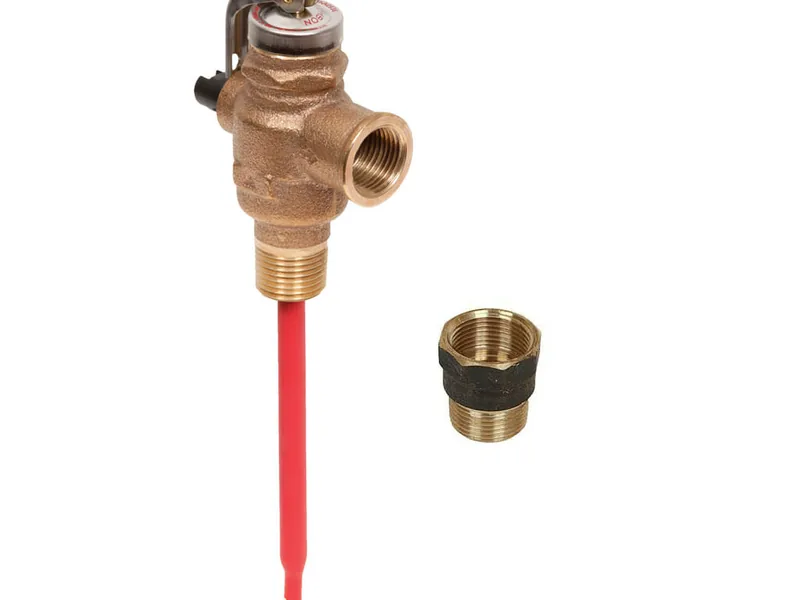
A TPR valve sits on the top or upper side of your water heater tank, screwed into a dedicated tapping. Inside the brass body, a spring holds a disc against a seat, and a temperature-sensing probe extends down into the tank water. The valve is engineered to open at 150 PSI of pressure or 210°F of temperature — whichever comes first. When we replace a TPR valve in an Arcadia home, the job follows a disciplined sequence because the valve is a safety device, not a wear part you swap blindly.
First, we shut off power or gas to the heater and close the cold-water inlet valve. We attach a hose to the drain valve and relieve pressure, then check the tank's actual condition: we measure incoming static water pressure with a gauge on the drain valve or a hose bib, and we test whether the system has working thermal expansion control. In many Arcadia homes — especially the older ranches south of downtown and farmhouses toward the county line — the original expansion tank (if one was ever installed) has long since lost its air charge or corroded through, so heated water has nowhere to expand and pressure spikes every recovery cycle. That spike is what pushes a TPR valve to weep.
Next, we remove the old valve. TPR valves thread into the tank with pipe dope or tape, and after years of heat cycling they can seize; we use the correct wrench on the valve body flats, never on the outlet, to avoid cracking the tank tapping. The replacement valve must match the tank: same thread size (almost always 3/4 inch), a BTU rating equal to or greater than the heater's input, and the standard 150 PSI / 210°F set points. A valve rated below the heater's BTU input is a real hazard on gas units, so we verify the data plate before installing.
The discharge pipe gets equal attention. Code requires the pipe to run full-size from the valve outlet, pitch downward by gravity, terminate 6 to 24 inches above a floor drain or the floor itself, and have no threads, caps, or valves on its end. We see plenty of Arcadia installations where the discharge pipe was never run at all, or where it terminates into a wall cavity or behind the heater where a discharge would go unnoticed. During a TPR valve replacement in Arcadia, IN 46030, we correct the discharge piping so that if the valve ever has to do its job in an emergency, scalding water goes somewhere visible and safe.
Finally, we restore water and power, bring the tank through a full heating cycle, and watch the new valve under load. We also test the manual test lever — lifting it briefly should produce a burst of hot water from the discharge pipe, and the valve must reseat cleanly when released. If it dribbles after testing, the seat may have debris and we flush it; a valve that will not reseat gets replaced again on the spot. Before we leave, we explain what we found: whether your system needs an expansion tank, a pressure-reducing valve adjustment, or a thermostat check, so the new valve is not left fighting the same conditions that killed the old one.
Why TPR Valves Start Leaking in the First Place
The single most common cause we find in Arcadia is thermal expansion in a closed system. Many homes here have check valves or pressure-reducing valves on the main that prevent expanded water from pushing back into the municipal supply. When the burner or elements heat 40 or 50 gallons of water, that water expands by a few percent and pressure climbs. Without a working expansion tank to absorb it, pressure can spike from a normal 60 PSI to over 150 PSI during each cycle, and the TPR valve weeps to relieve it. Homeowners often notice the dripping only after a long hot shower or a dishwasher cycle — exactly when the tank is reheating.
High static incoming pressure is the second culprit. Municipal pressure in parts of Hamilton County runs hot, and a failing pressure-reducing valve lets 90 to 110 PSI into the house around the clock. At that level, even normal expansion pushes the TPR valve past its set point. Sediment is the third: Arcadia-area water carries dissolved minerals, and in older tanks that have never been flushed, sediment bakes onto the tank bottom and can work its way up to the valve seat, preventing a clean seal. A valve with debris on its seat will drip steadily even at normal pressure, and no amount of tightening fixes it — the valve needs replacement and the tank usually needs a flush.
The most serious cause is a runaway thermostat. If the upper thermostat on an electric heater sticks closed, or a gas control valve fails, the tank keeps heating past the set point toward 210°F, and the TPR valve opens on temperature. This is the valve saving the tank from a steam explosion, and it is not a nuisance drip — if your TPR valve is discharging full streams of very hot water or steam, shut off the heater's energy supply, leave the area if you hear rumbling, and call (833) 713-2101 immediately. We treat temperature discharges as urgent.
Local Factors That Matter for TPR Valves in Arcadia, IN 46030
Arcadia's housing stock shapes what we find. The town's core has modest ranch and bungalow homes from the 1950s through the 1970s, many with their water heaters tucked into utility closets, crawlspaces, or unheated garage corners. Heaters in cold spots work harder in winter, cycle more often, and their TPR valves see more expansion events per day. We also find a lot of original galvanized discharge piping in these older homes — corroded, undersized, or terminating inside walls — which we replace as part of the service.
Outside town, many Arcadia-area homes run on private wells with pressure tanks and switches cycling between 40 and 60 PSI. Well systems add their own TPR complications: a waterlogged pressure tank removes the cushion that normally absorbs expansion, so the TPR valve becomes the expansion control by default and drips constantly. When we replace a TPR valve on a well-fed home near Arcadia, we always check the pressure tank's air charge and the switch settings, because a new valve will inherit the same dripping problem if the pressure tank is waterlogged.
Winter freeze risk matters here too. Discharge pipes that run through unheated garages or along exterior walls can freeze shut in a January cold snap. A frozen discharge pipe turns the TPR valve into a dead end — if the tank over-pressurizes, the valve cannot relieve it. During winter TPR valve replacements in Arcadia, IN 46030, we reroute or insulate discharge lines that pass through freeze-prone spaces, and we make sure the termination stays visible so a homeowner can spot discharge immediately.
Finally, hard water shortens TPR valve life. Central Indiana water carries calcium and magnesium that scale up valve seats and stiffen springs. In Arcadia homes without softeners, we often find valves that either weep from scaled seats or, worse, have scaled shut and will not open on the test lever at all. A valve that will not open when tested is arguably more dangerous than one that drips — it has stopped being a safety device. We recommend testing the lever annually, and if yours is frozen or crusted, replacement is overdue.
What Happens When You Call (833) 713-2101
Your call starts with a few quick questions: is the valve dripping, running steadily, or discharging steam? Is the water extremely hot? How old is the heater? Based on your answers, we tell you whether to shut off the heater's power or gas right away and whether the situation can wait for a scheduled visit. For steady discharge or signs of overheating, we prioritize the call.
On site, we run the full diagnostic — pressure test, expansion check, thermostat verification — then replace the valve and correct the discharge piping in a single visit in most cases. You get a plain-English explanation of the root cause and what, if anything, needs follow-up, like an expansion tank or pressure-reducing valve. Then we test the new valve in front of you so you can see it seat cleanly.
A dripping TPR valve is your water heater asking for attention. In Arcadia, IN 46030, Water Heater Leak Repair Co. answers that call with same-week service, correct parts matched to your tank, and discharge piping done right. Call (833) 713-2101 today — the sooner we see it, the simpler the fix.