Atlanta, IN 46031 is a small town with long memories — and long-lived water heaters. In the farmhouses, older frame homes, and modest ranches around Atlanta, we regularly find tank water heaters pushing 12 to 15 years, and the TPR valve is often the first component to announce that the tank is aging. A valve that seeps, spits, or runs steadily from its discharge pipe is telling you about pressure, temperature, or mineral buildup inside that tank, and in Atlanta's hard well water it pays to listen early.
Water Heater Leak Repair Co. handles TPR valve replacement in Atlanta, IN 46031 with a diagnostic-first approach. We do not just swap the valve; we find out why it opened — incoming pressure, thermal expansion, a scaled seat, or a runaway thermostat — then install the correctly rated valve and make the discharge piping safe and visible. If your valve is dripping right now, call (833) 713-2101 and we will talk through what to check before we arrive.
In Short: In Atlanta, IN 46031, TPR valve drips most often come from mineral-scaled seats in aging tanks, waterlogged well pressure tanks that remove expansion cushion, or high static pressure. We diagnose the pressure and temperature picture, replace the valve with one rated for your tank's BTU input, and correct the discharge pipe so any future discharge is visible and safe.
How TPR Valve Replacement Works in Atlanta, IN 46031
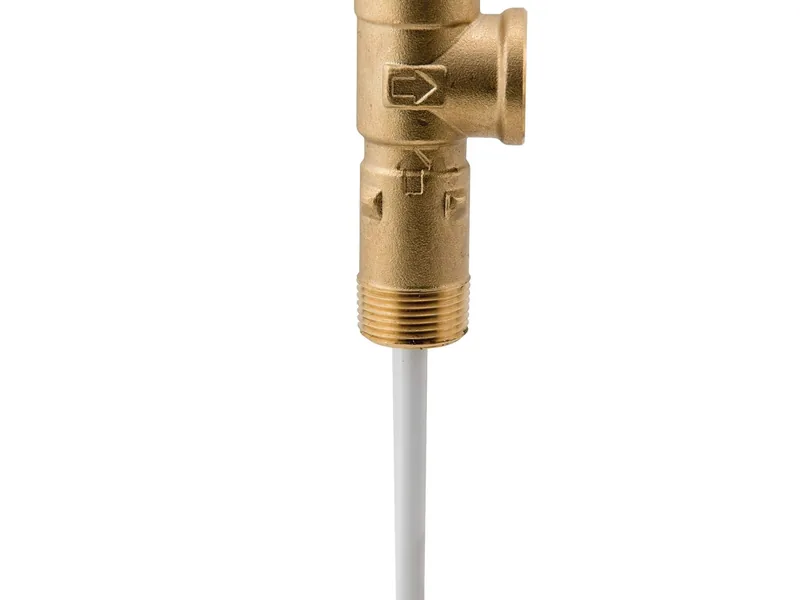
The TPR valve is a spring-loaded safety device threaded into your water heater tank, with a probe that senses water temperature inside the tank. It is set to open at 150 PSI or 210°F. Our replacement service in Atlanta starts with the energy supply off and the cold inlet closed, then a controlled pressure relief through the drain valve. From there, the diagnostic matters more than the wrench work.
We put a pressure gauge on the system and watch what happens through a heating cycle. In Atlanta-area homes on private wells, we frequently find the real problem sitting in the pressure tank: a bladder that has failed or an air charge that has bled away leaves the tank waterlogged, so every time the well pump cycles — or the water heater fires — pressure spikes with nowhere to go. The TPR valve ends up acting as the system's expansion relief, dripping after every pump cycle. Replacing the valve without catching a waterlogged pressure tank just resets the clock on the same drip, so we check the tank's air charge with the pump off and the system drained down, and we tell you plainly if the pressure tank needs attention too.
On municipal-fed homes, we look for the classic closed-system setup: a pressure-reducing valve or check valve on the main with no expansion tank, or an expansion tank whose diaphragm has failed. We check expansion tanks by tapping them — a tank that rings hollow at the top and thuds solid at the bottom still has its air cushion; one that thuds solid throughout is waterlogged and done. A failed expansion tank is one of the most common reasons a relatively new TPR valve starts weeping in Atlanta, because each recovery cycle drives pressure past 150 PSI.
The physical replacement is straightforward but must be exact. We remove the old valve from the tank tapping, clean the threads, and install a new valve with pipe thread sealant rated for hot water service. The new valve's BTU rating must meet or exceed the water heater's input rating — this is stamped on both the heater data plate and the valve body, and we match them. Undersized valves on high-input gas heaters are a genuine safety defect, and we have corrected more than a few in older Atlanta installations where a previous repair used whatever valve was on the truck.
Discharge piping is the part most often wrong. The pipe must be full 3/4-inch size from the valve to its end, run downhill by gravity alone, and terminate between 6 and 24 inches above the floor or a drain — with no threads, caps, shutoffs, or reductions. In Atlanta's older homes we find discharge pipes that end inside walls, pipes reduced to 1/2 inch, and valves with no discharge pipe at all. As part of every TPR valve replacement in Atlanta, IN 46031, we bring the discharge line into compliance, because a safety valve that cannot safely discharge is not a safety valve.
After installation, we refill the tank completely — firing a heater with air in the tank damages elements and creates its own hazards — restore power or gas, and run a full heating cycle while watching the new valve. We operate the test lever to confirm it opens and reseats, and we recheck system pressure under load. You see the test happen, and we explain the root cause in plain terms before we leave.
Reading What Your TPR Valve Is Telling You
Not every TPR discharge means the same thing, and the pattern is diagnostic. A drip that appears only after long hot-water use and stops within an hour points to thermal expansion — the tank reheats a large volume, pressure spikes, the valve weeps, and pressure settles. A constant drip that never stops suggests debris on the seat or sustained high static pressure. Intermittent spitting that coincides with the well pump cycling points to a waterlogged pressure tank. And a sudden full discharge of very hot water or steam, especially with rumbling from the tank, means temperature runaway — shut off the heater's energy and call (833) 713-2101 without delay.
Mineral scale deserves special attention in Atlanta. Well water in this part of Hamilton County carries significant hardness, and in tanks that have never been flushed, calcium deposits migrate and bake onto the TPR valve's seat and spring. A scaled seat cannot seal, so the valve seeps continuously; a scaled-shut valve is worse — it looks fine, feels fine, and will not open when the tank needs it most. When we replace valves in Atlanta, we often find the old one frozen solid, and we show the homeowner the test lever that would not budge. Annual lever testing prevents that silent failure.
Local Factors That Matter for TPR Valves in Atlanta, IN 46031
Well water dominates the Atlanta area, and well systems change the TPR equation. Beyond waterlogged pressure tanks, well owners deal with pressure switch differentials that let system pressure swing 20 PSI with every pump cycle. Add thermal expansion on top of a 40/60 switch, and peak pressures during recovery can flirt with the valve's 150 PSI set point even when static pressure looks normal. We set our diagnostic around the full cycle, not a single static reading.
Housing age is the second factor. Atlanta's homes include farmhouses and frame houses from the early-to-mid 20th century, where water heaters often sit in basements with stone or block walls, or in crawlspaces with limited access. Tight access does not change the procedure, but it changes the discharge routing — and we have seen creative, non-compliant piping in these tight spots, including discharge lines run uphill (which trap water against the valve and corrode it) and lines terminated into sump pits below the valve level via uphill runs. We reroute these properly even when it means opening a small chase.
Agricultural surroundings add sediment load. Fine silt from well systems settles in tank bottoms faster here, and sediment insulates the tank bottom from the burner or lower element, forcing longer, hotter burn cycles. Longer cycles mean more expansion per cycle and more thermal stress on the valve seat. During a TPR valve replacement in Atlanta, IN 46031, we recommend a tank flush when sediment is clearly contributing — it extends the life of the new valve and the tank alike.
Finally, outbuildings and workshops. Many Atlanta properties have a second water heater in a barn, shop, or garage apartment, often an older hand-me-down unit with minimal maintenance. These secondary heaters get the least attention and the most neglect — valves scaled shut, no discharge piping, sometimes no expansion control at all. If you have a heater in an outbuilding, mention it when you call; we can inspect both in one visit.
What Happens When You Call (833) 713-2101
We start with triage questions: drip, stream, or steam? Constant or only after hot-water use? Well or municipal water? Your answers tell us whether to have you shut off the heater immediately and how to prioritize the visit. Temperature discharges and constant heavy streams go to the front of the schedule.
At your home, we run the pressure and expansion diagnostic, replace the valve with a correctly rated unit, fix the discharge piping, and test everything under a live heating cycle. We show you the old valve, explain the root cause, and flag related issues — waterlogged pressure tanks, failed expansion tanks, high static pressure — with straight options and no pressure.
In Atlanta, IN 46031, a dripping TPR valve is common, fixable, and worth taking seriously. Water Heater Leak Repair Co. will sort the cause, not just the symptom. Call (833) 713-2101 and let us take a look.