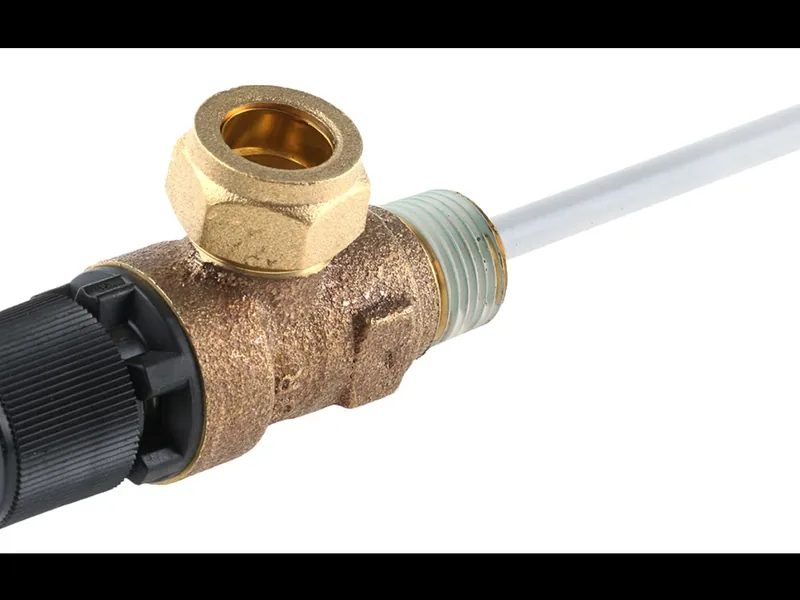
Brownsburg, IN 46112 sits at the intersection of small-town roots and rapid suburban growth, and its water heaters reflect both: aging tanks in the town's original neighborhoods and high-efficiency units in the subdivisions spreading toward the interstate. In both settings, the TPR valve is the component that speaks up first when pressure or temperature drifts out of range — a drip from the discharge pipe, a puddle that appears after every long shower, or a valve that will not stop weeping.
Water Heater Leak Repair Co. performs TPR valve replacement in Brownsburg, IN 46112 on gas and electric tank heaters. We diagnose before we replace — measuring system pressure through a heating cycle, checking expansion control, and verifying thermostat operation — so the new valve solves the problem instead of inheriting it. If your valve is dripping now, call (833) 713-2101 and we will help you read the signs.
In Short: In Brownsburg, IN 46112, TPR valve drips usually come from thermal expansion in closed systems, aging pressure-reducing valves passing high pressure, or mineral-scaled seats in hard water. We test pressure live through a recovery cycle, install a valve rated for your heater's BTU input, and correct discharge piping to a visible, code-compliant termination.
How TPR Valve Replacement Works in Brownsburg, IN 46112
The temperature and pressure relief valve threads into your water heater tank and guards two limits: 150 PSI and 210°F. A spring holds the valve shut; a temperature probe extends into the tank. When either limit is exceeded, the valve opens and dumps hot water through the discharge pipe. Our replacement process in Brownsburg is built around one principle: the valve opened for a reason, and we find the reason before the new valve goes in.
We start with energy off and the cold inlet closed, then relieve pressure and attach a test gauge. Static pressure tells us the baseline; pressure through a full heating cycle tells us the story. Brownsburg homes frequently show the closed-system pattern: a pressure-reducing valve or check valve on the main, no working expansion tank, and pressure that climbs 40 to 60 PSI during recovery until the TPR valve weeps. We have seen gauges peg past 150 PSI in homes where the homeowner assumed the dripping valve was simply old. The valve was doing its job; the system needed expansion control.
We also evaluate the water heater's controls. On electric heaters, a stuck upper thermostat or a failed ECO (energy cut-off) can drive tank temperature toward the valve's 210°F trip point — this produces discharge of scalding water rather than the lukewarm weep of pressure relief, and it is the more dangerous failure. On gas units, a failing gas control valve can cause the same runaway. When we find temperature-driven discharge in Brownsburg, we address the control failure as the primary repair and the valve as the secondary one, because a new valve on an overheating tank will simply discharge again.
Installing the replacement valve is precise work. We remove the old valve from the tank tapping, inspect the threads, and install a new valve sealed with thread compound rated for potable hot water. The replacement must match the heater: 3/4-inch threads, a BTU rating equal to or greater than the heater's input, and 150 PSI / 210°F set points. We verify the rating against the data plate — never assume — because undersized valves on high-input gas heaters cannot relieve energy fast enough in a true runaway.
Discharge piping receives a full compliance check. The pipe must run full size from the valve, pitch downward by gravity, contain no shutoffs, caps, or thread ends, and terminate 6 to 24 inches above the floor or a drain where anyone can see discharge happening. Brownsburg's mix of older utility rooms and newer finished basements produces every violation in the book: pipes reduced to half inch, terminations hidden behind water softeners, discharge lines run uphill into crawlspaces. During a TPR valve replacement in Brownsburg, IN 46112, we correct the discharge line so the valve's warning function actually works.
After installation we fill the tank completely, restore energy, and run a full cycle with the gauge attached. The new valve should remain dry through recovery. We exercise the test lever — a sharp burst of hot water, then a clean reseat — and we walk you through the pressure readings and what they mean for your system.
What Different Drip Patterns Mean
Timing is diagnostic. A valve that drips only in the hour after heavy hot-water use points to thermal expansion: the tank reheats a large volume, pressure spikes, the valve relieves, pressure settles. A valve that seeps around the clock suggests high static pressure or a seat fouled with mineral scale. A valve that spits in rhythm with a softener regeneration or irrigation cycle points to pressure transients from those devices. And sudden full discharge of very hot water means temperature — shut off the heater's energy and call (833) 713-2101 right away.
Scale is a quiet contributor across Brownsburg. Moderately hard municipal water leaves calcium on valve seats and stiffens springs over the years. A scaled seat weeps at normal pressure; a scaled-shut valve is more dangerous still, because it cannot open when needed. We test every old valve's lever during diagnosis, and when the lever will not budge, we show the homeowner — that frozen valve was providing zero protection.
Local Factors That Matter for TPR Valves in Brownsburg, IN 46112
Growth-corridor plumbing is the defining local factor. As Brownsburg expanded, municipal infrastructure added backflow prevention and pressure regulation at the street, which closed previously open systems. Homes built in the 1980s and 1990s that never had expansion tanks suddenly needed them once check valves went in upstream. We find many of these homes with TPR valves weeping for years, the homeowner having replaced the valve two or three times without anyone diagnosing the missing expansion control. Our first visit usually ends that cycle.
Finished basements raise the stakes. A large share of Brownsburg homes have finished lower levels, and the water heater often sits in a utility closet surrounded by drywall, carpet, and stored belongings. A weeping discharge pipe in that closet can feed mold behind drywall for months before discovery. We route discharge terminations to visible locations and suggest a battery water alarm at the heater base — a small device that turns a silent weep into an audible alert.
Garage installations are common in Brownsburg's ranch neighborhoods, where the heater sits in an unheated or semi-heated garage corner. Winter brings two risks: discharge pipes that freeze shut, and TPR valves whose springs and seats corrode faster in the wide temperature swings of a garage. A frozen discharge pipe is a blocked safety device. During winter service in Brownsburg, IN 46030-area garages, we reroute discharge lines out of freeze paths and insulate where rerouting is not practical.
Finally, water quality. Brownsburg-area water carries enough hardness to scale valves and tank bottoms over a heater's life. In homes without softeners, we recommend annual lever tests and a tank flush every year or two — the flush removes the sediment that migrates to valve seats, and the lever test catches valves that are scaling shut before they fail silently.
What Happens When You Call (833) 713-2101
Describe the drip: when it happens, how much water, how hot, and how old the heater is. We will tell you whether to shut the heater down immediately — any steam or scalding discharge means yes — and schedule accordingly. Urgent temperature discharges go to the front of the line.
On site, we run the full diagnostic, replace the valve with a correctly rated unit, bring the discharge piping into compliance, and test under a live heating cycle while you watch. You get the old valve, the pressure readings, and a plain explanation of the root cause and any follow-up your system needs.
For TPR valve replacement in Brownsburg, IN 46112, Water Heater Leak Repair Co. finds the cause and fixes it right. Call (833) 713-2101 today.