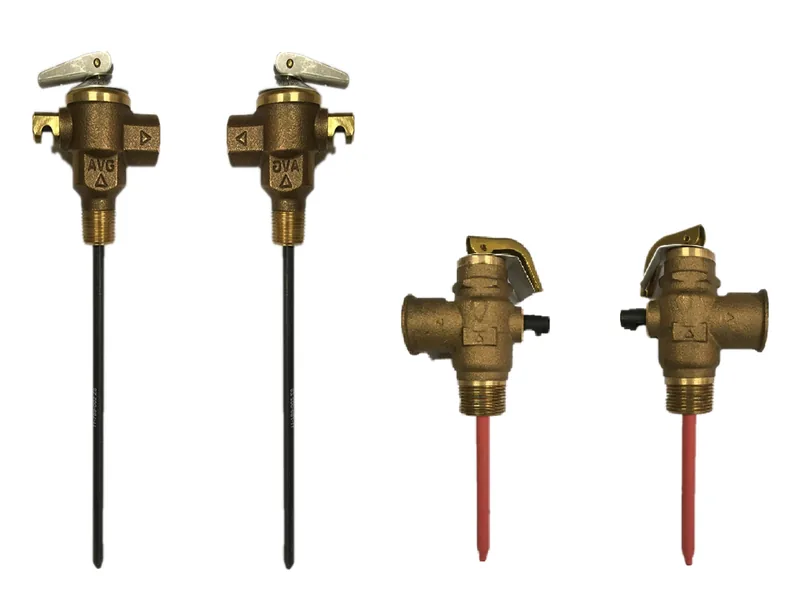
Lawrence, IN 46226 covers northeast Indianapolis — post-war suburbs, brick ranches, and split-levels whose water heaters are often the same age as the kitchen remodel. In these homes, dripping TPR valves are a familiar complaint: expansion weeping in closed systems, scaled seats from hard water, and pressure-reducing valves that have been drifting upward since the 1990s. A dripping temperature and pressure relief valve is your tank's report on pressure or temperature inside — and in Lawrence's aging housing stock, that report deserves a proper reading.
Water Heater Leak Repair Co. provides TPR valve replacement in Lawrence, IN 46226 for gas and electric tank heaters. We diagnose first — pressure through a live heating cycle, expansion control, thermostat function — then install a correctly rated valve and bring discharge piping up to code. Call (833) 713-2101 and tell us what your valve is doing.
In Short: In Lawrence, IN 46226, TPR valve drips typically trace to thermal expansion in closed systems, aging PRVs passing high pressure, scaled seats in hard water, or failing thermostats in older tanks. We diagnose pressure live, replace the valve with one matched to your heater's BTU rating, and rebuild discharge piping to a visible, code-compliant termination.
How TPR Valve Replacement Works in Lawrence, IN 46226
The TPR valve threads into your water heater and guards 150 PSI and 210°F via a spring-loaded disc and an immersed temperature probe. Our Lawrence process starts with energy off and the cold inlet closed, then controlled depressurization — followed by the diagnostic that determines the repair's durability.
We mount a gauge, record static pressure, and watch it through a full recovery cycle. Lawrence's post-war homes produce a consistent signature: PRVs installed in the 80s–90s now passing 85 to 100 PSI, check valves at meters closing the system, and no expansion tank — so recovery spikes blow past 150 PSI and the valve weeps. The live log makes the pattern undeniable, and the companion fix (expansion tank, PRV service) follows from it.
Thermostat verification matters on Lawrence's older electric tanks. Sticking thermostats drive tanks toward the temperature trip point, producing scalding discharge rather than pressure weeps. We verify cut-out temperatures and ECO function before condemning the valve — temperature-driven discharge means the control fault is the primary repair.
Installation is exact: old valve out with a wrench on the body flats, tapping cleaned, new valve installed with potable-rated sealant. The replacement's BTU rating must meet or exceed the heater's input — verified against the data plate, never assumed.
Discharge piping in Lawrence's basements and utility rooms is often decades out of compliance — reduced sizes, hidden terminations, missing pipes. Code requires full-size gravity-pitched pipe with no restrictions, terminating 6 to 24 inches above the floor or a drain, visible. During a TPR valve replacement in Lawrence, IN 46226, we rebuild the discharge line to that standard.
We fill the tank fully before restoring energy, run a complete cycle under gauge observation, confirm the new valve stays dry, exercise the test lever in front of you, and review findings plainly.
Reading the Patterns
Post-use weeping that fades within the hour is thermal expansion. Constant seepage with crust points to high static pressure or a scaled seat. Sudden scalding discharge or steam with rumbling is temperature runaway: shut off the heater's energy and call (833) 713-2101 immediately. Note the timing before calling — it sharpens our diagnosis.
Local Factors That Matter for TPR Valves in Lawrence, IN 46226
Post-war housing stock defines the work. Brick ranches and split-levels from the 1950s–70s with heaters in basements or utility rooms, PRVs added a generation ago, and systems closed by later meter work — the classic weeping-valve setup. Our diagnostic is tuned to this vintage: we expect expansion problems and verify rather than assume.
Aging PRVs are Lawrence's signature failure. Builder- and replacement-grade PRVs from the 1990s have drifted high across the area; we test PRV function during TPR service because the dripping valve is often just the symptom of 95 PSI static pressure.
Hard water scales seats and weakens springs over each heater's life. Annual lever tests catch frozen valves; flushing removes seat-fouling sediment. In Lawrence's unsoftened homes, we recommend both as routine.
Basement utility rooms with finished surroundings mean hidden discharge terminations are common — pipes ending behind furnaces or inside walls. We reroute to visible terminations and suggest a water alarm at the heater base.
The Real Cost of Living With a Weeping Valve in Lawrence
It is tempting to put a bucket under the discharge pipe and forget about a weeping TPR valve. In Lawrence, where many valves weep intermittently for months, that is exactly what happens — and the costs accumulate quietly. First is the water itself: a valve weeping a cup an hour wastes over 400 gallons a month, every month, straight down the discharge pipe. Over a year of neglect, that is thousands of gallons of heated water — you paid to heat it, then paid again to send it down the drain.
Second is the pressure damage you cannot see. The same overpressure condition that makes the valve weep is hammering everything else in the system: washing machine inlet hoses bulge and weaken, toilet fill valves chatter and fail early, faucet cartridges drip, and the water heater tank flexes with every spike, working its glass lining loose. We have traced clusters of premature fixture failures in Lawrence homes back to the chronic high pressure that a dripping TPR valve had been advertising for a year. Fixing the pressure when the valve is replaced protects the whole plumbing system, not just the heater.
Third is the tank's remaining life. Every expansion spike stresses the tank's steel shell and seams; every overheating event bakes sediment harder and degrades the anode rod's protection faster. A valve weeping from thermal expansion is evidence the tank is operating under conditions it was not designed for. Correcting expansion control at the same visit as the valve replacement — rather than swapping the valve alone — is the difference between a repair that lasts and a countdown to the next service call. That is why our Lawrence diagnostic always includes the pressure log: ten minutes with a gauge, and we know whether the system needs an expansion tank, PRV service, or just the valve.
Seasonal Pressure Swings in Lawrence
Lawrence homeowners sometimes notice their TPR valve behaves differently by season — quiet in summer, weeping in winter — and wonder if they imagined it. They did not. Municipal water arrives colder in winter, so the heater works through a larger temperature rise per cycle, producing more expansion per recovery. Meanwhile, winter's closed windows and dry air mean nobody hears the faint hiss of a weeping valve in the basement. The combination produces a seasonal pattern: the valve weeps hardest in January and February, exactly when the basement is visited least.
Cold also stiffens aging valve springs and thickens any scale on the seat, so a valve that sealed adequately in July may weep in January at the same pressure. If your Lawrence valve is a winter-only weeper, that is still a pressure problem worth diagnosing — seasonal does not mean harmless. And while we are in the basement in winter, we check the discharge pipe's routing through unheated spaces: a discharge line that freezes shut in a cold snap turns the relief valve into a dead end, which is a safety defect we correct on the spot.
What Happens When You Call (833) 713-2101
Describe the drip pattern, water temperature, heater age and fuel. Scalding discharge or steam means shutting down now with priority scheduling; a weep means a prompt visit.
On site: live pressure diagnostics, expansion and thermostat verification, correctly rated valve replacement, compliant discharge piping, demonstrated lever test — usually one visit. You get the old valve, the readings, and a straight explanation.
For TPR valve replacement in Lawrence, IN 46226, Water Heater Leak Repair Co. fixes causes, not just drips. Call (833) 713-2101 today.