Lebanon, IN 46052 anchors Boone County — a historic downtown of brick storefronts, established neighborhoods of mid-century homes, and the I-65 corridor's newer subdivisions spreading outward. Its water heaters span the same range: 20-year-old tanks in ranch homes near the square, farmhouse heaters on the rural routes, and young high-efficiency units in the growth areas. In all of them, the TPR valve is the component that reports pressure and temperature trouble first — a drip from the discharge pipe, a puddle that appears after every long shower, or a valve that weeps steadily around the clock.
Water Heater Leak Repair Co. provides TPR valve replacement in Lebanon, IN 46052 for gas and electric tank water heaters. We diagnose before we replace: system pressure logged through a live heating cycle, expansion control verified, thermostat function checked, and the old valve's lever tested to confirm it even opens. Then we install a correctly rated valve and bring the discharge piping up to code. Call (833) 713-2101 and describe what your valve is doing.
In Short: In Lebanon, IN 46052, TPR valve drips usually trace to thermal expansion in closed systems, aging pressure-reducing valves, mineral-scaled seats in hard water, or failing thermostats in older tanks — with rural well systems adding waterlogged pressure tanks to the list. We diagnose pressure live, install a valve rated for your heater's BTU input, and correct discharge piping to a visible, code-compliant termination.
How TPR Valve Replacement Works in Lebanon, IN 46052
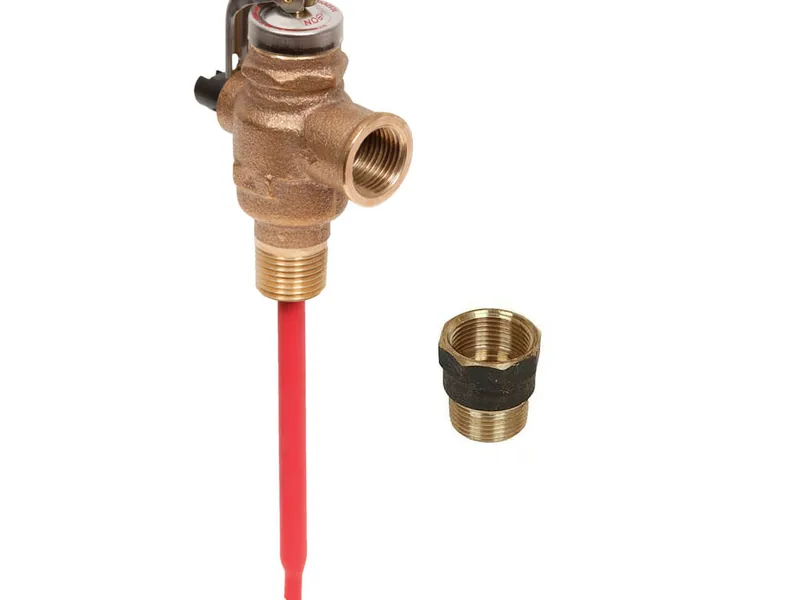
The temperature and pressure relief valve threads into your water heater tank and guards two limits: 150 PSI of pressure and 210°F of temperature. A spring holds the disc shut; a probe immersed in tank water senses temperature. When either limit is exceeded, the valve opens and hot water exits through the discharge pipe. Our Lebanon replacement service treats the valve as a safety device first — the diagnostic drives the repair, not the other way around.
We start with the heater's energy off and the cold-water inlet closed, then depressurize in a controlled manner through the drain valve. Next we mount a pressure gauge and record the static reading — then fire the heater and watch pressure through a full recovery cycle. Lebanon homes show the region's full catalog of patterns: in-town houses with PRVs installed decades ago and check valves added at meter swaps spike hard during recovery with no expansion tank to absorb it; newer corridor subdivisions show high static pressure from the start; rural well-fed homes show pump-synchronized pressure hammer. The live pressure log distinguishes these in minutes, and each points to its companion repair — expansion tank, PRV service, or pressure-tank attention.
On Lebanon's older electric tanks, thermostat verification is non-negotiable. Decades of heat cycling wear thermostat contacts; a sticking upper thermostat lets the tank climb toward the valve's 210°F trip point, producing scalding discharge rather than a lukewarm pressure weep. We verify cut-out temperatures and test the ECO (energy cut-off) reset before condemning the valve, because a temperature-driven discharge means the control fault is the primary repair — a new valve on an overheating tank will simply discharge again.
We also test whether the old valve opens at all. In Lebanon's hard water, valves on long-neglected heaters scale shut with depressing regularity. We attempt the lever test during diagnosis; a frozen lever means the tank has been operating without overpressure protection, possibly for years. That finding elevates the visit from drip repair to safety restoration, and we explain it plainly while showing you the immobile lever.
The installation itself is exacting. We extract the old valve with a wrench on the body flats — never on the outlet, which risks cracking the tank tapping — clean the threads, and install the new valve with thread sealant rated for potable hot water. The replacement's BTU rating must meet or exceed the heater's input rating, verified against the data plate on both. On Lebanon's older high-input gas units, correct rating is a safety matter: an undersized valve cannot pass energy fast enough during a true runaway.
Discharge piping receives a full compliance rebuild. Code requires full-size pipe from the valve outlet, continuous downward pitch by gravity, no valves, caps, threads, or reductions, and termination 6 to 24 inches above the floor or a drain — where discharge is visible. Lebanon's older homes produce the full violation catalog: reduced pipe, uphill runs, terminations inside walls and crawlspaces, missing pipes. During a TPR valve replacement in Lebanon, IN 46052, we correct the discharge line to standard, because the valve's warning function depends entirely on a clear, visible path.
Finally, we fill the tank completely before restoring energy — dry-firing destroys electric elements in seconds — run a full heating cycle with the gauge attached, and confirm the new valve stays dry through recovery. We exercise the test lever in front of you: a crisp burst of hot water, then a clean reseat. Then we review the pressure readings and the root cause in plain language, with honest guidance on any related needs.
What Different Discharge Patterns Mean
Timing is diagnostic. A drip that appears in the hour after heavy hot-water use and fades is thermal expansion — the closed-system signature, Lebanon's most common pattern. A constant seep with white mineral crust at the pipe end indicates sustained high static pressure or a scaled seat. Rhythmic spitting synchronized with a well pump points to a waterlogged pressure tank. A sudden gush of scalding water or steam, especially with the tank popping or rumbling, is temperature runaway: shut off the heater's energy and call (833) 713-2101 immediately. Note your pattern before calling — it focuses our diagnosis considerably.
Scale deserves special attention in Lebanon. The area's hard water bakes calcium onto valve seats and stiffens springs, and in tanks that have never been flushed, sediment migrates upward to foul the seat. A scaled seat weeps at normal pressure; a scaled-shut valve cannot open at all. Annual lever testing is the ten-second habit that catches the silent failure before it matters.
Local Factors That Matter for TPR Valves in Lebanon, IN 46052
The town-to-country split defines Lebanon's TPR work. In-town homes on municipal water face the closed-system problem: PRVs and check valves with no working expansion tank, producing recovery spikes that weep the valve. Rural Boone County homes on private wells face the pressure-tank problem: failed bladders and lost air charge that remove the system's cushion, hammering pressure with every pump cycle. We diagnose for the water source in front of us, not the one we saw at the last house.
Housing age adds a second axis. Lebanon's historic core has heaters in stone and block basements with original galvanized discharge piping — corroded, undersized, or absent entirely. Mid-century neighborhoods have PRVs added a generation ago without expansion tanks. The I-65 corridor subdivisions have young heaters but closed systems with builder-grade expansion tanks of uncertain pre-charge. Each era fails differently, and our diagnostic reads the home's vintage.
Agricultural surroundings raise sediment loads in well systems. Fine silt settles in tank bottoms, insulating the burner or lower element and forcing longer, hotter cycles — more expansion per cycle, more thermal stress on the valve seat. When sediment is clearly contributing during a Lebanon service, we recommend a tank flush alongside the valve replacement; it extends the life of both.
Basement dampness in older Lebanon homes corrodes valve bodies, discharge pipes, and fittings from the outside while hard water attacks from within. We inspect external condition carefully and replace compromised piping as part of the job — not just the valve.
The Hidden Cost of a Weeping Valve
A valve weeping a cup an hour wastes over 400 gallons a month — heated water you paid to heat, sent down the discharge pipe. But the water is the smallest cost. The chronic overpressure behind the weep also shortens the life of washing machine hoses, toilet fill valves, faucet cartridges, and the tank itself, flexing the steel shell with every spike. We have traced clusters of premature fixture failures in Lebanon homes to the high pressure a dripping TPR valve had been advertising for months. Fixing the pressure when the valve is replaced protects the entire plumbing system.
What Happens When You Call (833) 713-2101
We ask about the drip pattern, water temperature, heater age and fuel, and whether you are on municipal or well water. Scalding discharge or steam means shutting down now with priority scheduling; an intermittent weep means a prompt visit.
On site, expect live pressure diagnostics, expansion and thermostat verification, a function test of the old valve, replacement with a correctly rated unit, code-compliant discharge piping, and a demonstrated lever test — usually in a single visit. You receive the old valve, the pressure readings, and a straight explanation of the cause and any follow-up your system needs.
For TPR valve replacement in Lebanon, IN 46052, Water Heater Leak Repair Co. fixes the cause behind the drip. Call (833) 713-2101 today.