Plainfield, IN 46168 stretches from its historic downtown along White Lick Creek to the logistics corridor and subdivisions that have grown with the interstate economy. Its water heaters are equally varied: older tanks in the town's original neighborhoods, workhorse heaters in homes near the warehouse district, and young high-efficiency units in the newer developments. In all of them, a dripping TPR valve is the tank's early-warning system — reporting pressure or temperature trouble that deserves a real diagnosis, not just a replacement part.
Water Heater Leak Repair Co. provides TPR valve replacement in Plainfield, IN 46168 for gas and electric tank heaters. We diagnose first — system pressure logged through a live heating cycle, expansion control verified, thermostat function checked, old valve lever-tested — then install a correctly rated valve and bring discharge piping up to code. Call (833) 713-2101 and tell us what your valve is doing.
In Short: In Plainfield, IN 46168, TPR valve drips typically come from thermal expansion in closed systems, aging PRVs passing high pressure, scaled seats in hard water, or failing thermostats in older tanks. We diagnose pressure live through a recovery cycle, install a valve rated for your heater's BTU input, and rebuild discharge piping to a visible, code-compliant termination.
How TPR Valve Replacement Works in Plainfield, IN 46168
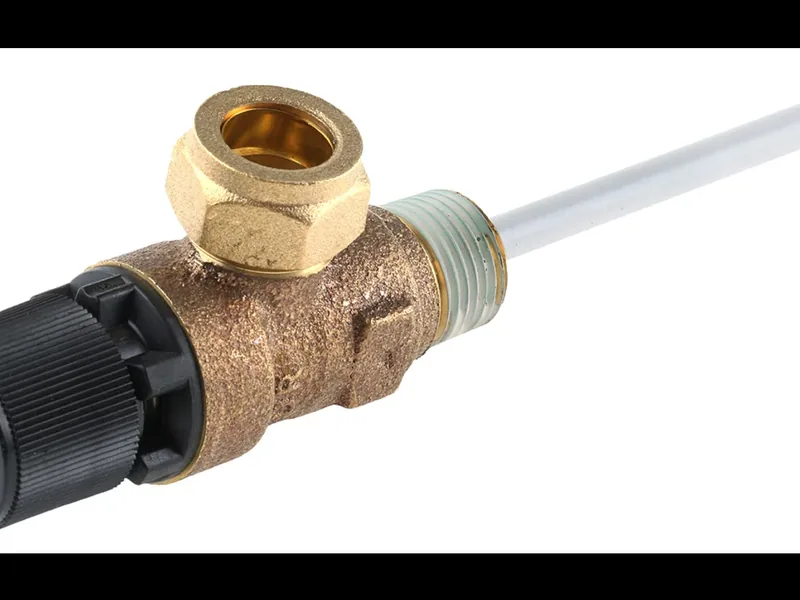
The temperature and pressure relief valve threads into your water heater tank and guards two limits: 150 PSI of pressure and 210°F of temperature. A spring holds the disc shut; an immersed probe senses water temperature. Our Plainfield replacement process starts with energy off and the cold inlet closed, then controlled depressurization — followed by the diagnostic that determines whether the new valve will last.
We mount a gauge, record static pressure, and watch it through a full recovery cycle. Plainfield's housing mix produces the region's standard signatures: older in-town homes with decades-old PRVs and meter-added check valves spike hard during recovery with no expansion tank; newer subdivisions show high static pressure or mis-charged expansion tanks on young heaters. The live pressure log separates these in minutes, and the companion repair follows the pattern.
On Plainfield's older electric tanks, thermostat verification is essential. Worn thermostats stick closed and drive the tank toward the valve's temperature trip point, producing scalding discharge rather than a pressure weep. We verify cut-out temperatures and ECO function before condemning the valve — a temperature-driven discharge means the control fault is the primary repair.
We also function-test the old valve. In Plainfield's hard water, long-neglected valves scale shut; a frozen lever means the tank has been operating without overpressure protection. We attempt the lever test during every diagnosis and show you the result plainly.
Installation is exact: old valve extracted with a wrench on the body flats, tapping threads cleaned, new valve installed with potable-rated thread sealant. The replacement's BTU rating must meet or exceed the heater's input — verified against the data plate, never assumed. On high-input gas units, correct rating is a safety requirement.
Discharge piping gets a full compliance rebuild: full-size pipe, continuous gravity pitch, no valves, caps, threads, or reductions, terminating 6 to 24 inches above the floor or a drain — visible. Plainfield's older homes contribute the full violation catalog: reduced pipe, uphill runs, hidden terminations, missing pipes. During a TPR valve replacement in Plainfield, IN 46168, we correct the discharge line to standard, because the valve's warning function depends on a clear, visible path.
We fill the tank completely before restoring energy, run a full cycle under gauge observation, confirm the new valve stays dry, exercise the test lever in front of you, and review the readings and root cause in plain language.
Decoding Discharge Patterns
Weeping after heavy hot-water use that fades within the hour is thermal expansion — the closed-system signature. Constant seepage with mineral crust points to sustained high pressure or a scaled seat. Sudden scalding discharge or steam with tank rumbling is temperature runaway: shut off the heater's energy and call (833) 713-2101 immediately. Note the timing before calling — it sharpens our diagnosis.
Local Factors That Matter for TPR Valves in Plainfield, IN 46168
The downtown-to-corridor spread defines Plainfield's TPR work. Historic neighborhoods near the creek have heaters in older basements with original piping and layered decades of repairs; the growth corridors have young heaters with closed-system configuration issues. Our diagnostic adapts to the home's era.
High groundwater and creek proximity mean many Plainfield basements run damp, corroding valve bodies and discharge piping from the outside while hard water attacks from within. We inspect external condition during every service and replace compromised piping as part of the job.
Hard water scales seats and stiffens springs across Plainfield. Annual lever tests catch frozen valves before they fail silently; periodic flushing removes the sediment that fouls seats. Both are routine recommendations in unsoftened homes.
Rental and workforce housing near the logistics corridor sees heavy heater use and minimal maintenance — the combination that kills TPR valves fastest. We document findings clearly for landlords and tenants alike.
What Chronic Weeping Costs
A valve weeping a cup an hour wastes over 400 gallons of heated water monthly. The hidden cost is pressure damage: the chronic overpressure behind the weep shortens the life of washing machine hoses, toilet fill valves, faucet cartridges, and the tank shell. Correcting expansion control when the valve is replaced protects the whole plumbing system — which is why our diagnostic always includes the pressure log.
Your Annual TPR Checklist in Plainfield
Five minutes once a year keeps your TPR valve honest in Plainfield. First, the lever test: lift the test lever briefly and confirm a strong burst of hot water from the discharge pipe, then a complete seal when you release it. Stand clear of the pipe end, and only test when the pipe terminates somewhere safe and visible. Second, look at the discharge pipe itself — follow it from the valve to its end and check for corrosion, kinks, or new obstructions (storage tends to migrate in front of discharge terminations). Third, look for the telltale white or green mineral crust at the pipe's end, which signals past weeping worth mentioning at your next service.
Fourth, know your expansion situation: if you have an expansion tank, note its age — tanks older than 8 to 10 years deserve a professional check of the air charge. If you do not have one and your plumbing has a pressure-reducing valve or check valve, ask us about adding expansion control before the valve starts weeping. Fifth, in Plainfield's damper basement areas near the creek, glance at the valve body and fittings for external corrosion once a year; damp air attacks from the outside while hard water works from within. This short routine catches frozen valves, failing expansion tanks, and corroded piping while each is still a simple fix.
What Happens When You Call (833) 713-2101
Describe the drip pattern, water temperature, heater age and fuel. Scalding discharge or steam means shutting down now with priority scheduling; a weep means a prompt visit.
On site: live pressure diagnostics, expansion and thermostat verification, old-valve function test, correctly rated replacement, compliant discharge piping, demonstrated lever test — usually one visit. You get the readings and a straight explanation of the cause and any related needs.
For TPR valve replacement in Plainfield, IN 46168, Water Heater Leak Repair Co. fixes the cause behind the drip. Call (833) 713-2101 today.