Thorntown, IN 46071 is a small Boone County town of historic homes and surrounding farmland, where water heaters are often older than the cars in the driveway and maintenance is a when-it-breaks affair. In Thorntown's farmhouses, Victorian-era homes, and modest ranches, TPR valves fail across the spectrum: weeping from thermal expansion, seeping from scaled seats, and frozen shut by a decade of hard-water scale. A dripping temperature and pressure relief valve is your tank's distress signal — and a silent, frozen valve is the more dangerous failure.
Water Heater Leak Repair Co. provides TPR valve replacement in Thorntown, IN 46071 for gas and electric tank heaters. We diagnose first — pressure through a heating cycle, well pressure-tank checks where applicable, thermostat verification, and a function test of the old valve — then install a correctly rated valve and bring discharge piping up to code. Call (833) 713-2101 and tell us what yours is doing.
In Short: In Thorntown, IN 46071, TPR valve problems range from chronic weeping (thermal expansion, high pressure, scaled seats) to valves frozen shut by hard-water scale on long-neglected heaters — with rural well systems adding waterlogged pressure tanks. We test whether the old valve opens, diagnose pressure live, install a correctly rated replacement, and correct discharge piping.
How TPR Valve Replacement Works in Thorntown, IN 46071
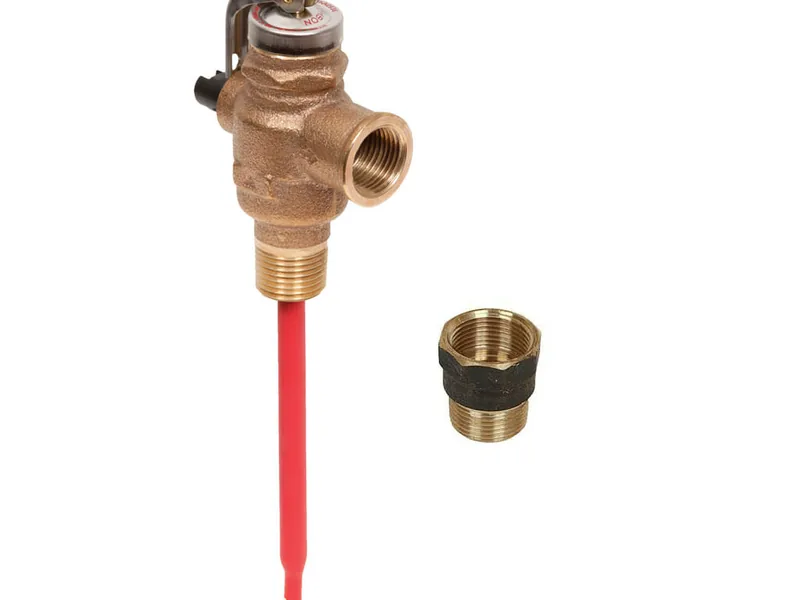
The TPR valve threads into your water heater tank and guards 150 PSI and 210°F with a spring-loaded disc and an immersed temperature probe. Our Thorntown process starts with energy off and the cold inlet closed, then controlled depressurization — followed by a diagnostic that matters enormously here, because Thorntown's valves are frequently found in advanced states of neglect.
We mount a gauge, record static pressure, and watch it through a full recovery cycle. In-town homes on municipal water show the closed-system pattern: PRVs or check valves with no working expansion tank, spiking past 150 PSI on every reheat. The well-fed farmhouses around Thorntown show the pressure-tank pattern: failed bladders and lost air charge removing the system's cushion, hammering pressure with every pump cycle. We check well pressure-tank air charge with the pump off and the system drained as a matter of routine — a five-minute test that prevents the new valve from inheriting the old drip.
Valve function testing is essential in Thorntown. Heaters that have not seen a lever test in a decade often have valves scaled solid. We attempt the test during diagnosis and show you exactly what we find; a frozen lever reframes the visit from drip repair to safety restoration. The tank has been operating without overpressure protection, and we say so plainly.
Thermostat checks matter on Thorntown's aging electric tanks. Sticking thermostats drive tanks toward the temperature trip point, producing scalding discharge. We verify cut-out temperatures and ECO function before replacing the valve, because a temperature-driven discharge means the control fault is the primary repair.
Installation is exact: old valve extracted with a wrench on the body flats, tapping threads cleaned and inspected, new valve installed with potable-rated sealant. The replacement's BTU rating must meet or exceed the heater's input — verified against the data plate. On older heaters with corroded tappings, we inspect carefully and tell you honestly if the tank itself is the real problem.
Discharge piping in Thorntown's older homes is frequently absent or hazardous: missing pipes, reduced sizes, uphill runs, crawlspace terminations. Code requires full-size gravity-pitched pipe with no restrictions, terminating 6 to 24 inches above the floor or a drain — visible. During a TPR valve replacement in Thorntown, IN 46071, we rebuild the discharge line to that standard.
We fill the tank completely before restoring energy, run a full cycle under gauge observation, confirm the new valve stays dry, exercise the test lever in front of you, and review the findings in plain terms.
Reading Your Valve
Post-use weeping that fades is thermal expansion. Constant seepage with crust is high static pressure or a scaled seat. Rhythmic discharge matching a well pump is a waterlogged pressure tank. A frozen lever is years of neglect. Sudden scalding discharge or steam with rumbling is temperature runaway: shut off the heater's energy and call (833) 713-2101 immediately.
Local Factors That Matter for TPR Valves in Thorntown, IN 46071
Deferred maintenance defines Thorntown's TPR work. Heaters run 15 to 20 years with no flushing, no lever tests, no expansion checks. Our service is a reset — new valve, verified expansion control, demonstrated lever test — plus a simple annual checklist to prevent the next decade of neglect.
Well water dominates the surrounding countryside, bringing waterlogged pressure tanks and heavy mineral content. Agricultural sediment loads tank bottoms with silt, forcing longer, hotter cycles and more valve stress; when sediment clearly contributes, we recommend a flush with the replacement.
Historic homes have heaters in stone basements and tight utility spaces with original galvanized piping — corroded, undersized, or absent. We rebuild discharge lines properly even in difficult spaces.
Outbuildings are common: barn and shop heaters, often hand-me-down units with zero maintenance. Mention yours when you call — we can inspect both in one visit.
The Cost of Waiting
A weeping valve wastes hundreds of gallons of heated water monthly; chronic overpressure degrades hoses, fill valves, cartridges, and the tank shell. A frozen valve leaves the tank entirely unprotected. Our diagnostic-first service addresses both the drip and the silence.
A Ten-Minute Annual TPR Routine for Thorntown
Thorntown homeowners can protect their water heaters with a ten-minute routine once a year — no tools, no expertise. Start at the water heater: find the TPR valve (brass, on the top or upper side of the tank, with a small lever and a pipe running down from it). Lift the lever briefly — you should hear and see a strong burst of hot water at the pipe's end, and the flow must stop completely when you let go. A lever that will not move, or a valve that keeps dripping afterward, means it is time to call us.
Next, follow the discharge pipe with your eyes from the valve to wherever it ends. It should run downhill the whole way, with no kinks, caps, or mysterious connections, ending in the open air above the floor or a drain — somewhere you would notice water. Then listen: with the house quiet, put your ear near the pipe end for a few seconds. Hissing or dripping sounds mean the valve is weeping, even if the floor is dry. Finally, well owners: once a year, check your pressure tank's air charge with a tire gauge (pump off, system drained to zero) — it should read about 2 PSI below your pressure switch's cut-in setting. A waterlogged pressure tank is the most common reason Thorntown TPR valves start dripping, and this check catches it early.
What Happens When You Call (833) 713-2101
We ask about the pattern — timing, volume, temperature — plus heater age, fuel, and water source. Scalding discharge or steam means shutting down now with priority scheduling; a weep or frozen lever means a prompt visit.
On site: live pressure diagnostics, well-tank check where applicable, thermostat verification, old-valve function test, correctly rated replacement, compliant discharge piping, demonstrated lever test — usually one visit. You get the old valve, the readings, and a straight explanation.
For TPR valve replacement in Thorntown, IN 46071, Water Heater Leak Repair Co. restores the valve and the protection it provides. Call (833) 713-2101 today.